

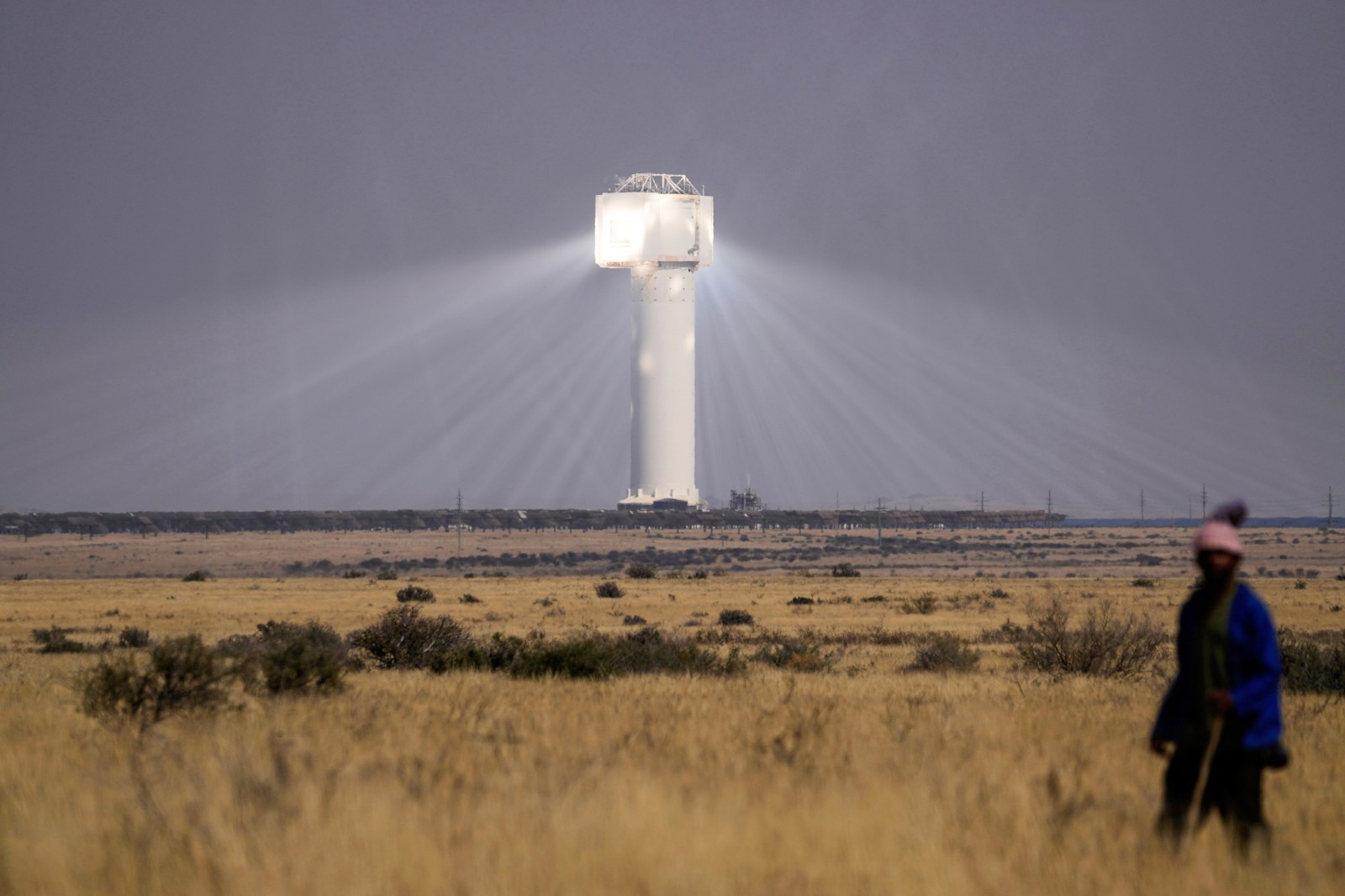
NAIROBI, Kenya (AP) — Africa’s biggest clean energy challenge is shifting from building projects to building the institutions, markets and regulatory systems needed to deliver them at scale, experts say.
Focus turns to building stronger institutions in Africa to speed shift to renewable energy To continue reading, please subscribe: Digital Subscription One year of digital access for only $205* - Enjoy unlimited reading on winnipegfreepress.com - Read the E-Edition, our digital replica newspaper - Access News Break, our award-winning app - Play interactive puzzles *First annual payment billed as $205.00 + GST for one year. This annual subscription will automatically renew at $233.00 + GST every 52 weeks (10% off the regular annual price of $259.35). Offer available to new and qualified returning subscribers only.
Cancel any time. To continue reading, please subscribe: Add Free Press access to your Brandon Sun subscription for only an additional $1 for the first 4 weeks* * Your next Brandon Sun subscription payment will increase by $1.00 and you will be charged $17.95 plus GST for four weeks.
After four weeks, your payment will increase to $24.95 plus GST every four weeks. NAIROBI, Kenya (AP) — Africa’s biggest clean energy challenge is shifting from building projects to building the institutions, markets and regulatory systems needed to deliver them at scale, experts say. That challenge is emerging even as clean energy reaches a historic milestone globally.
Renewables generated 34% of the world’s electricity in 2025, overtaking coal’s 33% share. Together with nuclear power, renewables are expected to provide half of global electricity by 2030. As industrialization, artificial intelligence and electrification push demand higher, experts say the bottleneck in transitioning to cleaner energy has shifted from technology to the systems supporting it, including funding.
Overcoming such obstacles is vital for securing access to power for the 600 million people in Africa who are yet to be connected. “Clean energy is now cheaper than fossil fuels in virtually every part of the world,” former New York City Mayor Michael R. Bloomberg, the U.N. Secretary-General’s Special Envoy on Climate Ambition and Solutions, said in late June while announcing a new $285 million Bloomberg Philanthropies initiative to strengthen clean energy industries in emerging and developing economies. “But fixable obstacles are still slowing down deployment, and with energy demand rising at an unprecedented speed, we can’t allow those obstacles to continue standing in the way,” he said.
Rather than financing solar farms or wind projects directly, the initiative will invest in strengthening market design, regulatory capacity, technical expertise and industry institutions, areas increasingly viewed as essential for attracting private investment and accelerating use of renewable energy. It reflects a growing consensus that Africa’s energy transition is constrained less by a lack of renewable resources or viable technologies than by the institutional capacity needed to turn those advantages into financially viable projects and electricity on the grid. Many projects remain delayed by weak market design, limited grid planning, slow permitting processes and fragmented regulatory systems.
“What has been missing is not the potential, but the institutional infrastructure and capabilities to unlock it,” said Saliem Fakir, executive director of the African Climate Foundation. “Philanthropy that targets those gaps directly is the kind of intervention that can shift the trajectory of a continent’s energy system.” Across Africa, renewable energy costs have fallen sharply while investment appetite continues to grow.
However, investors say policy uncertainty, slow permitting processes and limited regulatory capacity are hindering projects. Wangari Muchiri, founder and chief executive of RE.Think Energy, said the commitment signals that “the next phase of the energy transition is not about proving clean energy works, it’s about removing the barriers preventing it from scaling fast enough.” The Bloomberg initiative is looking beyond ambitious renewable energy targets to focus on helping projects attract long-term investments and connect to national grids.
“The next chapter of Africa’s renewable energy story will not be only by the projects it builds, but the institutions that make these projects possible,” Muchiri said. ___ The Associated Press’ climate and environmental coverage receives financial support from multiple private foundations.
AP is solely responsible for all content. Find AP’s standards for working with philanthropies, a list of supporters and funded coverage areas at AP.org.
- Published
- Jul 11, 2026
- Updated
- Jul 11, 2026
- Source
- Winnipeg Free Press
- Category
- Business
- Read time
- 3 min
Key facts
Why this matters locally
This business story matters locally because it may affect readers, businesses, commuters, families, or public services in British Columbia.
Local impact
BC Post links this item to British Columbia coverage so readers can follow related city updates, weather, traffic, events, and category news in one place.
Timeline
Source and credit
BC Post may summarize, organize, and add local context for reader clarity. Original reporting remains with the listed publisher.
Related Articles
View all Business
AI Market Trends: Q2 2026 Review and Forecast
Business
AI Market Trends: Q2 2026 Review and Forecast
 Business
Starchuk seeking judicial review of Surrey arena land-swap
Business
Starchuk seeking judicial review of Surrey arena land-swap
 Business
Earth Angel Worldwide Expands Its Mission Through Music, Education and Environmental Stewardship
Business
Earth Angel Worldwide Expands Its Mission Through Music, Education and Environmental Stewardship
 Business
B.C.'s Massey Tunnel replacement doubles in cost to estimated $8.5 billion
Business
B.C.'s Massey Tunnel replacement doubles in cost to estimated $8.5 billion
More Local Coverage
Latest news Politics
Powerful pro-life ad featuring boxing legend to air during final World Cup matches
Politics
Powerful pro-life ad featuring boxing legend to air during final World Cup matches
 Politics
Traditional Catholic response to Cupich’s suicide distortion
Politics
Traditional Catholic response to Cupich’s suicide distortion
 Top
‘Entire city’ asked to help search for missing 11-year-old Parker: Calgary police
Top
‘Entire city’ asked to help search for missing 11-year-old Parker: Calgary police