

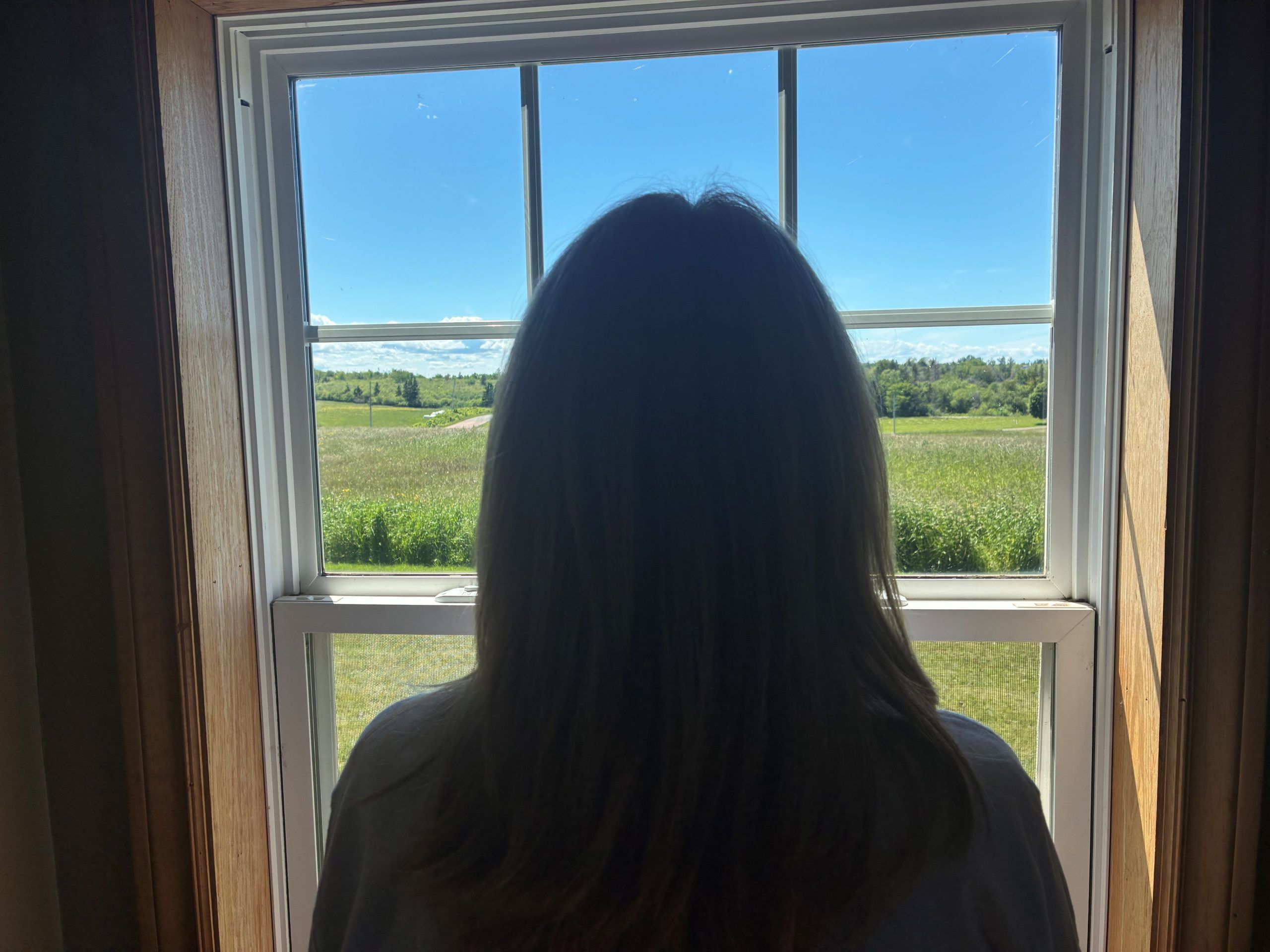
'How do you even tell someone who thinks they’re fine that they are being delusional?'
In a Pictou County home, a woman looked at a photo of her son taken before it all began. “Oh, that sweet freckled face on my happy-go-lucky boy,” she said. “Do I think he’d hurt me?
No. But he also believes he’s Apollo and that he can kill people and bring them back from the dead.” That freckled boy is 25 years old now.
He’s sometimes homeless, sometimes couch surfing. Sometimes using hard drugs and sometimes not. The woman spends her time worrying about him, tracking him down, cajoling him to take his monthly anti-psychotic injection and oral mood stabilizer medication.
She doesn’t want herself or her son to be identified because he may stop accepting what help he does let her give. But the woman we’ll call Lynn has a story to tell about mental illness and a system that’s made involuntary care very hard to get. “They take him in, keep him for a few weeks, and he tells the doctors he acknowledges he has a mental illness and will take his medication and then they let him out and he tells me he’s a demi-god,” Lynn said.
“He knows what to tell them to get out.” That’s meant a cycle of homelessness and hospitalization for the man we’ll call James, and endless worry for his family. The link Lynn sees as missing is an involuntary step between the psychiatric ward and discharge — a period of care when he could learn to acknowledge his illness, learn life skills and receive supervised treatment.
The Chronicle Herald has not been able to speak to James. So, this is a mother’s story. ‘There were signs but at the time you don’t see it’ “There were two things that motivated that boy – fishing and paintball – and they were both things he did with his dad,” said Lynn.
James was eight when his father was diagnosed with pancreatic cancer. They buried him seven months later. That Christmas she took their four children to Florida.
They had to get clear of the house’s memories. Photos of that trip, with its moments of peace and pain, were on her kitchen table, along with notebooks chronicling James’s long struggle with his mind and hers with the mental health care system. “When you look back, there were signs but at the time you don’t see it,” said Lynn.
He started smoking cannabis in Grade 8. She found toilet paper rolls and dryer sheets in the vent of his bedroom for masking the odour. Despite her efforts to control it, the use of marijuana became chronic.
James stopped playing hockey. There were trips to school guidance and addictions counsellors. “Whenever he was asked about his dad, he’d say, ‘I can deal with it,’” Lynn said.
“About the pot, he’d say it was to calm him so he could focus in class. Later, in high school, he once said, ‘It’s so I don’t punch anyone out.’” He injured his hand punching a wall at school and got a concussion at a party.
His siblings warned Lynn he’d begun doing harder drugs. The first psychosis came when James was 19. He tried going to culinary school in Dartmouth.
Despite his love of cooking, he struggled, stopped going and ended up back and forth between the city and his mother’s home. In May 2020, Lynn got a call from his roommate saying, “You need to take him home.” The family found him delusional and refusing to leave.
The police were called. He met with a crisis team at the Queen Elizabeth II Health Sciences Centre. No diagnosis was made.
“He buffaloed his way out, convinced them he was fine,” said Lynn. “In the car he was wild, angry at his brother and me. Driving home he calmed a bit and was looking out the window, saying, ‘Things don’t make sense’ and that he could control the weather.”
He didn’t get better. He burned his father’s blanket in the yard to “release his spirit.” Another night, Lynn woke to find him killing June bugs on the deck, saying he was fighting demons.
“It was chronic weed use and other drugs, gaming all night and sleeping all day. He couldn’t hold down a job,” said Lynn. “He’d say if he went to bed before 3 a.m. everyone would die.
One day he called me downstairs and said, ‘I figured out who I am.’ Then he showed me a picture of Apollo, the demigod, on his phone.” She took him to the Colchester East Hants Health Centre in Truro because it has a psychiatric unit.
They kept him overnight. He met with a psychiatrist the next day, who released him without a diagnosis. The episodes and delusions of being Apollo continued.
His three older siblings told Lynn they were worried for her safety. “But he’s my son,” said Lynn. “I remember him crying.
I told him, ‘I know, bud. I love you. We will keep trying until we find someone who can help.’”
When it got really bad, she convinced James to let her take him to St. Martha’s Regional Hospital in Antigonish, where she thought he might get better care. But enroute, as his delusions grew, she became fearful and instead took him to the Aberdeen Hospital in New Glasgow, which was closer. She was told to bring him back the next morning.
“Then my older son told them, ‘If something happens to her tonight . . . I’m going to jail.’ That’s the only way they let him stay.”
The next day, he was back at the Colchester East Hants Health Centre; from there they took him in an ambulance to Valley Regional Hospital. Diagnoses and treatment He was diagnosed with drug-induced psychosis, poly-substance use disorder and schizophreniform disorder. Less than three weeks later, in July 2020, Lynn and James’s siblings were called to meet with the doctor to plan for his release.
“They were saying he’s ready to be let out,” Lynn said. “He’d told them the things they wanted to hear. They said he was more stable now and it may take awhile for all the delusional thoughts to go away.
I told them he’s telling me he’s a demigod.” They told Lynn they couldn’t keep him. He came home.
She was strict that there would be no drugs and made sure he took his medication. There was stability for a few months. That fall he started classes at the Nova Scotia Community College campus in Stellarton.
When his student loan came in, his drug use started back up. On Nov. 27, 2022, he started talking about how he had the power to kill people and bring them back to life. Lynn took him back to the psychiatric unit in Truro.
They discharged him Dec. 9 without telling her. A former fellow patient picked up James and took him to New Glasgow. He lived rough.
She took him back in. He kept using drugs and the delusions continued. One evening, as Lynn was on the phone with his mental health nurse explaining what was happening, the nurse (with Lynn’s approval) called police to the home.
“He just told the police he was fine and they told me they couldn’t do anything because he wasn’t a threat,” Lynn said. The struggle to get involuntary care She went to court in Pictou and filed an affidavit to have him receive an involuntary psychiatric assessment. He let Lynn and his brother take him to the psychiatric unit in Truro to avoid being taken by police.
Under Nova Scotia’s Involuntary Psychiatric Treatment Act, a person can be admitted against their will if a psychiatrist finds they meet all of the following criteria: - Are threatening or attempting to cause serious harm to themself, or has recently done so - Have recently caused serious harm to themselves - Are seriously harming or threatening serious harm toward another person, or has recently done so - Suffer serious physical impairment - Suffer serious mental deterioration Two months later, Lynn was called to meet with the psychiatrist. “She said, ‘I can’t hold him anymore, he’s showing enough insight.’”
Lynn, who was her son’s substitute decision maker during those two months, opposed the release. But under the act, once a patient is found to no longer meet the conditions for involuntary care, they become a voluntary patient. Out of fear for her safety, Lynn said he couldn’t come home.
He was released to stay in a hotel, then became homeless and lived rough for about a month. “He got kicked out of his drug dealer’s and showed up here in the middle of the night,” said Lynn. “I said, ‘You can stay if you go in the recovery program tomorrow.’”
He came back to Lynn’s house and then began living with a partner in New Glasgow. That continued until the spring of 2025. He won over $10,000 gambling.
The money was gone within weeks. He moved back in with Lynn. There was a constant stream of visitors and drug use.
Her grandchildren couldn’t come to visit. Delusions of crypto and grand business ventures were mixed with paranoia. He carried a knife in his belt and slept with it under his pillow.
Last November, he was again involuntarily admitted to the psychiatric unit in Truro. He called Lynn up to 15 times a day. When she didn’t answer, he became angry and then apologetic.
He told her she didn’t need to work any more because he had $100,000 in crypto, had various business ventures he was going to start and land he was going to clear. In notes Lynn took after each conversation, he doesn’t acknowledge he is mentally ill. Lynn told the hospital that for her own safety and that of her family, James couldn’t come home.
He was discharged Dec. 15 with nowhere to go. He couch surfed in New Glasgow with another former patient and then ended up homeless in Moncton in February. Lynn called shelters around the New Brunswick city, trying to find him, as he was overdue for his monthly antipsychotic injection.
They’d tell her that for privacy reasons they couldn’t say whether he was staying there. He ended up back in New Glasgow and then back to Moncton. He got beat up, suffering black eyes and a broken shoulder.
He ended up back at the Colchester East Hants Health Centre’s emergency room this spring and was involuntarily admitted and then released on June 8. “I’m supposed to be his nurse, his social worker, his therapist, psychiatrist, but I don’t have training in any of those things,” said Lynn. “How do you even tell someone who thinks they’re fine that they are being delusional?”
Lynn is none of those health professions, but those who are haven’t been able to help her son. She said she thinks that with a year or more in care, James might be able to be helped to accept his illness, be off drugs (including cannabis), learn life skills and get to a place where he could be released with supports. “I don’t think (James) should be hospitalized now but rather there be somewhere to transition from being stabilized in a psychiatric unit to preparing for independent living with support,” said Lynn.
“Being discharged to live rough should not be an option.” A mother’s heart Now Lynn goes looking for her son in New Glasgow, encouraging him to take his medication. Sometimes he talks to her.
Sometimes he doesn’t. “I love him,” Lynn said. “You get glimpses.
He’s a very empathetic person. He cares about people. Even when he’s unwell, his plans are about taking care of others.
In his mind, when he’s in hospital it’s not because he has an illness, it’s to take care of others.” In February 2024, Lynn had a heart attack. Her doctors told her it was partially induced by accumulated stress.
She doesn’t blame it on James but on all that life has thrown at her. In bed at the hospital, waiting to get two stents put in, she thought about her boy. “If I don’t wake up, who’s going to look after him?”
- Published
- Jul 16, 2026
- Updated
- Jul 16, 2026
- Source
- Pniatlantic
- Category
- Health
- Read time
- 9 min
Key facts
Why this matters locally
This health story matters locally because it may affect readers, businesses, commuters, families, or public services in British Columbia.
Local impact
BC Post links this item to British Columbia coverage so readers can follow related city updates, weather, traffic, events, and category news in one place.
Timeline
Source and credit
BC Post may summarize, organize, and add local context for reader clarity. Original reporting remains with the listed publisher.
Related Articles
View all Health
Provation Expands Global Footprint with Launch of Provation® Apex in Australia and New Zealand
Health
Provation Expands Global Footprint with Launch of Provation® Apex in Australia and New Zealand
 Health
The Surprising Cellular Benefit of the Pigment Behind Red Hair
Health
The Surprising Cellular Benefit of the Pigment Behind Red Hair
 Health
Coffee May Protect the Liver in More Ways Than Scientists Realized
Health
Coffee May Protect the Liver in More Ways Than Scientists Realized
 Health
Study ties some birth control to brain tumours, but risks ‘rare’: experts
Health
Study ties some birth control to brain tumours, but risks ‘rare’: experts
 Health
Neuroscientists find a teamwork paradox: highly synchronized brains perform worse at complex tasks
Health
Neuroscientists find a teamwork paradox: highly synchronized brains perform worse at complex tasks
More Local Coverage
Latest news Business
AI Market Trends: Q2 2026 Review and Forecast
Business
AI Market Trends: Q2 2026 Review and Forecast
 Politics
Powerful pro-life ad featuring boxing legend to air during final World Cup matches
Politics
Powerful pro-life ad featuring boxing legend to air during final World Cup matches