

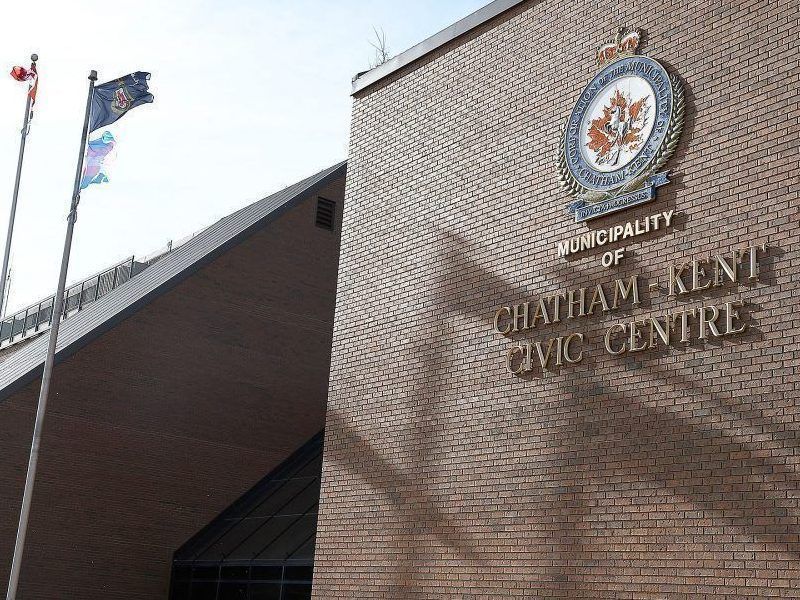
The cost to replace all of Chatham-Kent's municipal assets is now $13.3 billion, up from $13.03 billion in 2025.
Article content The replacement costs of Chatham-Kent’s assets grew by $300 million since last year, but part of the reason for the increase is better data available, the municipality’s manager of asset and quality management told council recently. Sean Hilderley said at the July 13 council meeting that the cost to replace all municipal assets is $13.3 billion, up from $13.03 billion in 2025. Recommended Videos These numbers represent what it would cost today to replace these assets, rather than the historical costs less the depreciation, he said.
Hilderley said the methodology in identifying these costs has improved at the municipality. He said if his team looks at a playground which would cost $250,000 to replace, they also look at inspection costs, the cost of putting in new mulch every year and the cost of at least one major repair over its lifespan. “When we look at things like a replacement cost and our (funding) gaps, these numbers are improving for us because we have better data,” Hilderley said.
“We’ve had better conversations with these services.” There are other reasons for the increase, he said, including new assets. An extra kilometre of road would also come with replacements costs for pipes under the roads, curbs, catch basins, manholes and speed signs, he said.
Part of the growth is also inflation, Hilderley said. His presentation also included looking at the gap between what the municipality currently spends and what it needs to spend to maintain its levels of service over the next 10 years. That number has grown by $260 million since last year to $2.66 billion.
“We’re going to continue to improve that data so we have a better understanding of what we truly need,” he said. “Once we know what we truly need, we can come up with those solutions to solve the problem.” Hilderley noted he is on the third year of a four-year plan to get the municipality’s asset management plans to a “good place,” and he previously told council they would see the numbers for the replacement costs and the gap increase over this time.
The municipality has asset management plans for 23 services, such as parks, waste water and transit services. He said options to manage this gap include tax rates, debt financing, reducing levels of service, consolidating or re-allocating services or deferring projects. However, he said growth and investment over time is still important.
“We think that the appropriate use of growth and the appropriate use of debt to invest in our infrastructure is one of the best ways to manage our gap over time as well,” he said. Hilderley gave a second presentation on a review of the asset management plan. He said this was a new requirement from the province, and he will deliver a review to council every year.
“It’s an interesting piece of (provincial) legislation because it’s basically saying, ‘You have to keep getting better. Every single year, you have to keep getting better at this,’” he said. “They want that continuous improvement element to it”
The presentation covered the status of implementing the asset management plan, “roadblocks” to implementation and strategies to move past those barriers. One of the barriers, Hilderley said, was limited asset management literacy at the council level. “When the familiarity of asset management is limited, recommendations often get de-prioritized and things happen where we defer maintenance, we make decisions at budget to cut funds because we’re looking for a very specific per cent that we’re after,” he said.
Hilderley also noted budget decisions can sometimes be disconnected from their impact to the level of service. He noted $1 million cut from the budget in one year would mean $30 million over 30 years of managing gaps between funding and levels of service. He used parks and recreation as an example to show the impact of that $30 million loss.
“That would be every playground being renewed at the proper time,” Hilderley said. “That would be every sports court being renewed at the proper time.” Council voted to adopt the strategies Hilderley recommended to help address these barriers.
They included an asset management literacy program for council, linking level of service impact to budget decisions, developing a long-term financial plan, using a framework to show potential impacts to service levels and developing an infrastructure gap dashboard for council.
- Published
- Jul 17, 2026
- Updated
- Jul 17, 2026
- Source
- Chathamdailynews
- Category
- Business
- Read time
- 3 min
Key facts
Why this matters locally
This business story matters locally because it may affect readers, businesses, commuters, families, or public services in British Columbia.
Local impact
BC Post links this item to British Columbia coverage so readers can follow related city updates, weather, traffic, events, and category news in one place.
Timeline
Source and credit
BC Post may summarize, organize, and add local context for reader clarity. Original reporting remains with the listed publisher.
Related Articles
View all Business
AI Market Trends: Q2 2026 Review and Forecast
Business
AI Market Trends: Q2 2026 Review and Forecast
 Business
Starchuk seeking judicial review of Surrey arena land-swap
Business
Starchuk seeking judicial review of Surrey arena land-swap
 Business
B.C.'s Massey Tunnel replacement doubles in cost to estimated $8.5 billion
Business
B.C.'s Massey Tunnel replacement doubles in cost to estimated $8.5 billion
 Business
Earth Angel Worldwide Expands Its Mission Through Music, Education and Environmental Stewardship
Business
Earth Angel Worldwide Expands Its Mission Through Music, Education and Environmental Stewardship
More Local Coverage
Latest news Politics
Powerful pro-life ad featuring boxing legend to air during final World Cup matches
Politics
Powerful pro-life ad featuring boxing legend to air during final World Cup matches
 Local News
Cowichan sports shorts: rugby, hockey, biking
Local News
Cowichan sports shorts: rugby, hockey, biking