


Alberta Health Services has issued a health advisory for Floatingstone Lake after blue-green algae was detected in the water.
ST. PAUL - A blue-green algal bloom has been spotted at Floating Stone Lake, within the County of St. Paul. Alberta Health Services (AHS) sent a health advisory on July 14, stating, "A cyanobacterial (blue-green algal) bloom and/or toxins have been identified in the waters of Floatingstone Lake." Residents living near the shores of the lake, as well as visitors should take precautions to avoid the blue-green algae.
The advisory recommends people: - Do not swim or wade in any areas where cyanobacterial blooms are visible. - Avoid all contact with cyanobacterial blooms in the water and washed up on shore. Wash with clean tap water as soon as possible if contact occurs.
- Do not drink or cook with water from this lake. - Do not eat whole fish or fish trimmings from this lake as fish may store toxins in their liver. Fish fillets contain less toxins and are safer to eat.
- Keep pets away from the water. Do not allow pets to swim in areas where cyanobacterial blooms are visible or to contact blooms in the water or on the shore. - Do not feed whole fish or fish trimmings from this lake to your pets.
"As always, visitors and residents are reminded to never drink or cook with untreated water directly from any body of water, including Floatingstone Lake, at any time. Boiling of this water will not remove the toxins produced by cyanobacteria. An alternate
Source and reference
source of drinking water should also be provided for pets and livestock while this advisory is active," according to AHS. Cyanobacteria are naturally occurring and blooms are more common during warm weather. "Cyanobacterial blooms can be blue-green, greenish-brown, brown, pink and/or red, and can look like scum, streaks, grass clippings, fuzz balls, paint or pea soup. They often smell musty or grassy." The advisory further adds, "People who come in contact with a cyanobacterial bloom or who ingest water containing cyanobacteria may experience skin irritation, rash, sore throat, sore red eyes, swollen lips, fever, nausea and vomiting and/or diarrhea. Symptoms can appear within one to three hours and resolve in one to two days. Symptoms in children are often more pronounced; however, all people are at risk of these symptoms. Exposure to cyanobacteria may be fatal to pets." The blooms...
Read original source- Published
- Jul 15, 2026
- Updated
- Jul 15, 2026
- Source
- Lakeland News
- Category
- Environment
- Read time
- 2 min
Key facts
Why this matters locally
This environment story matters locally because it may affect readers, businesses, commuters, families, or public services in British Columbia.
Local impact
BC Post links this item to British Columbia coverage so readers can follow related city updates, weather, traffic, events, and category news in one place.
Timeline
Source and credit
BC Post may summarize, organize, and add local context for reader clarity. Original reporting remains with the listed publisher.
Related Articles
View all Environment
50-hectare wildfire burns between Clearwater and 100 Mile House
Environment
50-hectare wildfire burns between Clearwater and 100 Mile House
 Environment
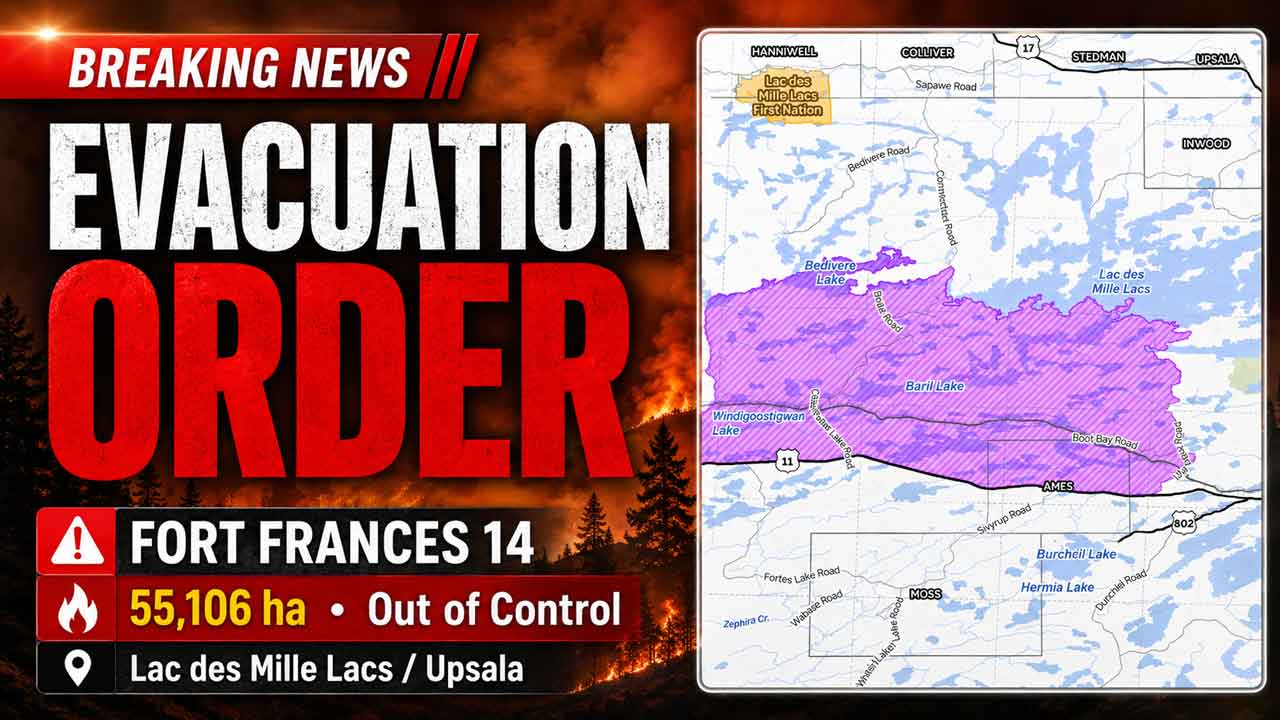
Updated Evacuation Information for Wildfire Fort Frances 14 (July 17 2026)
Environment
Updated Evacuation Information for Wildfire Fort Frances 14 (July 17 2026)
 Environment
A powerful movement of healing arrives at Delta’s Discovery Centre
Environment
A powerful movement of healing arrives at Delta’s Discovery Centre
 Environment
EU Excludes Soybean Seed from Deforestation Rules
Environment
EU Excludes Soybean Seed from Deforestation Rules
 Environment
Metro Vancouver issues air quality warning as wildfire smoke drifts in
Environment
Metro Vancouver issues air quality warning as wildfire smoke drifts in
 Environment
Vancouver forecast in 'sweet spot' but hot temperatures on the way
Environment
Vancouver forecast in 'sweet spot' but hot temperatures on the way
More Local Coverage
Latest news Business
AI Market Trends: Q2 2026 Review and Forecast
Business
AI Market Trends: Q2 2026 Review and Forecast
 Politics
Powerful pro-life ad featuring boxing legend to air during final World Cup matches
Politics
Powerful pro-life ad featuring boxing legend to air during final World Cup matches