

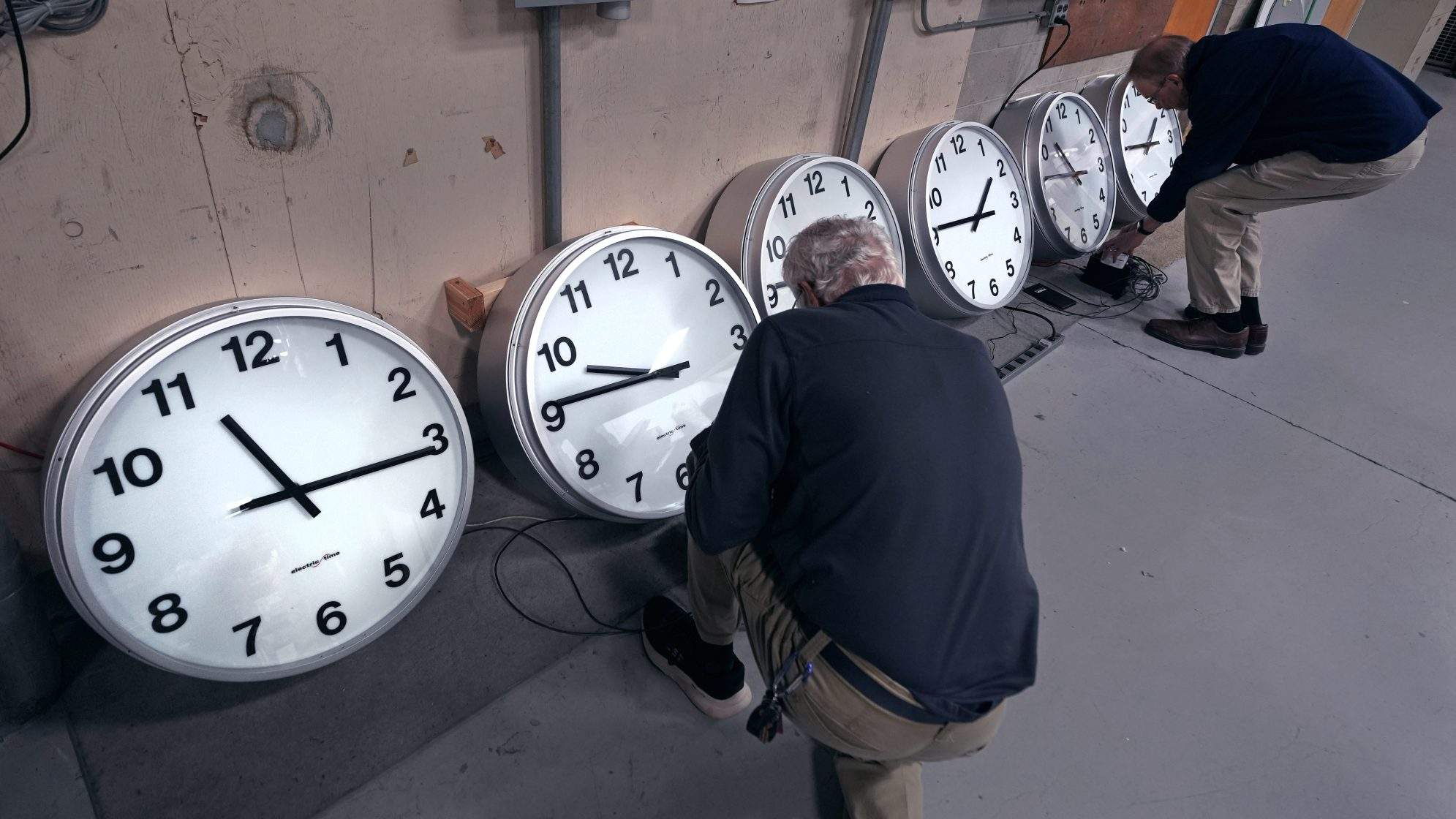
The Sunshine Protection Act was passed on Tuesday, which would put the country under time currently observed between March and November.
The U.S. House of Representatives has voted in favour of making daylight saving time permanent — and while it’s not law yet, the push is renewing some calls to stop the biannual time changes. With a 308-117 vote, both Republicans and Democrats passed the Sunshine Protection Act on Tuesday, which would no longer require Americans to change their clocks twice a year and put the country under time currently observed between March and November — known as permanent standard time. U.S. President Donald Trump called the development “Great News for America” on Truth Social Tuesday morning.
Trump has also previously shown support for getting rid of daylight saving time, calling the move “an easy one.” “It’s time that people can stop worrying about the ‘Clock,’ not to mention all of the work and money that is spent on this ridiculous, twice yearly production,” he wrote on Truth Social on May 21. “We are going with the far more popular alternative, Saving Daylight, which gives you a longer, brighter Day — And who can be against that.”
How much of Canada has made the switch? British Columbia, Saskatchewan and Yukon are currently the only three Canadian regions that no longer observe the switch in times. Get daily National news Saskatchewan first made the change in 1966 with Yukon following suit in 2020.
B.C. passed legislation in 2019 but didn’t make the change until March 2026. The province opted to observe permanent daylight saving time, with some exceptions in eastern and northeastern regions. From November to March, B.C.’s new time will match Alberta and the parts of B.C. on Mountain Time.
For the rest of the year, the clocks will align with U.S. neighbours to the south. The province will also remain one hour ahead of Washington state, Oregon and California during the winter months. “When we change our clocks twice a year, it creates all kinds of problems,” Premier David Eby said March 2 when announcing the new policy.
“Kids get up at the same time, even though the clocks changed. Dogs get up at the same time, even though the clocks changed. Parents lose sleep.
Kids lose sleep. And even people without kids or parents, they’re losing an hour of sleep... So what we see is more car accidents and people not feeling well and impacts that have a huge, unnecessary impact on the lives of British Columbians.”
- TTC prepares to install automatic train signalling, promises more frequent service - Chiefs want residential school denialism criminalized as hate speech - Quebec and Alberta announce plan to work together to deploy AI in government - Canada pauses immigration applications for parent, grandparent sponsorship What about the rest of Canada? Alberta recently announced that it will also stop the twice-yearly changes of the clock. The province will move to permanent Alberta Time (Mountain Daylight Time) in November 2026.
Northwest Territories Premier R.J. Simpson also said on April 21 that the territory will follow Alberta’s lead and end twice-a-year clock changes. Alberta and the Northwest Territories share the same time zone, with Simpson previously saying the territory would only make the switch if Alberta did as well. In addition, Manitobans have the opportunity to provide feedback on biannual time changes via a survey launched by the province on May 20.
The survey asked specifically which option residents would like to see: including permanent daylight time, permanent standard time, sticking to the status quo and keeping time changes and a final option for no preference. The survey will be available until Aug. 31.
- Published
- Jul 15, 2026
- Updated
- Jul 15, 2026
- Source
- Global News
- Category
- Local News
- Read time
- 3 min
Key facts
Why this matters locally
This local news story matters locally because it may affect readers, businesses, commuters, families, or public services in British Columbia.
Local impact
BC Post links this item to British Columbia coverage so readers can follow related city updates, weather, traffic, events, and category news in one place.
Timeline
Source and credit
BC Post may summarize, organize, and add local context for reader clarity. Original reporting remains with the listed publisher.
Related Articles
View all Local News
Cowichan sports shorts: rugby, hockey, biking
Local News
Cowichan sports shorts: rugby, hockey, biking
 Local News
Cost of B.C. Massey tunnel replacement doubles from previous budget
Local News
Cost of B.C. Massey tunnel replacement doubles from previous budget
 Local News
Lions earn first win by handing Elks their first loss in 36-24 decision
Local News
Lions earn first win by handing Elks their first loss in 36-24 decision
 Local News
Consumer watchdog secures 4 ticketing undertakings during World Cup
Local News
Consumer watchdog secures 4 ticketing undertakings during World Cup
 Local News
Business leader says he hopes Greater Victoria gets fair share of submarine money
Local News
Business leader says he hopes Greater Victoria gets fair share of submarine money
More Local Coverage
Latest news Top Stories
Yukon minerals work still under review despite federal announcement
Top Stories
Yukon minerals work still under review despite federal announcement
 Top Stories
Hotel bookings during World Cup down from last year, but B.C. minister sees positives
Top Stories
Hotel bookings during World Cup down from last year, but B.C. minister sees positives