

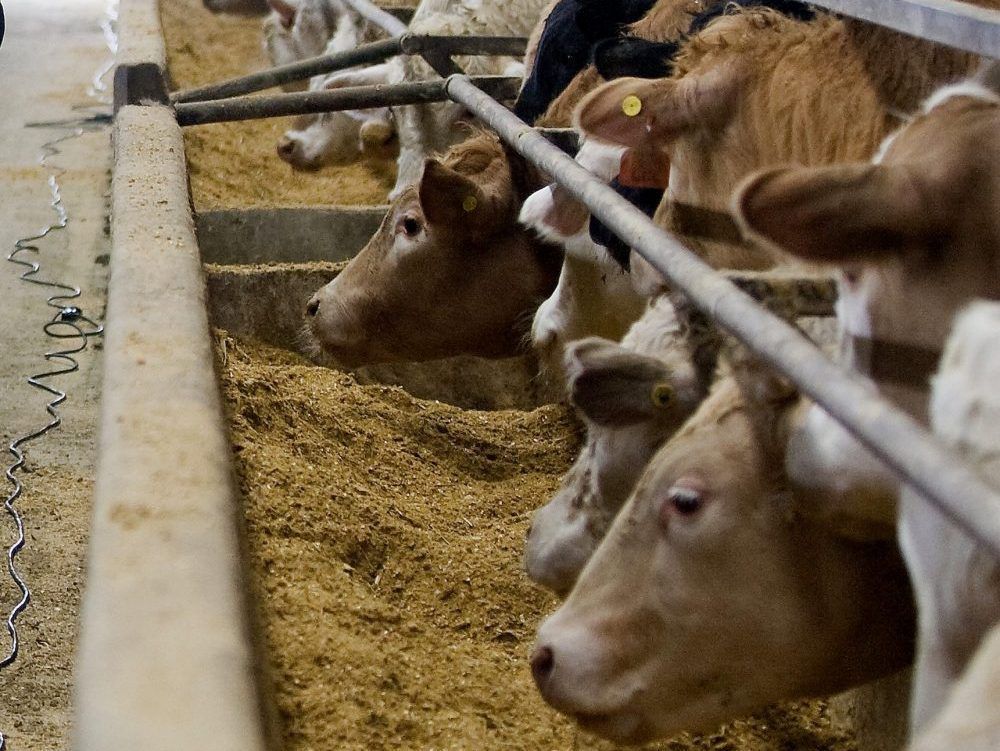
The Canadian Food Inspection Agency is considering relaxing bans on specified risk materials from beef
Article content The Canadian Food Inspection Agency is considering relaxing bans on specified risk materials from beef so they could once again be included in non-ruminant livestock feed, pet food and fertilizer. The bans went into effect after bovine spongiform encephalopathy was identified in May, 2003, in the brain tissue of a cow that died in Alberta.
Federal Agriculture Minister Heath MacDonald said lifting the bans will make it easier for Canadian beef processors to compete with the U.S. Canada’s current enhanced feed ban took effect in 2007 to persuade the U.S. and other countries to resume buying Canadian beef. Since 2021, Canada is considered to have negligible risk status for BSE, according to the World Organization for Animal Health, and the trading bans have been lifted. The change in regulations would allow the sale of skulls, eyes, the nervous system, tonsils and the distal ileum portion of the small intestine, from cattle less than 30 months old.
All of these items will still be banned from human food. Bans will remain in effect for brains and spinal cords from cattle more than 30 months old. Beef processors and abattoirs will need a permit from the CFIA to separate and use the eligible parts from cattle aged 30 months or older.
CFIA has opened public consultation on the proposed changes. It closes Sept. 9. Chief executive officer Andrea Brocklebank of the Canadian Cattle Association said “This is good news for our industry and our competitiveness.”
The Canadian Meat Council said the changes include “long-sought updates” to SRM requirements. Additional costs related to removal and disposal of SRMs in Canada are estimated to cost an average of $167 per tonne, the CCA and CMC said. Under today’s requirements, Canadian processors must discard about 57 kilograms of materials per carcass, compared to about three in the U.S.
- Published
- Jul 17, 2026
- Updated
- Jul 17, 2026
- Source
- Ontariofarmer
- Category
- Canada
- Read time
- 1 min
Key facts
Why this matters locally
This canada story matters locally because it may affect readers, businesses, commuters, families, or public services in British Columbia.
Local impact
BC Post links this item to British Columbia coverage so readers can follow related city updates, weather, traffic, events, and category news in one place.
Timeline
Source and credit
BC Post may summarize, organize, and add local context for reader clarity. Original reporting remains with the listed publisher.
Related Articles
View all Canada
Port of Vancouver expansion project referred to Canada’s Major Projects Office
Canada
Port of Vancouver expansion project referred to Canada’s Major Projects Office
 Canada
Vancouver working to avoid ‘the great sigh’ following FIFA World Cup excitement
Canada
Vancouver working to avoid ‘the great sigh’ following FIFA World Cup excitement
 Canada
Vaughn Palmer: NDP was asked four years ago to rescue B.C.'s pulp mills. It didn't
Canada
Vaughn Palmer: NDP was asked four years ago to rescue B.C.'s pulp mills. It didn't