

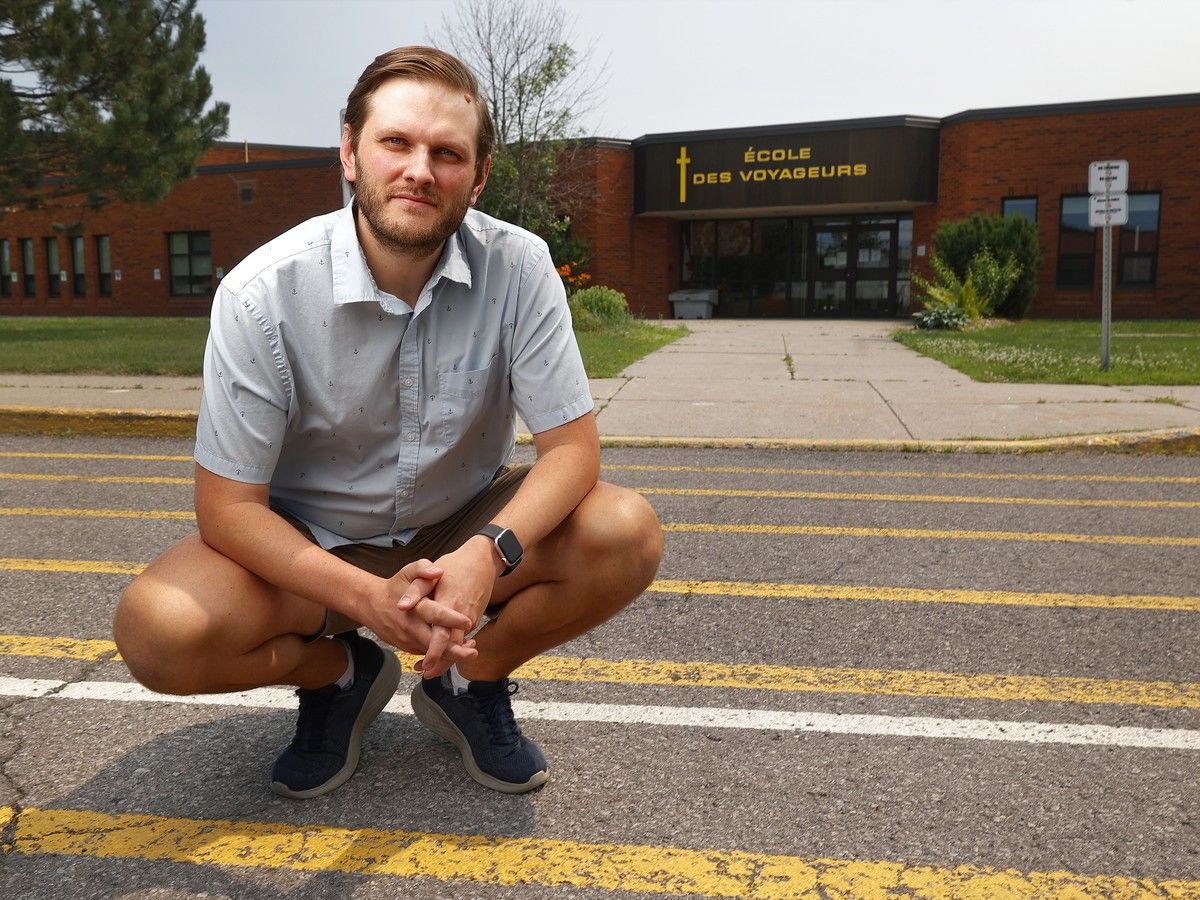
On July 15, Ottawa City Council carried a motion to move forward with a pilot of its ‘School Streets’ initiative for the upcoming school year.
During drop-off and pick-up, the road in front of École élémentaire catholique Des Voyageurs is a chaotic place, according to Rob Attrell, whose three kids attend the Orléans school. He remembers one day in January 2026, when just after a snowfall, this routine chaos “ground everything to a halt.” Though he said he’s used to seeing two rows of cars double-parking in the lot, “On this day, there was one row of cars triple-parking everyone in.
Everyone was really frustrated,” Attrell said. This frustration may be alleviated in some neighbourhoods this fall. On July 15, city council carried a motion to move forward with a pilot of its School Streets initiative at École élémentaire publique Francophone Francojeunesse, Hopewell Avenue Public School and École élémentaire publique Trille des Bois on the recommendation of the Public Works and Infrastructure Committee.
Adding children to this mess is risky, said Attrell, who is also a spokesperson for Vision Zero Ottawa, a local safety advocacy group. So, Attrell thinks that temporarily closing streets in front of elementary schools to traffic during peak times is an easy choice to prioritize kids’ safety. “In cities that have implemented School Streets, the front of the school just becomes this joyous place where it’s not teachers urging everyone to stay on the sidewalk, stay out of the way, or go right to the school doors and just wait there,” he said.
When school starts again, kids coming and going from three elementary schools in Ottawa will be able to walk, bike, play, or do whatever kids do these days without worrying about stopping for cars. While specific programs vary, “School Streets are generally defined as car-free areas outside schools where roads are closed to vehicles (or access is severely limited) for a timed period at the start and end of the school day. The aim is to create a safer, healthier environment that will foster increased active transportation for students,” according to a 2024 study on the feasibility of Ottawa’s implementation from non-profit group EnviroCentre.
The initiative began in 1989 in Bolzano, Italy, in response to traffic management challenges during peak pick-up and drop-off hours, says the same document. “Since then, the number of School Streets has grown dramatically with over 1,000 School Streets projects occurring across countries in Europe, North America, and Australia and New Zealand.” Ottawa has tested out the program before in a short pilot project at a single scool, but this bigger move follows the lead of numerous other cities like Toronto, Vancouver and Winnipeg that have already implemented the initiative.
The project is a collaboration between climate action group Green Communities Canada, Toronto-based not-for-profit 8 80 Cities , numerous other local organizations and research from several Canadian universities. EnviroCentre to run project Implementing the program in Ottawa hasn’t been clear-cut. “Neither the City nor the Ottawa Police Service have the staff resources or budget to develop, implement, and operate any School Street initiatives,” said a March 5 report from the public works department said.
This could change if a third party were to organize funding, lead planning and coordination, assume liability, and operate the road closures, the report said. Now, this support has come from EnviroCentre, which means there will be no direct financial impact on the City of Ottawa, according to an email from Beacon Hill-Cyrville Coun. Tim Tierney, who chairs the Public Works & Infrastructure Committee.
The city’s agreement with the organization allows staff to conduct an independent assessment of the initiative to evaluate its impacts and effectiveness, Tierney said. EnviroCentre’s funding, which consists of $47,500 to organize the program, comes from the National Active School Street Initiative, via the Public Health Agency of Canada, said Dzifa Binka, EnviroCentre’s community and sustainability program lead. “School Streets are practical ways to make walking or rolling to school easier for families.
Instead of traffic, School Streets make the space in front of the school fun and welcoming, open to pedestrians and cyclists,” Binka said. Pilot of the pilot The city first trialled School Streets at Vanier’s Trille des Bois Elementary School for a four-month mini pilot project starting in January 2024, according to Rideau-Vanier Coun. Stéphanie Plante.
For 30 minutes every weekday morning, 50 meters of the usually packed Alice Street was closed to traffic and open only to pedestrians, which was a success after only a few small hiccups, she said. “There was one grumpy parent who drove her child and wanted to drop her off right in front of the door, and we indicated, ‘You’re 30 seconds from the door when you drop her off at the adjacent street. It’s fine.’
After a while, everybody got used to it,” the councillor said, adding that she thinks it’s something that needs to be ruled out across the city. A tradeoff Attrell agrees that although the pilot is an encouraging start, it isn’t enough. “The idea that it only needs to be safe to walk around schools right at the beginning and end of the school day seems kind of silly to me because what if they have an activity at the school or near the school, two hours after school?
That should still be safe in my view,” he said. For some Ottawa parents, it may not be as simple as it seems. Erika Graffunder, whose youngest attends Hopewell, thinks the initiative is fantastic but knows it might be tough in reality for some.
“It depends on your work and marital status and social network. If you have young kids, are a single parent and work somewhere where flexibility is not an option, then you may not have the extra time to park further away and walk the distance,” Graffunder wrote in a message. But the pilot should be seen as a fluid, rather than a set-in-stone process, said Attrell.
“There are lots of different ways that this can work. My kids’ school happens to not be on a particularly main or busy road. There are paths where you can still use your vehicle, just not going past the school, going around it,” he said, estimating that this would be a 30-second detour for drivers.
Attrell thinks that this “small inconvenience” is worth it. “The tradeoff between the inconvenience of having to drive a little bit further or drive for a little bit longer is against the feeling of safety and the feeling of comfort for kids who are trying to get to or from school,” he said, adding that he doesn’t think the responsibility should be on kids to respond to traffic dangers. “I don’t think we should be subjecting them to dangerous situations where they’re forced to interact with traffic in a way that they are entering into an environment where car traffic is prioritized.
I think that around schools, active transportation — walking, cycling — should be prioritized.” Related Opinion: What would you do with no cars on a road for 30 minutes? This is why so many people hate the ByWard Market District Authority | Opinion Take control of your search results.
Make the Ottawa Citizen a preferred
Source and reference
source on Google and see verified local reporting first.
Read original source- Published
- Jul 17, 2026
- Updated
- Jul 17, 2026
- Source
- Ottawa Citizen
- Category
- Health
- Read time
- 5 min
Key facts
Why this matters locally
This health story matters locally because it may affect readers, businesses, commuters, families, or public services in British Columbia.
Local impact
BC Post links this item to British Columbia coverage so readers can follow related city updates, weather, traffic, events, and category news in one place.
Timeline
Source and credit
BC Post may summarize, organize, and add local context for reader clarity. Original reporting remains with the listed publisher.
Related Articles
View all Health
Study ties some birth control to brain tumours, but risks ‘rare’: experts
Health
Study ties some birth control to brain tumours, but risks ‘rare’: experts
 Health
The Surprising Cellular Benefit of the Pigment Behind Red Hair
Health
The Surprising Cellular Benefit of the Pigment Behind Red Hair
 Health
Tactile Systems: Clean Balance Sheet, But A Possible Value Trap
Health
Tactile Systems: Clean Balance Sheet, But A Possible Value Trap
 Health
Dexcom G7 15 Day Receives Health Canada Authorization: Extending Wear and Continuity for Canadian Adults Living with Diabetes
Health
Dexcom G7 15 Day Receives Health Canada Authorization: Extending Wear and Continuity for Canadian Adults Living with Diabetes
More Local Coverage
Latest news Politics
Powerful pro-life ad featuring boxing legend to air during final World Cup matches
Politics
Powerful pro-life ad featuring boxing legend to air during final World Cup matches
 Local News
Cowichan sports shorts: rugby, hockey, biking
Local News
Cowichan sports shorts: rugby, hockey, biking