


A health emergency has erupted in the northern US as multiple cities see their air quality become the worst in the world due to the Canadian wildfires raging out of control.
Millions in the US remain under dire air quality warnings as wildfire smoke from Canada makes the air worse for your health than smoking a dozen cigarettes a day. The situation has deteriorated to the point where major metropolitan areas, including Chicago, Detroit, Washington and New York are now ranked as the worst polluted cities in the world on Friday. The National Weather Service has issued air quality alerts in 16 states, stretching from Minnesota, Wisconsin, Michigan and Illinois in the Upper Midwest to New York, New Jersey, Maryland and Virginia along the East Coast.
According to the EPA, the air is now considered 'hazardous' from northern Minnesota to Columbus, Ohio - the agency's most severe air quality rating. Officials with NWS urged anyone in areas where the air quality has reached this levels to 'avoid all physical activity outdoors.' The wildfire smoke pouring down from hundreds of forest fires in Canada, mainly in the province of Ontario, is filled with microscopic pollutants called fine particulate matter, or PM2.5.
Air pollution rivals cigarette smoking dangers These are toxic compounds typically created by burning wood or industrial pollution, which are small enough to penetrate human tissue and cause severe breathing issues or even death among people with heart and lung disease. Health officials have noted that breathing in PM2.5 in the amounts currently seen in Detroit (292.6 μg/m3) on Friday equates to smoking more than 13 cigarettes in a single day. According to live air quality-tracking website IQAir, Chicago's air is currently filled with more than 240 μg/m3 (micrograms per cubic meter) of PM2.5 pollution - the equivalent of smoking more than 10 cigarettes in a day.
High AQI levels equal cigarette exposure Berkeley Earth, a nonprofit research organization known for analyzing climate and air quality data, estimated that breathing air with 22 μg/m3 of PM2.5 pollution for one full day has roughly the same long-term impact as smoking one cigarette. Dr Jonathan Tan from the Children’s Hospital of Philadelphia told AccuWeather: 'When the AQI climbs into the 150+ range for a full day outside, that’s in the ballpark of [smoking] seven to nine cigarettes.' Typically, the Air Quality Index (AQI) is measured on a scale from 0 to 500: 'good' (0–50) carries little risk, 'moderate' (51–100) may affect sensitive individuals, 'unhealthy for sensitive groups' (101–150) poses increased risk and 'unhealthy' (151–200) impacts everyone, limiting outdoor activity.
Midwest cities choke on hazardous air When outdoor air quality reaches the 300 to 500 'hazardous' zone or surpasses that mark, the EPA warns that everyone should avoid all physical activity outside. As of 9am ET on Friday, both Detroit and Chicago had surpassed 380, according to IQAir. Washington DC registered at 247, the third-worst polluted major city on the planet, and New York was fourth at 165 - all in the unhealthy to very unhealthy ranges.
The growing plume of pollution-filled smoke has been blamed on Canada's lack of fire management services, which has now let roughly 800 wildfires burn through over two millions acres of land throughout the country this year. Canada’s rural fires spark US criticism Dan DePodwin, AccuWeather's vice president of forecasting, told the Daily Mail: 'Because a lot of Canada is very rural, in many parts of the country, they don't actively fight fires, because there is very little to no population nearby.' 'So, the fires burn until they go out themselves, or they do minimal fire suppression.
So that is part of it, that is occurring here,' he continued. The situation has drawn the ire of US lawmakers, who slammed the Canadian government's alleged inability to contain the wildfires and the smoke reaching the northern US. Lawmakers urge Canada to address wildfires Congressman Nick Langworthy of New York said: 'Americans should not be forced to breathe hazardous air year after year because Canada refuses to properly manage its forests.'
'This is no longer a one-time emergency - it’s becoming an annual public health crisis. That is unacceptable,' added Langworthy, who represents parts of Buffalo, which has been severely impacted by the toxic air crisis. Congressman Bill Huizenga of Michigan also called on the Canadian government to work with the US on finding a solution to the annual wildfire problem north of the border.
'Michiganders must stop paying the price for bad policy,' Huizenga declared. Sensitive groups urged to stay indoors NWS officials also urged anyone considered to be in a 'sensitive group' to poor air quality to remain indoors with the windows shut on Friday. These groups include the elderly, young children, pregnant women and those with chronic health problems such as heart and lung disease.
'If you don`t have an air conditioner, staying inside with the windows closed may be dangerous in extremely hot weather. If you are hot, go someplace with air conditioning or check with your local government to find out if cooling centers are available in your community,' the agency recommended. 'Make sure to keep pets indoors to limit their exposure to poor air quality,' the AccuWeather team added in a statement.
- Published
- Jul 17, 2026
- Updated
- Jul 17, 2026
- Source
- Mail Online
- Category
- Environment
- Read time
- 4 min
Key facts
Why this matters locally
This environment story matters locally because it may affect readers, businesses, commuters, families, or public services in British Columbia.
Local impact
BC Post links this item to British Columbia coverage so readers can follow related city updates, weather, traffic, events, and category news in one place.
Timeline
Source and credit
BC Post may summarize, organize, and add local context for reader clarity. Original reporting remains with the listed publisher.
Related Articles
View all Environment
A powerful movement of healing arrives at Delta’s Discovery Centre
Environment
A powerful movement of healing arrives at Delta’s Discovery Centre
 Environment
50-hectare wildfire burns between Clearwater and 100 Mile House
Environment
50-hectare wildfire burns between Clearwater and 100 Mile House
 Environment
Metro Vancouver issues air quality warning as wildfire smoke drifts in
Environment
Metro Vancouver issues air quality warning as wildfire smoke drifts in
 Environment
Vancouver forecast in 'sweet spot' but hot temperatures on the way
Environment
Vancouver forecast in 'sweet spot' but hot temperatures on the way
 Environment
Mark Carney's new climate doctrine
Environment
Mark Carney's new climate doctrine
 Environment
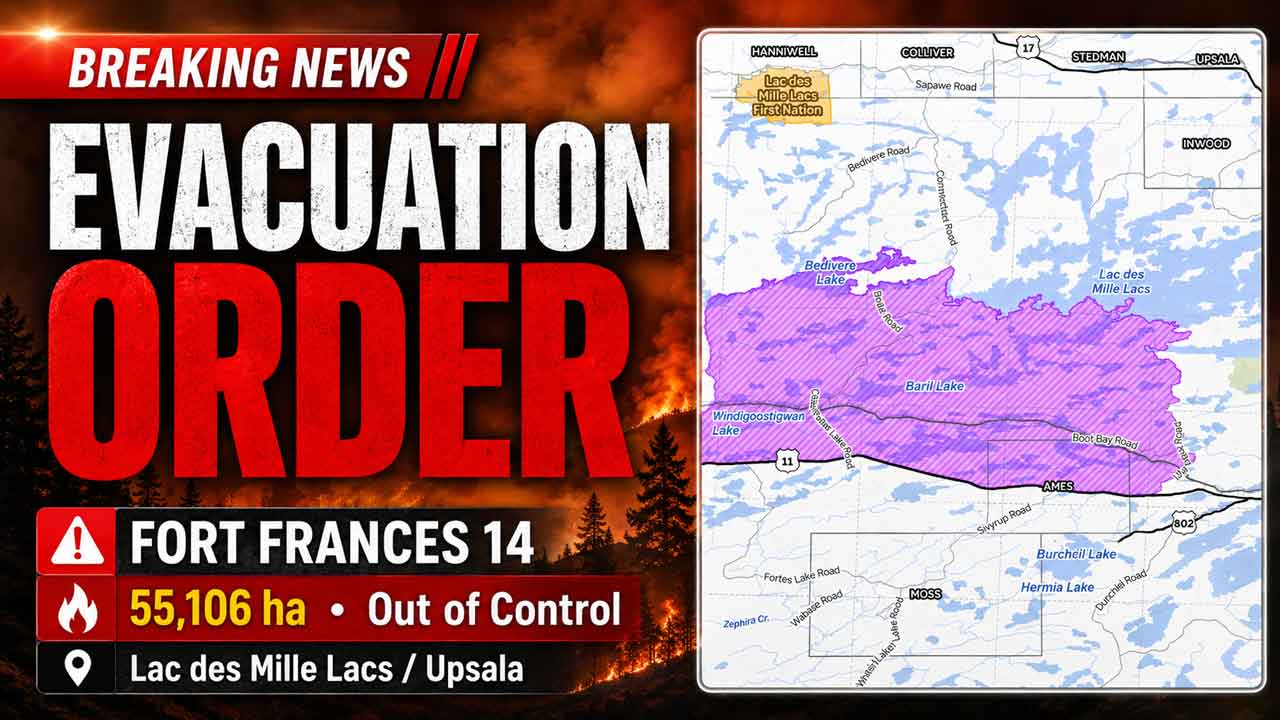
Updated Evacuation Information for Wildfire Fort Frances 14 (July 17 2026)
Environment
Updated Evacuation Information for Wildfire Fort Frances 14 (July 17 2026)
More Local Coverage
Latest news Politics
Powerful pro-life ad featuring boxing legend to air during final World Cup matches
Politics
Powerful pro-life ad featuring boxing legend to air during final World Cup matches
 Business
AI Market Trends: Q2 2026 Review and Forecast
Business
AI Market Trends: Q2 2026 Review and Forecast