


German plastics industry associations have strongly criticised the plan.
Germany’s federal government plans to introduce a national plastics tax from 2027. The cabinet approved the draft federal budget for 2027 on 6 July. The draft must still pass through the German parliament before it is finally adopted.
The proposed plastics tax forms part of a package of consolidation measures intended to close a €34 billion funding gap. The government expects the plastics tax to generate around €1 billion in 2027 , according to German public broadcaster ARD. However, it has not yet published details establishing which companies or products would be covered, how the tax would be calculated or whether exemptions would apply.
The most important headlines delivered free to your inbox Subscribe to weekly newsletter The measure is expected to shift at least part of the cost of Germany’s contribution to the EU budget based on non-recycled plastic packaging waste onto companies placing plastic packaging on the market. Since 2021, EU member states have been required to contribute €0.80 for every kilogram of plastic packaging waste they generate that is not recycled. The contribution is paid by national governments into the EU budget and is not, in itself, a tax directly imposed on packaging producers.
The EU tax is also planned to rise to €1 per kilogram from 2028. Germany has so far covered the cost through its federal budget. Plastics Europe Germany estimates that the country pays approximately €1.4 billion annually, corresponding to around 1.7 million tonnes of non-recycled plastic packaging waste.
A previous attempt to transfer the cost to industry emerged during negotiations over Germany’s 2024 budget. The planned measure was initially postponed until 2025 and was later abandoned after the ministries involved failed to agree on a workable model. The new cabinet-approved budget revives the proposal from 2027.
Industry warns of “serious political misstep” German plastics industry associations have strongly criticised the plan, arguing that a tax targeting one material would raise costs without necessarily increasing recycling or improving packaging design. “We are appalled that the German government, despite being aware of the harmful effects on the environment, industry and society, is clinging to a one-sided, national plastics tax,” said Christine Bunte, managing director of Plastics Europe Germany. She described the proposal as a “serious political misstep” that would create “disastrous misallocations of resources” for climate protection and the circular economy while placing another burden on manufacturers and increasing consumer prices.
The association estimated that the tax could affect around 1.2 million companies and generate at least €600 million in annual administrative costs. It also warned that taxing plastics alone could encourage companies to substitute plastic packaging with heavier or less recyclable alternatives. “Instead of new burdens, we need effective incentives for circular packaging design, the use of recycled materials and investments in modern recycling infrastructure,” Bunte said.
She called for Germany to use eco-modulated extended producer responsibility fees, under which highly recyclable packaging and packaging containing recycled material would pay lower charges. Details remain unclear The IK German Association for Plastic Packaging similarly criticised the absence of an implementation model. “It is highly concerning to commit billions in tax revenue while it remains unclear how the levy will be structured, who will pay it, how high it will be and what its economic and environmental consequences will be,” said IK managing director Martin Engelmann.
IK argued that a consumption tax would ultimately be reflected in product prices and said the measure could generate total costs of as much as €2 billion when company administration, consultancy, auditing and government enforcement costs are included. The association also pointed to Spain , which introduced a tax on non-reusable plastic packaging in 2023. Engelmann claimed that the Spanish measure had encouraged imports from outside the EU rather than significantly increasing recycling, with domestic producers allegedly facing competition from imported packaging accompanied by questionable recycled content certificates.
Spain is currently the only EU country that imposes a plastic tax on packaging producers. Portugal also has a tax on certain packaging products. Italy, alongside Germany, has been considering introducing a tax for years.
The United Kingdom has its own plastic packaging tax. An overview is available here .
- Published
- Jul 13, 2026
- Updated
- Jul 13, 2026
- Source
- Plasticsnews
- Category
- Top
- Read time
- 3 min
Key facts
Why this matters locally
This top story matters locally because it may affect readers, businesses, commuters, families, or public services in British Columbia.
Local impact
BC Post links this item to British Columbia coverage so readers can follow related city updates, weather, traffic, events, and category news in one place.
Timeline
Source and credit
BC Post may summarize, organize, and add local context for reader clarity. Original reporting remains with the listed publisher.
Related Articles
View all Top
‘Entire city’ asked to help search for missing 11-year-old Parker: Calgary police
Top
‘Entire city’ asked to help search for missing 11-year-old Parker: Calgary police
 Top
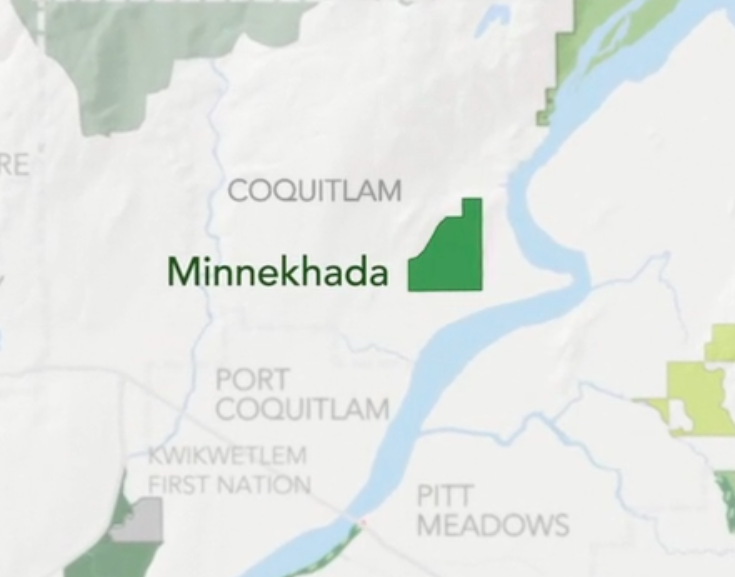
Metro Vancouver land acquisition adds to Minnekhada Regional Park
Top
Metro Vancouver land acquisition adds to Minnekhada Regional Park
 Top
Rock the Lake celebrated its ninth year at Prospera Place this past weekend
Top
Rock the Lake celebrated its ninth year at Prospera Place this past weekend
 Top
Million-dollar contract awarded for Surrey Sport & Leisure Complex renos
Top
Million-dollar contract awarded for Surrey Sport & Leisure Complex renos
 Top
'A sacred place': Delta park to get dedicated ash-scattering site
Top
'A sacred place': Delta park to get dedicated ash-scattering site
 Top
Brunswick Creek wildfire grows, leads to air quality warning in east Fraser Valley
Top
Brunswick Creek wildfire grows, leads to air quality warning in east Fraser Valley
More Local Coverage
Latest news Business
AI Market Trends: Q2 2026 Review and Forecast
Business
AI Market Trends: Q2 2026 Review and Forecast
 Politics
Powerful pro-life ad featuring boxing legend to air during final World Cup matches
Politics
Powerful pro-life ad featuring boxing legend to air during final World Cup matches
 Politics
Traditional Catholic response to Cupich’s suicide distortion
Politics
Traditional Catholic response to Cupich’s suicide distortion