

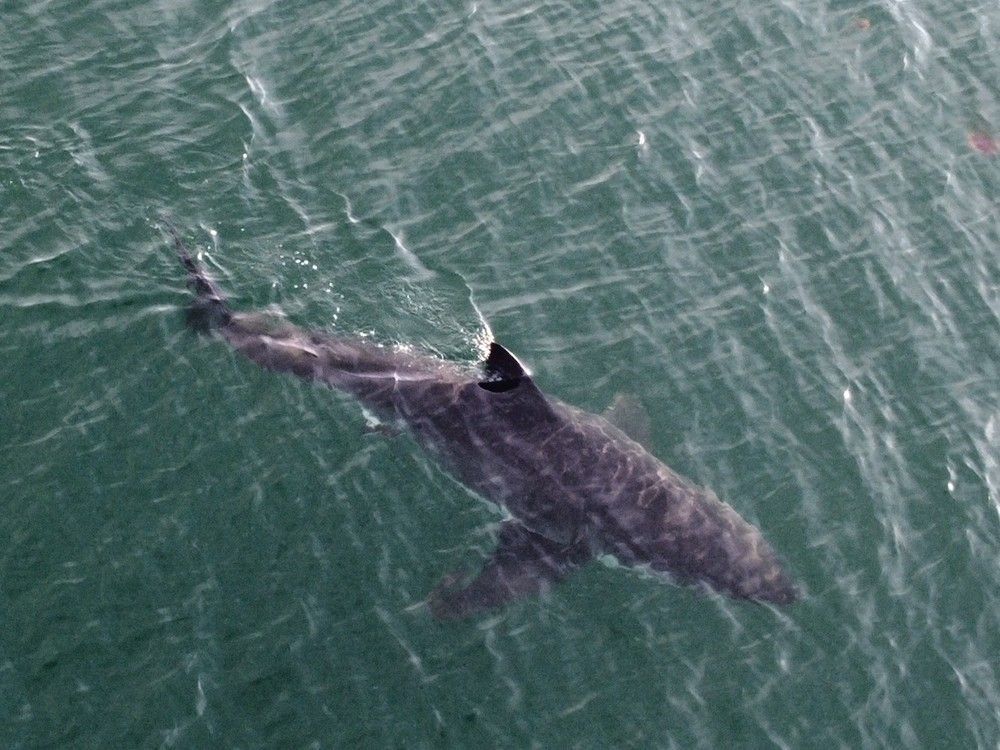
Researchers say the conditions of Nova Scotia oceans, including food and warmth, could be the reason they return each year.
Great white sharks have returned to the waters off Nova Scotia, drawing attention from residents monitoring their movements using online trackers. While sharks seem to be visiting more often, researchers say there are many reasons related to their environment that cause the Atlantic Canadian move each year, and the online trackers only show a fraction of what’s happening below the waves. Why do sharks migrate to Nova Scotia?
When sharks are making the trip to Nova Scotia each year, it’s less a summer vacation spot and more of a summer feeding ground. Marine ecologist Neil Hammerschlag, president of Atlantic Shark Expeditions and executive director of the Shark Research Foundation, said the waters off the Nova Scotia coast contain a large food supply, making it attractive for seasonal feeding. “There’s a high availability of prey, you know, whether it’s seals or fish or tunas,” Hammerschlag said.
“There’s a lot of big, big food items available to them here in these waters.” Nova Scotia is home to one of the largest grey seal populations in North America, with 380,000 counted in 2017 between the Nova Scotia coast and Sable Island, according to Fisheries and Oceans Canada . Hammerschlag said that while seals aren’t the only reason sharks migrate to the province, they are definitely a big part.
“It’s probably like having like a massive six-patty burger,” he said. “You’re not going to have to eat again right away, so I think it’s probably worth it to them.” He said the availability of filling food like seals and other food options have most likely made Nova Scotia part of the natural migration patterns for sharks, returning year after year before continuing south as temperatures shift.
Are they coming earlier than normal? When it comes to whether great whites are reaching Nova Scotia sooner, Hammerschlag said sharks are popping up earlier this year compared to the previous season but it’s too soon to call it a trend. “Last year we were looking for great whites starting kind of the beginning of July, and we didn’t see them until the end of July,” he said.
This year, they have been able to find them at the start of the month. Hammerschlag said he believes one potential reason could be warming temperatures making the ocean off Nova Scotia a more suitable place for sharks to pause, though years of data would be required to determine if the change is more permanent. “It’s more comfortable for them now than it’s been,” he said.
“They’re probably coming up here and, you know, opportunistically, they’re saying, ‘Oh, the water conditions are good,’ and they come up and then they’re like, ‘Oh, there’s a lot of food here,’ and they kind of remember that and follow the same pattern next year and maybe that’s why they’re coming earlier.” How to track a shark When following a shark using an online tracker, the location shown may be out of date. The satellite technology used in a tracker tag can only transmit a signal when their dorsal fin emerges from the water.
Unlike dolphins and whales, sharks don’t need to breech the water to breathe. As a result, trackers may not update a shark’s whereabouts for days or weeks before they surface long enough for the tag to send a signal. In order to tag a shark, researchers in the past would have had to temporarily capture it and secure them to a vessel.
However, Hammerschlag’s team uses a newer method that doesn’t require so much stress. Last year they began to use an air-powered device adapted from whale and dolphin research to attach a tag directly to a shark’s dorsal fin while it swims. “You shoot an arrow that delivers the tag to the fin, and essentially you shoot the arrow towards the fin, and the tag attaches to the fin, and the shark keeps swimming around,” Hammerschlag said.
“You don’t have to capture it at all, and it doesn’t cause any behavioral stress to the shark.” Hammerschlag and his team were able to tag six great white sharks last year. What to know before hitting the beach Hammerschlag said that while great white sharks are major predators, encounters with people are extremely rare.
Still, he said, there are ways Nova Scotians can reduce the risk. “If someone’s fishing actively, it’s probably not a good place to go swim next to them,” he said. “If you catch a fish and they’re struggling on a line, the vibrations could be like ringing a dinner bell for the sharks.”
He also said that swimming with others, not swimming after dusk and removing reflective jewelry or anything that could be mistaken for fish scales are good ways to avoid issues. Most important, however, is to listen to your instincts. “Listen to your gut,” Hammerschlag said.
“If it says something’s off, get out of the water.” Nova Scotia research in the public eye In more recent years, Nova Scotia has been growing into a hub for great white shark research. This summer, Hammerschlag and his team will be featured on Discovery’s Shark Week as part of the Invasion of the Mega Sharks special.
According to a news release, Hammerschlag will be joined by expert Paul de Gelder with the goal of finding a great white shark named Big Rose, which they believe to be one of the largest predators in the North Atlantic, while also showcasing the new tagging technology. “Nova Scotia is emerging as one of the most important and exciting places in the North Atlantic to study great white sharks,” Hammerschlag said in the release. “These animals are not monsters; they are powerful, intelligent and ecologically important predators.
As more people head to the beach and spend time on the water this summer, the goal should be awareness, not fear.” The special premieres July 26.
- Published
- Jul 13, 2026
- Updated
- Jul 13, 2026
- Source
- Pniatlantic
- Category
- Environment
- Read time
- 4 min
Key facts
Why this matters locally
This environment story matters locally because it may affect readers, businesses, commuters, families, or public services in British Columbia.
Local impact
BC Post links this item to British Columbia coverage so readers can follow related city updates, weather, traffic, events, and category news in one place.
Timeline
Source and credit
BC Post may summarize, organize, and add local context for reader clarity. Original reporting remains with the listed publisher.
Related Articles
View all Environment
A powerful movement of healing arrives at Delta’s Discovery Centre
Environment
A powerful movement of healing arrives at Delta’s Discovery Centre
 Environment
50-hectare wildfire burns between Clearwater and 100 Mile House
Environment
50-hectare wildfire burns between Clearwater and 100 Mile House
 Environment
Metro Vancouver issues air quality warning as wildfire smoke drifts in
Environment
Metro Vancouver issues air quality warning as wildfire smoke drifts in
 Environment
Vancouver forecast in 'sweet spot' but hot temperatures on the way
Environment
Vancouver forecast in 'sweet spot' but hot temperatures on the way
 Environment
Mark Carney's new climate doctrine
Environment
Mark Carney's new climate doctrine
 Environment
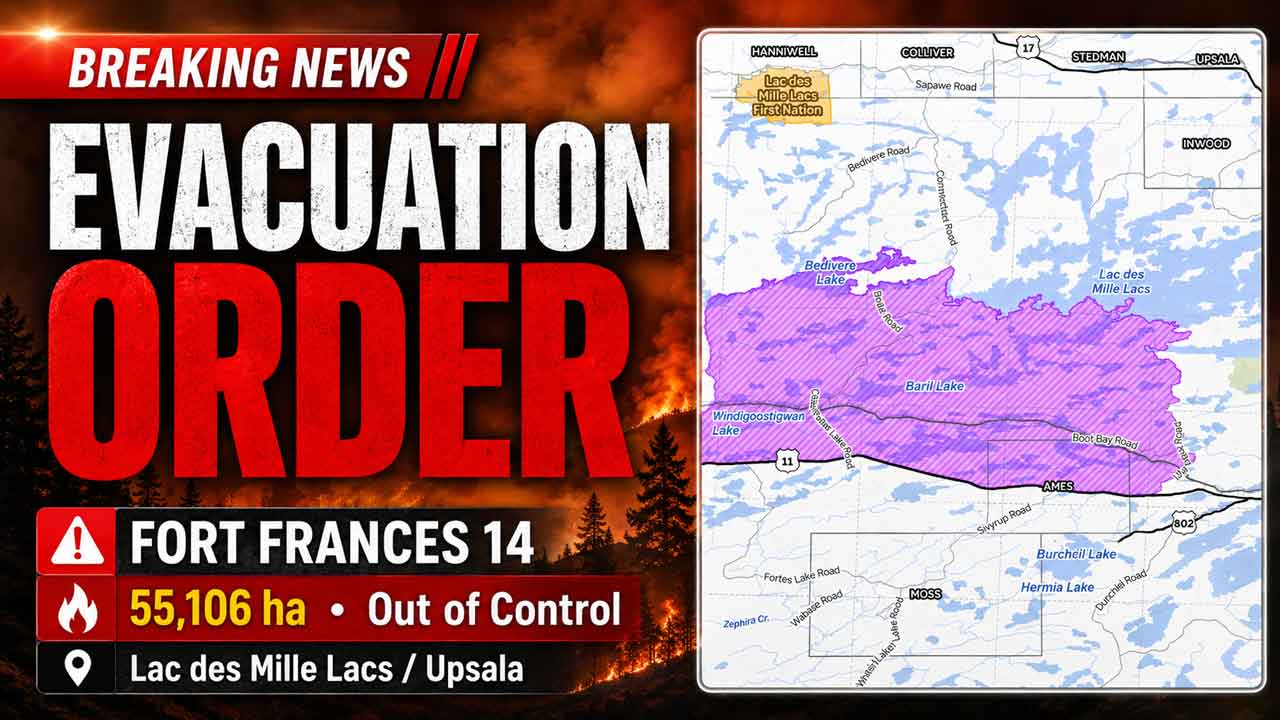
Updated Evacuation Information for Wildfire Fort Frances 14 (July 17 2026)
Environment
Updated Evacuation Information for Wildfire Fort Frances 14 (July 17 2026)
More Local Coverage
Latest news Politics
Powerful pro-life ad featuring boxing legend to air during final World Cup matches
Politics
Powerful pro-life ad featuring boxing legend to air during final World Cup matches
 Business
AI Market Trends: Q2 2026 Review and Forecast
Business
AI Market Trends: Q2 2026 Review and Forecast