


As temperatures soar this week in southern Ontario, experts say the heat can affect people taking medications and street drugs and cause adverse health effects.
Heat can impact medications, street drugs leading to adverse health effects, experts warn Important people recognize signs and symptoms that heat might be interacting with meds: Dr. Samir Gupta As temperatures are set to soar again this week, health experts are warning the heat can lead to adverse health impacts for people who take certain medications or who use street drugs. A yellow-level heat warning is currently in effect and Tuesday is expected to be the hottest day in southern Ontario, with the temperature reaching the mid-30s but the humidex will make it feel more like the mid-40s.
Dr. Samir Gupta, a respirologist at the University of Toronto, told CBC Saskatchewan's The Morning Edition that some common prescription medications can increase a person's vulnerability to heat. "People are living longer and that means they're living with more and more chronic conditions, and that means they're on more and more medications to manage those conditions and unfortunately, some of the most common chronic diseases require medications that have an impact on the body's ability to tolerate heat," Gupta said. These can include medications for high blood pressure, heart disease and mental health disorders.
He said some medications can interfere with how the body cools itself. "Don't forget that sweating is our most effective way of getting rid of heat. The problem is that many of these different medications have what's called an anticholinergic effect, which is when they inhibit the signals used by our nervous system to tell our sweat glands to produce sweat," he said.
Gupta said anti-depressants can interfere with the brain's ability to regulate heat, and some anti-depressants increase sweating which raises the risk of dehydration. Anthistamine, commonly used at this time of year for allergies, can inhibit sweating, while beta blockers and aspirin can impair the ability of blood vessels to dilate, which they do to radiate heat outward and cool down the body. People who take diuretics use them to keep body fluids at a lower level, so "when it's hot and you start sweating on top of that, you become very susceptible to dehydration."
"Other blood pressure pills can actually reduce your thirst sensations," Gupta said. He added any blood pressure medication can pose a risk when it's hot out because when you become dehydrated from sweating, your blood pressure will drop further. Keep medications in cool spots Gupta said people also need to make sure they're keeping their medications stored in a cool and dry place.
"Most medications are not designed to be kept in a hot environment," Gupta said, noting if the temperature inside a person's living space begins to rise, or if medications get left in a hot vehicle, "they can be degraded by that heat and stop working properly." He noted insulin should be kept at temperatures below 30 C and Epipens can deliver less epinephrine when they become too warm so should be stored at temperatures below 25 C. "One thing to keep in mind as well is that heat waves can trigger power outages because of the strain on the grid, and some of my patients are on, for example, nebulizers that require power for their inhaled medications, some have an oxygen concentrator," he said.
"These are life-sustaining treatments so these patients absolutely need a backup plan in case of a power outage." Overdoses increased during summer's 1st heat wave At the start of July, Waterloo region's overdose monitoring system issued a community drug alert after 44 suspected overdoses and one death within just a week, between June 28 and July 2. Part of that alert warned, "People who use drugs have an increased risk of death and overdose/ drug poisoning during very hot weather."
Windsor-Essex County Health Unit’s opioid and substance use notification system also reported an elevated number of overdoses between June 28 and July 4: 29 opioid overdoses reported, 19 of which involved fentanyl. Julie Kalbfleisch is a spokesperson for Sanguen Health Centre, which helps people experiencing homelessness across Waterloo region with a drug testing program and a community health van. "We know that heat can actually cause a more adverse reaction with certain drugs, and because people don't always know exactly what they're taking, that increases the risk as well," she told CBC K-W's The Morning Edition.
She said through the drug-checking program, Sanguen is seeing "some very concerning substances" including unregulated drugs or medications meant for veterinarian use including tranquilizers. Many people don't have a choice and have to be outside in the heat, Kalbfleisch said. It means people may be using drugs in public places like parks and that means people "are now witnessing that and seeing people in potential distress."
She says people can help, ask the person of they're OK, and look for signs like: - Are they breathing? If so, is it very slow or ragged? Are they making a gurgling sound?
- Look at the colour of their lips and fingernails. If you see blue or purple, that could indicate they're in distress. - If you interact with that person, you may notice that they can't be woken up.
It may be someone is just asleep, she said. Or it may be something more serious. "Shout to them to see if you can get them to wake up.
Raise your voice gradually," she said. "You may want to gently shake their shoulders. You can do stuff like a trapezius squeeze or a fingernail pinch, even a collarbone rub.
And then say verbally that you're going to administer naloxone and call 911." Risk of sunburn Both street drugs and prescribed medications can also pose a risk when people go out in the sun. Gupta says they can cause photosensitivity, which means people become more sensitive to the sun and may sunburn more easily.
Prescribed medications including for cholesterol, some antibiotics, diuretics, or over-the counter anti-inflammatory medications like ibuprofen could pose an issue. He said people should avoid sun or use as much protection as possible to protect themselves. "We do not want you to stop your medications," he said of dealing with side effects of medication and heat.
"In some cases, your doctor might tell you to decrease the dose or maybe even the frequency during a heat wave, but the most important thing is to be able to recognize the signs and symptoms that heat might be interacting with your meds ... so that you are aware when this is happening and can take those extra precautions to protect from heat exhaustion and heat stroke."
- Published
- Jul 14, 2026
- Updated
- Jul 14, 2026
- Source
- Cbc
- Category
- Environment
- Read time
- 5 min
Key facts
Why this matters locally
This environment story matters locally because it may affect readers, businesses, commuters, families, or public services in British Columbia.
Local impact
BC Post links this item to British Columbia coverage so readers can follow related city updates, weather, traffic, events, and category news in one place.
Timeline
Source and credit
BC Post may summarize, organize, and add local context for reader clarity. Original reporting remains with the listed publisher.
Related Articles
View all Environment
50-hectare wildfire burns between Clearwater and 100 Mile House
Environment
50-hectare wildfire burns between Clearwater and 100 Mile House
 Environment
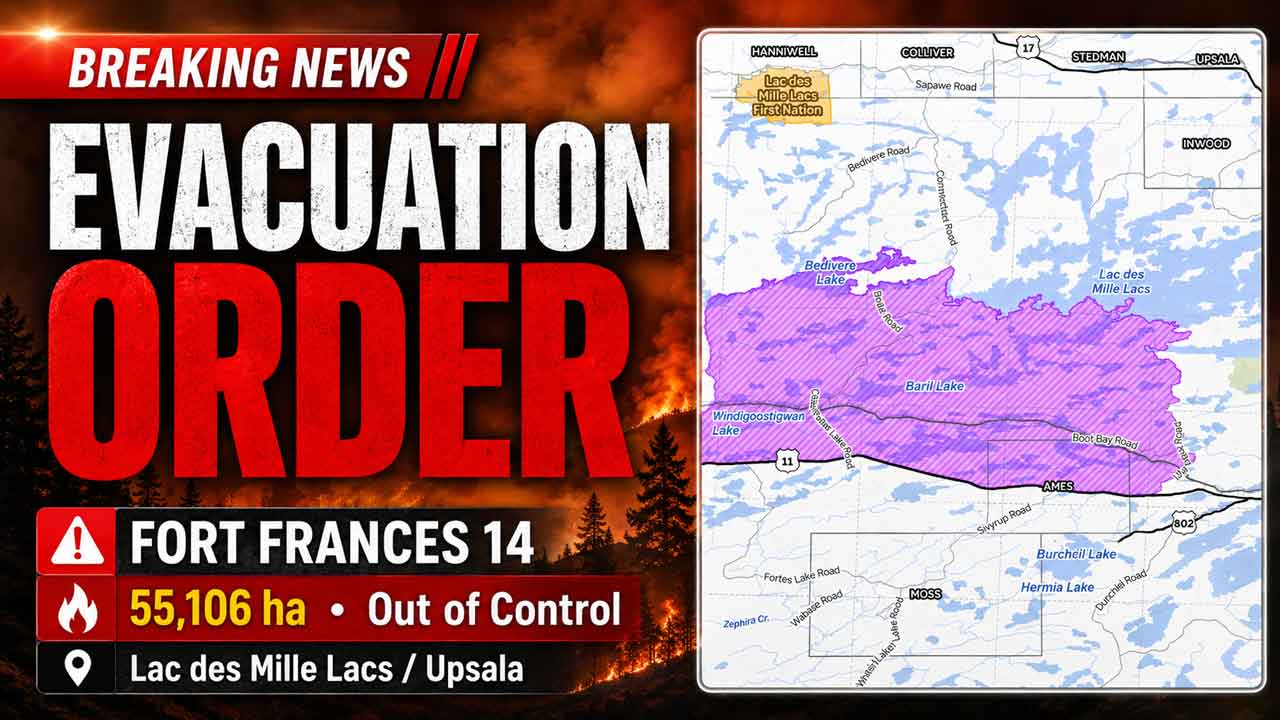
Updated Evacuation Information for Wildfire Fort Frances 14 (July 17 2026)
Environment
Updated Evacuation Information for Wildfire Fort Frances 14 (July 17 2026)
 Environment
A powerful movement of healing arrives at Delta’s Discovery Centre
Environment
A powerful movement of healing arrives at Delta’s Discovery Centre
 Environment
EU Excludes Soybean Seed from Deforestation Rules
Environment
EU Excludes Soybean Seed from Deforestation Rules
 Environment
Metro Vancouver issues air quality warning as wildfire smoke drifts in
Environment
Metro Vancouver issues air quality warning as wildfire smoke drifts in
 Environment
Vancouver forecast in 'sweet spot' but hot temperatures on the way
Environment
Vancouver forecast in 'sweet spot' but hot temperatures on the way
More Local Coverage
Latest news Business
AI Market Trends: Q2 2026 Review and Forecast
Business
AI Market Trends: Q2 2026 Review and Forecast
 Politics
Powerful pro-life ad featuring boxing legend to air during final World Cup matches
Politics
Powerful pro-life ad featuring boxing legend to air during final World Cup matches