

What if, instead of hearing the story of Little Red Riding Hood as it happened, we instead heard about the impacts of its actions? For example, what might be the [...]
To continue reading, please subscribe: Digital Subscription One year of digital access for only $205* - Enjoy unlimited reading on winnipegfreepress.com - Read the E-Edition, our digital replica newspaper - Access News Break, our award-winning app - Play interactive puzzles To continue reading, please subscribe: Add Free Press access to your Brandon Sun subscription for only an additional $1 for the first 4 weeks* What if, instead of hearing the story of Little Red Riding Hood as it happened, we instead heard about the impacts of its actions?
For example, what might be the mental health of a grandmother captured by a wolf and experiencing identity theft? How traumatizing would it be to be a granddaughter discovering the person she thought was her grandmother was an impostor? Could a woodsman, while working to feed his family one afternoon, complete his job if he heard calls for help and a sleeping wolf stood between him and saving a life?
At the very minimum, these events would carry lifelong impacts ranging from permanent physical injuries and post-traumatic stress disorder to unemployment in the woodcutting industry. What might be the remedy to these harms? What restitution would need to happen?
To whom? Would any apology be enough? These are some of the questions asked by the 19 writers and actors enrolled in a theatre class in the Walls to Bridges program that’s offered via a partnership between the University of Winnipeg and the Stony Mountain penitentiary education program.
The university-certified course brings together incarcerated (“inside”) minimum-security students with campus-enrolled (“outside”) students who work together over eight weeks to learn about theatre, study restorative justice and then write, produce and perform a show. The collective’s final performance — which features original pieces and creative expression, such as the re-imagining of Little Red Riding Hood — was staged June 23. I was one of the nearly 40 guests invited to see the show, aptly titled The Wolves We Feed.
I had spoken to the class in May. Winnipeg playwright and director Hope McIntyre was the course instructor. Theatregoers will know her from the many shows produced through her theatre company, Sarasvati Productions, but recently McIntyre has focused on teaching theatre at Stony Mountain Institution and the Women’s Correctional Centre.
She is now an associate professor in the theatre and film department at the University of Winnipeg and studies how theatre can be taught in prisons across Canada and the U.S. Restorative justice isn’t a concept she introduced to her Stony Mountain students these past few weeks — it was something they chose to explore themselves. “The topic of our course was first proposed by an inside collective member,” McIntyre explains.
Bringing education inside prisons isn’t a Manitoba idea, either. Existing for decades in the United States penal system as a program called Inside-Out, the Canadian version, Walls to Bridges, started in Ontario in 2011. Now, it features hundreds of “inside” and “outside” students annually who study and work together on topics in the humanities and sciences.
The most successful theatre program in W2B operates at William Head Institution on Vancouver Island, and has been in operation for over 40 years. The program has offered a public performance every autumn since 1981. That’s a goal for McIntyre — but it’s not easy.
Offering the W2B course at Stony Mountain is difficult because it requires a rigorous process to ensure student security and classroom safety, navigate protocols and rules, and maintain a spirit of collaboration that is flexible, sensitive and understanding. Classes take place in a large gym — a difficult space for any class. Not to mention the course engages sensitive topics that demand trust, vulnerability and bravery — things that can sometimes be complicated behind prison walls.
Still, The Wolves We Feed made its worldwide debut last week and I was there. For obvious privacy reasons, I am not able to use students’ names. I am also unable to share specifics of many of the original scenes, monologues and songs in the show — scenes that examine the real-life impacts of violence, gangs and addiction for those inside and outside Stony Mountain Institution.
A few highlights I can share include a chorus of masked spirits holding someone accountable for their actions, the message that shadows from the past can haunt if not confronted and the idea that a loved one’s dedication is often the most important medicine of all. I witnessed how those who perpetrate a harm come to understand the effects of their actions and how restoring relationships involves taking on a lifelong responsibility for the situations one creates. It was a profound afternoon.
After the applause came the most beautiful scene of all: the presentation of certificates by University of Winnipeg administrators. This led to visiting, a meet-and-greet with audience members and lots of words of thanks, encouragement and appreciation. There was also an excited announcement about next year’s class.
Leaving the gates behind and driving away, I thought about what I had just witnessed: the power of theatre, the strength found through trust and relationships, and the healing power gained from confronting the wolves we feed, together. niigaan.sinclair@freepress.mb.ca Niigaan Sinclair is Anishinaabe from Peguis First Nation and a professor in the Department of Indigenous Studies at the University of Manitoba.
He’s been a columnist for the Free Press since 2018. Read more about Niigaan. Every piece of writing Niigaan produces is reviewed by an editing team before it is posted online or published in print — part of the Free Press‘s tradition, since 1872, of producing reliable independent journalism.
Read more about Free Press’s history and mandate, and learn how our newsroom operates. Our newsroom depends on its audience of readers to power our journalism. Thank you for your support.
- Published
- Jul 13, 2026
- Updated
- Jul 13, 2026
- Source
- Winnipeg Free Press
- Category
- Top
- Read time
- 4 min
Key facts
Why this matters locally
This top story matters locally because it may affect readers, businesses, commuters, families, or public services in British Columbia.
Local impact
BC Post links this item to British Columbia coverage so readers can follow related city updates, weather, traffic, events, and category news in one place.
Timeline
Source and credit
BC Post may summarize, organize, and add local context for reader clarity. Original reporting remains with the listed publisher.
Related Articles
View all Top
‘Entire city’ asked to help search for missing 11-year-old Parker: Calgary police
Top
‘Entire city’ asked to help search for missing 11-year-old Parker: Calgary police
 Top
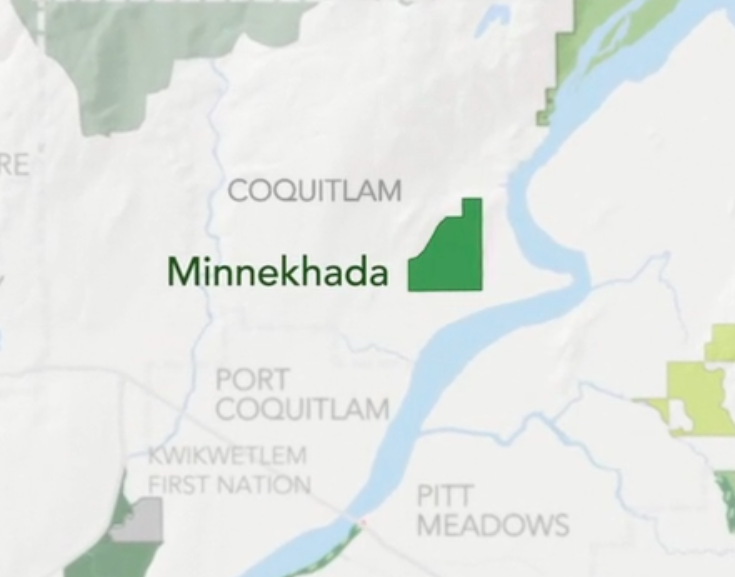
Metro Vancouver land acquisition adds to Minnekhada Regional Park
Top
Metro Vancouver land acquisition adds to Minnekhada Regional Park
 Top
Rock the Lake celebrated its ninth year at Prospera Place this past weekend
Top
Rock the Lake celebrated its ninth year at Prospera Place this past weekend
 Top
Million-dollar contract awarded for Surrey Sport & Leisure Complex renos
Top
Million-dollar contract awarded for Surrey Sport & Leisure Complex renos
 Top
'A sacred place': Delta park to get dedicated ash-scattering site
Top
'A sacred place': Delta park to get dedicated ash-scattering site
 Top
Loop Industries earnings missed by $0.02, revenue fell short of estimates
Top
Loop Industries earnings missed by $0.02, revenue fell short of estimates
More Local Coverage
Latest news Business
AI Market Trends: Q2 2026 Review and Forecast
Business
AI Market Trends: Q2 2026 Review and Forecast
 Politics
Powerful pro-life ad featuring boxing legend to air during final World Cup matches
Politics
Powerful pro-life ad featuring boxing legend to air during final World Cup matches
 Politics
Traditional Catholic response to Cupich’s suicide distortion
Politics
Traditional Catholic response to Cupich’s suicide distortion