


The open space on a busy road is your escape route when someone brakes hard or a vehicle suddenly dives into your lane.
I feel that there’s been a noticeable surge in traffic volume around the CRD these past few weeks. Can’t offer anything scientific on that, but it certainly feels different out there right now. Some drivers seem to react differently than others in heavy traffic, and I guess by saying “react” I mean — drive badly.
In fast-moving traffic that’s packed with cars, the last thing we want is bravado. It’s really about time and space. The most skilled drivers in these conditions don’t look or act dramatically.
In fact, they look almost boring: calm, smooth and predictable. That’s exactly why they’re the ones least likely to end up in a crash. The first shift is mental.
You’re not out there to “win” the commute. You’re there to arrive. When lanes are full and speeds are high, sudden moves are what cause pileups.
The goal is to surf the flow, not fight it. Accept that you may lose a minute or two. That trade is cheap compared to the cost of an airbag in your face.
Your most valuable safety tool is the gap in front of you. Can’t say that enough. On a busy highway, hold at least a two- to three-second following distance, more if the road is wet or visibility is poor.
The open space on a busy road is your escape route when someone brakes hard or a vehicle suddenly dives into your lane. Think of the width of your lane and the distance behind the driver in front as a buffer zone — and you’re managing it, not just occupying a strip of asphalt. Lane choice is another quiet form of protection.
On multi-lane roads, the centre lane is often the safest place to live: you’re away from the chaos of merging traffic on the right and the speed extremes on the far left. Constant lane-hopping, weaving from gap to gap, rarely gets you ahead in any meaningful way. What it does do is multiply the number of times you can be surprised.
Pick the most stable lane you can and stay there. When you do change lanes, do it like a professional. Signal early
so the drivers around read your intentions. Check your mirrors, then do a quick shoulder check to clear the blind spot. Make a single, smooth move.
If you have to “dive” into a gap that forces the driver behind to brake sharply. It meant that the gap was never really there and the guy now giving you the finger saw it that way as well. Vision and awareness matter just as much as mechanics.
Set your mirrors so you only just see the sides of your own car; that shrinks your blind spots. Then keep a slow, steady scan going: rear-view, left mirror, right mirror, and far ahead. In dense, fast traffic, you’re not just watching the car in front of you.
You’re watching rows of brake lights five or 10 vehicles up. When they flicker, ease off the accelerator early and let your following distance soak up the slowdown. Smooth, early braking prevents the kind of chain-reaction “accordion” crashes we see during rush hour.
Equally important is how you handle the people around you. If someone is tailgating, resist the urge to “teach them a lesson.” Maintain your speed, signal, and give them a chance to get past when it’s safe.
If a driver cuts you off, rebuild your gap and move on. Eye contact, gestures and horn blasts don’t make you safer; they just move your attention away from the road when you need it most. And through all of this, your attention must be undivided.
In heavy, fast-moving traffic, every second is spoken for. The phone stays out of reach. The music stays low enough that you can hear sirens and tire noise.
Notice your own tension. Shoulders up around your ears? Hands clamped on the wheel?
Time to take a breath and loosen up. Driving in dense, high-speed traffic is never going to be relaxing. But with space, smoothness and a bit of humility, it doesn’t have to be dangerous.
Glove Box: Well we’re doing something right. Auto crime has dropped by 31 per cent in B.C. over the last 10 years according to ICBC. “Most dramatically, vehicle break-ins have decreased by 60 per cent since 2016, including a noticeable drop starting in 2023,” says the provincial auto insurer.
Stolen vehicle incidents have decreased by 46 per cent since 2016 while vandalism claims unfortunately have remained relatively stable. Message: Don’t keep valuables in your vehicle.
- Published
- Jul 17, 2026
- Updated
- Jul 17, 2026
- Source
- Times Colonist
- Category
- Crime
- Read time
- 3 min
Key facts
Why this matters locally
This crime story matters locally because it may affect readers, businesses, commuters, families, or public services in British Columbia.
Local impact
BC Post links this item to British Columbia coverage so readers can follow related city updates, weather, traffic, events, and category news in one place.
Timeline
Source and credit
BC Post may summarize, organize, and add local context for reader clarity. Original reporting remains with the listed publisher.
Related Articles
View all Crime
Video shows rescue of lone survivor from deadly B.C. helicopter crash
Crime
Video shows rescue of lone survivor from deadly B.C. helicopter crash
 Crime
A dozen cats are missing after New Westminster apartment fire that displaced roughly 100 residents
Crime
A dozen cats are missing after New Westminster apartment fire that displaced roughly 100 residents
 Crime
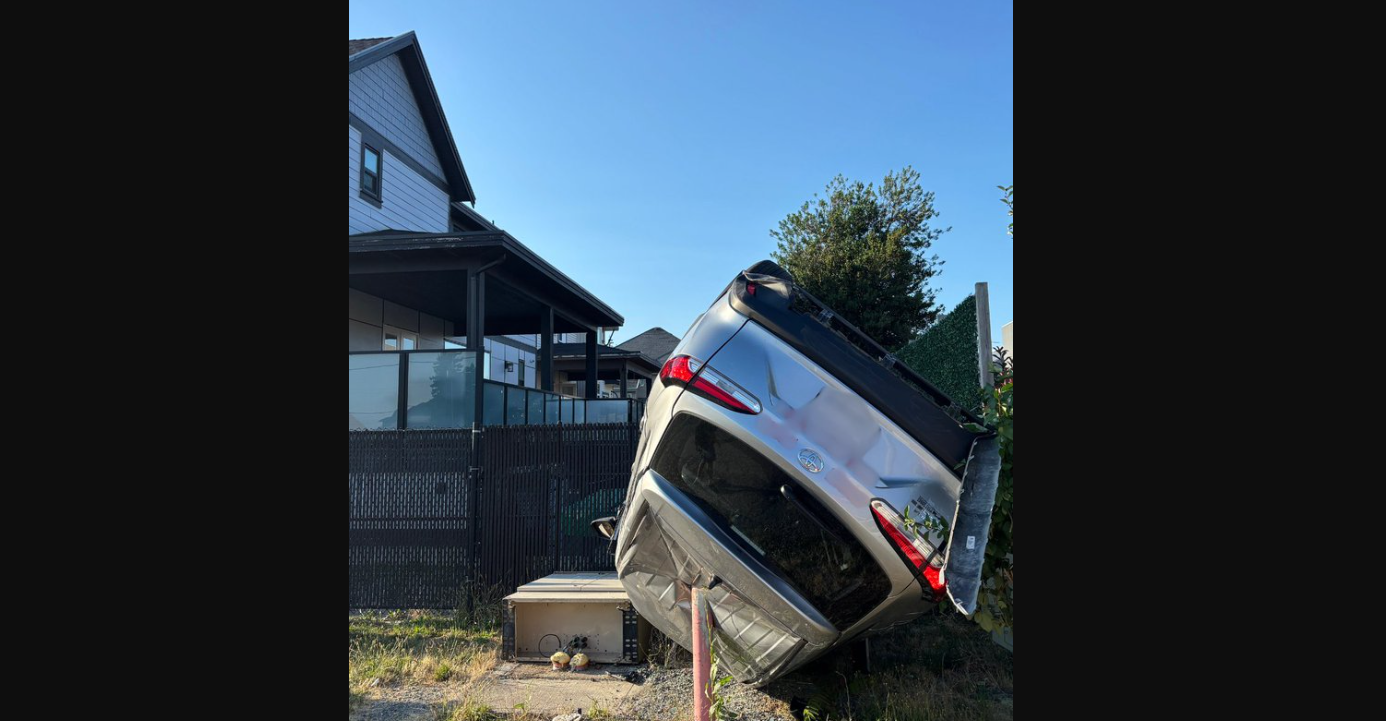
‘N’ driver involved in Abbotsford rollover crash, police say
Crime
‘N’ driver involved in Abbotsford rollover crash, police say
 Crime
Langley woman pleads for break on $49K fines after felling 11 trees
Crime
Langley woman pleads for break on $49K fines after felling 11 trees
 Crime
B.C. seeks forfeiture of alleged gangster’s properties worth more than $6.2 million
Crime
B.C. seeks forfeiture of alleged gangster’s properties worth more than $6.2 million
 Crime
Motorcycle impounded after new rider reaches ‘shocking speed’ on B.C. highway
Crime
Motorcycle impounded after new rider reaches ‘shocking speed’ on B.C. highway
More Local Coverage
Latest news Business
AI Market Trends: Q2 2026 Review and Forecast
Business
AI Market Trends: Q2 2026 Review and Forecast
 Politics
Powerful pro-life ad featuring boxing legend to air during final World Cup matches
Politics
Powerful pro-life ad featuring boxing legend to air during final World Cup matches