

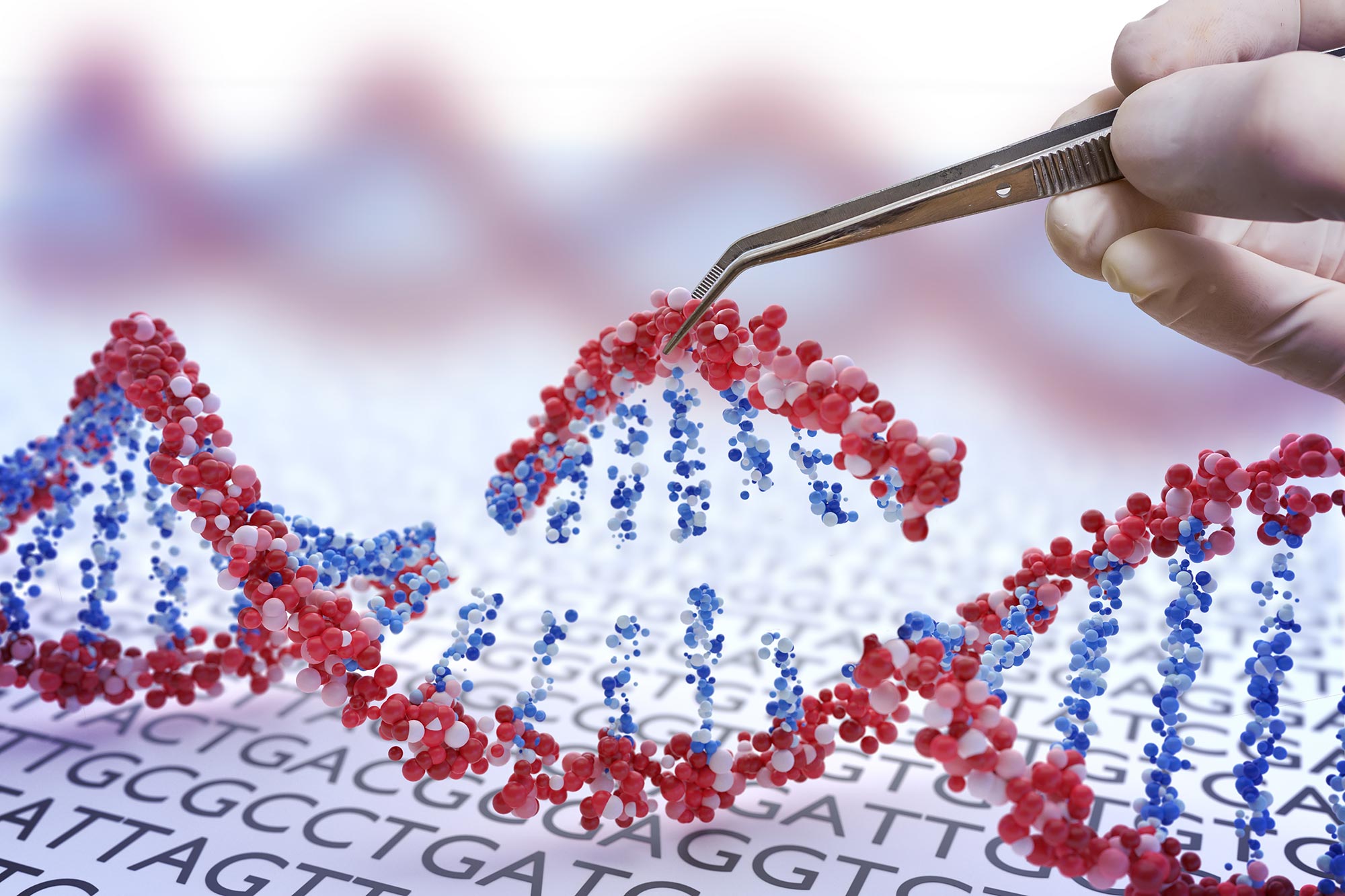
Controlling ribosomal RNA could help researchers target diseases driven by too little or too much protein production. Cells do not simply make proteins at a fixed pace. They continually adjust production to match their needs, and those changes can help determine whether a cell keeps dividing, adopts a specialized identity, or retains the developmental flexibility [...]
Controlling ribosomal RNA could help researchers target diseases driven by too little or too much protein production. Cells do not simply make proteins at a fixed pace. They continually adjust production to match their needs, and those changes can help determine whether a cell keeps dividing, adopts a specialized identity, or retains the developmental flexibility of a stem cell.
At the center of this process are ribosomes, the molecular machines that build proteins, and the ribosomal RNA that forms their structural and functional core. Now, researchers led by Professor Stefan H. Stricker of LMU’s Biomedical Center and Helmholtz Munich, working with international collaborators, have shown that ribosomal RNA is more than a passive component of this machinery. Their study, published in Science, provides direct evidence that altering the amount of rRNA can change protein production and influence fundamental processes involved in cell identity, development, and growth.
TAPIR shows rRNA drives protein production Scientists already knew that cells contain different amounts of ribosomal RNA depending on their type and condition. Abnormal rRNA levels have also been observed in several diseases. The unresolved question was whether those differences actively shaped what cells did or simply appeared after other biological changes had already occurred.
To separate cause from consequence, the researchers needed a way to raise rRNA production deliberately and observe what followed. They developed TAPIR (Targeted Activation of Protein Translation), a CRISPR-based method that increases the activity of ribosomal genes. Ribosomal genes provide the instructions for producing rRNA, which combines with proteins to form ribosomes.
Ribosomes act like molecular assembly lines, reading genetic instructions and building the proteins that cells need to function. By activating these genes directly, TAPIR allowed the researchers to test whether additional rRNA would change protein output rather than merely accompany it. “Our new study shows that targeted activation of rRNA production significantly increases protein synthesis,” explains Stricker, lead
Source and reference
author of the publication. One mechanism produces opposite disease effects The researchers next used TAPIR to explore what increased rRNA production might mean in disease. The outcome depended heavily on the biological setting. One test involved ribosomopathies, a group of disorders caused by impaired ribosome function. These conditions include Treacher-Collins syndrome, a rare congenital disorder associated with facial malformations. In a mouse model of Treacher-Collins syndrome, targeted stimulation of rRNA production partially compensated for changes linked to the disease. The result suggests that increasing the activity of the protein-making system may help counteract some effects of reduced ribosome function, although the findings remain limited to the model studied. Pancreatic cancer presented the opposite situation. Cancer cells require large amounts of protein to support...
Read original source- Published
- Jul 16, 2026
- Updated
- Jul 16, 2026
- Source
- Scitechdaily
- Category
- Health
- Read time
- 3 min
Key facts
Why this matters locally
This health story matters locally because it may affect readers, businesses, commuters, families, or public services in British Columbia.
Local impact
BC Post links this item to British Columbia coverage so readers can follow related city updates, weather, traffic, events, and category news in one place.
Timeline
Source and credit
BC Post may summarize, organize, and add local context for reader clarity. Original reporting remains with the listed publisher.
Related Articles
View all Health
Provation Expands Global Footprint with Launch of Provation® Apex in Australia and New Zealand
Health
Provation Expands Global Footprint with Launch of Provation® Apex in Australia and New Zealand
 Health
The Surprising Cellular Benefit of the Pigment Behind Red Hair
Health
The Surprising Cellular Benefit of the Pigment Behind Red Hair
 Health
Coffee May Protect the Liver in More Ways Than Scientists Realized
Health
Coffee May Protect the Liver in More Ways Than Scientists Realized
 Health
Neuroscientists find a teamwork paradox: highly synchronized brains perform worse at complex tasks
Health
Neuroscientists find a teamwork paradox: highly synchronized brains perform worse at complex tasks
 Health
Andlauer-backed group loses bid for Château Montebello
Health
Andlauer-backed group loses bid for Château Montebello
More Local Coverage
Latest news Business
AI Market Trends: Q2 2026 Review and Forecast
Business
AI Market Trends: Q2 2026 Review and Forecast
 Politics
Powerful pro-life ad featuring boxing legend to air during final World Cup matches
Politics
Powerful pro-life ad featuring boxing legend to air during final World Cup matches