


The provincial government says it will be sending more financial aid to residents affected by the flooding on Canada Day.
The provincial government says it will be sending more financial aid to residents affected by the flooding on Canada Day. On Monday afternoon, Municipal Affairs Minister Rob Flack confirmed the Disaster Recovery for Ontarians (DRAO) program will be activated for “eligible areas” in Ottawa that have experienced significant flooding. “We know many families are facing challenging circumstances, and I want them to know that our government is working alongside municipal partners to help ensure affected communities receive the support they need,” Flack said in a statement posted to social media.
Flack says residents facing loses not covered by insurance may be eligible to apply for assistance through DRAO once the program is activated. The minister didn’t specify when residents may start to apply for assistance or what areas might be eligible. At a news conference on Monday, Ottawa Mayor Mark Sutcliffe said he spoke with Flack and had anticipated the province to confirm the additional funding sometime this week.
Sutcliffe stressed that the program is managed by the province and that the process to receive funds may take time. “DRAO is not an emergency, immediate response program where funds are given out in the hours after an emergency has occurred. As much as I’d like to see the area activated as soon as possible, residents who are eligible for funding will not be completing the process with their insurance company for many many days, and will not be applying to the provincial government for many days after that,” Sutcliffe said.
“This is a process that takes time and kicks in after you’re finished working with your insurance company.” Under DRAO, residents and small businesses can apply for financial assistance of up to $250,000 to recover after a natural disaster. The program is only accessible if activated by the government for a specific region when a “sudden, unexpected natural disaster causes costly and widespread damage.”
Flack says affected residents are encouraged to document all damage and retain photos, receipts, and records of clean-up and repair costs. They should also contact their insurance company to determine coverage. “The DRAO program is not intended to replace private insurance, which often covers structural damage resulting from natural disasters, including damage caused by sewer backup where coverage is in place.
Residents should continue to document any damage and work directly with their insurance providers to determine what coverage may be available,” Flack said. Speaking at an event in Welland, Ont., on Monday, Emergency Preparedness Minister Jill Dunlop said she and Flack have been in touch with Sutcliffe since the storms. “I talked to the mayor a couple of weeks ago.
As well, the premier talked to him and so did the Minister of Municipal Affairs and Housing, as the disaster relief program falls under municipal affairs and housing,” said Dunlop. “We did speak with the mayor, as we needed them to make the call for assistance in order to deploy Ontario Corps supports in the area. So, we’ve been working very closely, myself, Minister Flack as well, and working through the next steps in the disaster relief program.”
Sutcliffe told reporters he doesn’t know yet which areas will be eligible for DRAO, once activated. “There is no risk on anybody missing out on anything because it wasn’t activated sooner. I’ve been told by the province they will activate it in the coming days,” he said.
“My understanding is this is meant to be supplemental funding to be applied after some has gone through the process with their insurance company. The provincial government will be making an announcement. It’s their program.”
Number of flooded homes continues to rise The mayor said nearly 5,800 residents have now reported flooding in their basements as of Monday. The record-breaking rainfall on Canada fell differently across Ottawa. While 118 millimetres of rain was the official recording at the Ottawa airport, Water Services general manager Tammy Rose said the city’s rain gauges show the rainfall totals varied across the city, from 15 mm at Trim Road in the east end to as much as 167 mm at the Britannia Station in the west end.
Sutcliffe said the city has launched a thorough review of the event to look at how the city’s stormwater system performed and to identify opportunities for improvement. “We’ll review thousands of service requests. We’ll look at how our infrastructure performed.
We’ll assess what worked well and what didn’t, where we can improve and what changes we need to make so Ottawa is even more prepared for future extreme weather events, including significant rainfall,” said Sutcliffe. “Residents deserve answers, and they need to know we will learn from this and make the city and its infrastructure stronger and more resilient in the future.” On Sunday, the City of Ottawa said it had received more than 6,600 service requests related to the flooding.
Four cycles of storm-related waste collection were completed in all affected wards. According to Public Works general manager Alain Gonthier, more than 2,500 tonnes of storm waste has been collected and delivered to the Trail Road landfill.
- Published
- Jul 13, 2026
- Updated
- Jul 13, 2026
- Source
- Ctv News
- Category
- Environment
- Read time
- 4 min
Key facts
Why this matters locally
This environment story matters locally because it may affect readers, businesses, commuters, families, or public services in British Columbia.
Local impact
BC Post links this item to British Columbia coverage so readers can follow related city updates, weather, traffic, events, and category news in one place.
Timeline
Source and credit
BC Post may summarize, organize, and add local context for reader clarity. Original reporting remains with the listed publisher.
Related Articles
View all Environment
50-hectare wildfire burns between Clearwater and 100 Mile House
Environment
50-hectare wildfire burns between Clearwater and 100 Mile House
 Environment
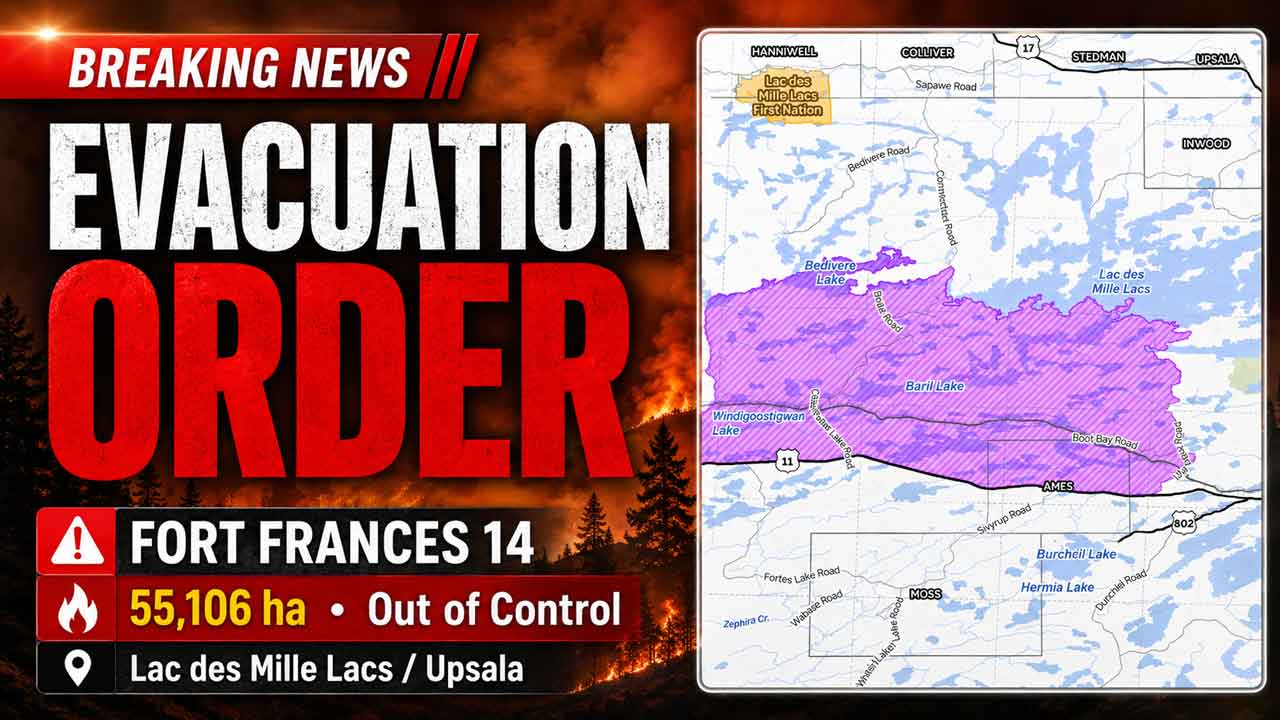
Updated Evacuation Information for Wildfire Fort Frances 14 (July 17 2026)
Environment
Updated Evacuation Information for Wildfire Fort Frances 14 (July 17 2026)
 Environment
A powerful movement of healing arrives at Delta’s Discovery Centre
Environment
A powerful movement of healing arrives at Delta’s Discovery Centre
 Environment
EU Excludes Soybean Seed from Deforestation Rules
Environment
EU Excludes Soybean Seed from Deforestation Rules
 Environment
Metro Vancouver issues air quality warning as wildfire smoke drifts in
Environment
Metro Vancouver issues air quality warning as wildfire smoke drifts in
 Environment
Vancouver forecast in 'sweet spot' but hot temperatures on the way
Environment
Vancouver forecast in 'sweet spot' but hot temperatures on the way
More Local Coverage
Latest news Business
AI Market Trends: Q2 2026 Review and Forecast
Business
AI Market Trends: Q2 2026 Review and Forecast
 Politics
Powerful pro-life ad featuring boxing legend to air during final World Cup matches
Politics
Powerful pro-life ad featuring boxing legend to air during final World Cup matches