


Empirical evidence suggests the omnivorous animals are becoming trapped inside waste disposal bins at alarming rates after they climb in to eat human waste, but Québec's Ministry of the Environment and the Fight Against Climate Change could offer no data.
Year after year, raccoons become trapped and die in garbage and compost bins that are all too accessible to these food-seeking animals. Québec's Ministry of Environment says it is aware of the problem but has no data on the extent of the issue. A Laurentians resident is nevertheless trying to raise public awareness about an issue for which practical solutions exist.
While walking through her neighbourhood in Saint-Hippolyte, Patricia Hamel spotted a raccoon that was unable to climb out of one of the large wheeled bins every household uses to dispose of compostable material and the garbage we continue to produce in such large quantities. "Since then — for the past three years now — whenever I'm out walking or going for a run, I take the time to look inside the bins. I find dozens of raccoons every year," she told Le Devoir.
Last year alone, Hamel says she found no fewer than 50 live raccoons trapped inside bins. She also came across at least 20 that had died. How do they end up there?
A raccoon would not normally be able to climb onto a large plastic bin. But if the bin is positioned against a tree, fence, retaining wall or similar structure, the agile climber can scramble inside, lured by the smell of food. Once at the bottom, however, it may be unable to climb back out — particularly if it is a young animal.
"From July to September, it's awful because that's when the year's young raccoons start venturing out on their own. I find so many of them, both alive and dead. During heat waves, I also try to go out more often to rescue them before they die, because the bins become veritable ovens," Hamel said.
On several occasions, while out walking, she said she arrived just moments before the truck collecting compost or garbage — sparing a trapped raccoon from being killed. Common and widespread Since Hamel began sharing photos and information on social media, she has come to realize that such incidents appear to be both common and widespread across the province. "This is happening all over Québec.
People write to me describing similar situations in municipalities across the province. One person even told me they found four raccoons in a single bin." In general, however, people are unaware of the danger their bins pose, she said.
"When I tell people I've found a raccoon in the bin they left at the curb, they're usually surprised." Reducing the risk Hamel hopes to raise public awareness about the danger wheeled bins pose to these omnivorous animals, which are drawn to the abundant food humans discard. Québec throws away more than one million tonnes of food every year, while each resident generates nearly 700 kilograms of waste annually.
Despite repeated efforts, however, the Laurentians resident says she has encountered what she sees as indifference from public authorities, who have been slow to educate residents about the steps that can help prevent these deaths: keeping bins away from trees, fences and other structures that allow raccoons to climb inside; using devices that keep lids securely closed (some municipalities provide such mechanisms); and checking bins before placing them at the curb for collection. All of these preventive measures are already well known, including within Québec's Ministry of the Environment. The ministry also recommends putting garbage bins out "on the morning of collection day rather than the previous evening," since raccoons and similar animals are nocturnal.
It further advises reducing odours by "washing your garbage bins regularly" and placing "mothballs (naphthalene) in the bottom." The ministry responsible for monitoring the status of Québec's wildlife populations has no data on the number of deaths attributable to wheeled bins. "We have no data on the phenomenon, but we are aware that it does occur from time to time," the Ministry of the Environment, the Fight Against Climate Change, Wildlife and Parks said in response to questions from Le Devoir.
The ministry added that it "does not provide a service to free trapped animals. Where applicable, that responsibility rests with the property owner." "As part of our raccoon rabies surveillance program, citizens occasionally report animals trapped in garbage bins.
However, a trapped animal that appears healthy is not of interest for surveillance purposes, since the likelihood of detecting rabies in a healthy animal is very low. Our teams are sometimes called to the scene and determine that the animal is healthy but trapped. In those cases, it is released on site," the ministry added in an emailed response.
- Published
- Jul 14, 2026
- Updated
- Jul 14, 2026
- Source
- Canada’s National Observer
- Category
- Environment
- Read time
- 3 min
Key facts
Why this matters locally
This environment story matters locally because it may affect readers, businesses, commuters, families, or public services in British Columbia.
Local impact
BC Post links this item to British Columbia coverage so readers can follow related city updates, weather, traffic, events, and category news in one place.
Timeline
Source and credit
BC Post may summarize, organize, and add local context for reader clarity. Original reporting remains with the listed publisher.
Related Articles
View all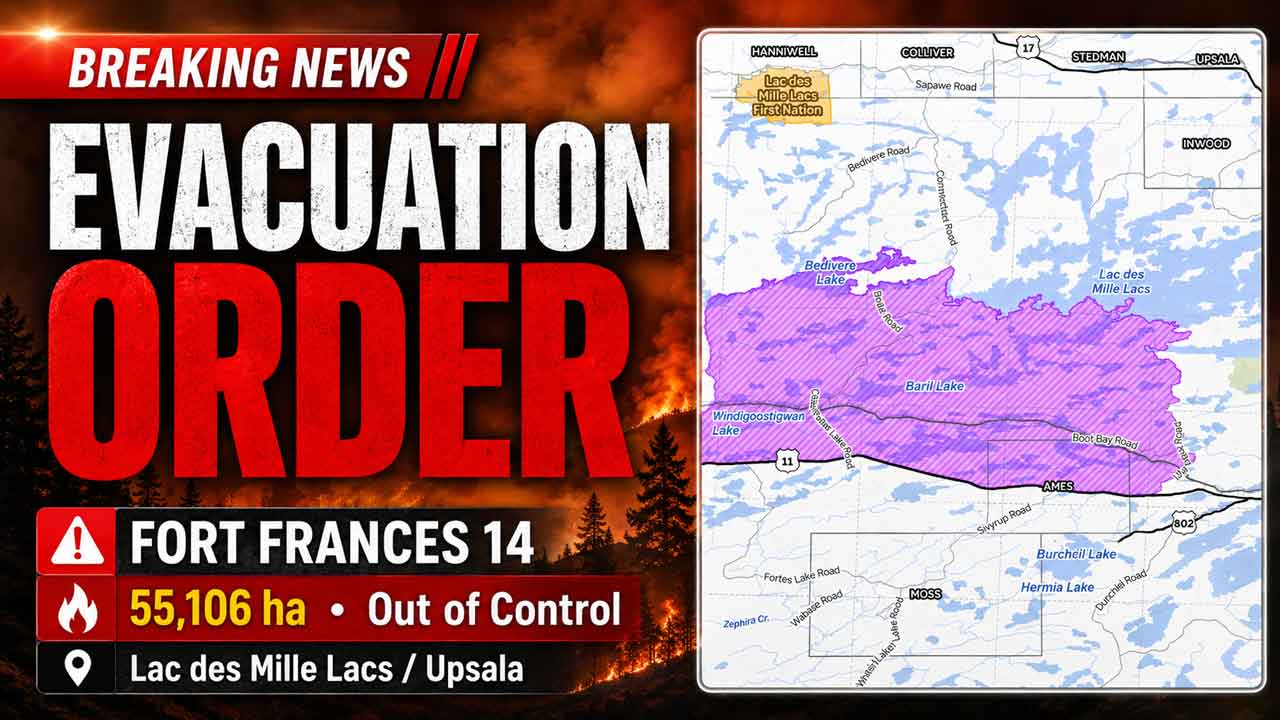 Environment
Updated Evacuation Information for Wildfire Fort Frances 14 (July 17 2026)
Environment
Updated Evacuation Information for Wildfire Fort Frances 14 (July 17 2026)
 Environment
50-hectare wildfire burns between Clearwater and 100 Mile House
Environment
50-hectare wildfire burns between Clearwater and 100 Mile House
 Environment
2 wildfires north of Anahim Lake currently out-of-control
Environment
2 wildfires north of Anahim Lake currently out-of-control
 Environment
A powerful movement of healing arrives at Delta’s Discovery Centre
Environment
A powerful movement of healing arrives at Delta’s Discovery Centre
 Environment
Port Coquitlam mayor launches program that removes graffiti on public property within 48 hours
Environment
Port Coquitlam mayor launches program that removes graffiti on public property within 48 hours
 Environment
'Fending for ourselves' after Manitoba wildfire forces evacuation: O-Pipon-Na-Piwin leaders
Environment
'Fending for ourselves' after Manitoba wildfire forces evacuation: O-Pipon-Na-Piwin leaders
More Local Coverage
Latest news Business
AI Market Trends: Q2 2026 Review and Forecast
Business
AI Market Trends: Q2 2026 Review and Forecast
 Politics
Powerful pro-life ad featuring boxing legend to air during final World Cup matches
Politics
Powerful pro-life ad featuring boxing legend to air during final World Cup matches
 Politics
Traditional Catholic response to Cupich’s suicide distortion
Politics
Traditional Catholic response to Cupich’s suicide distortion