

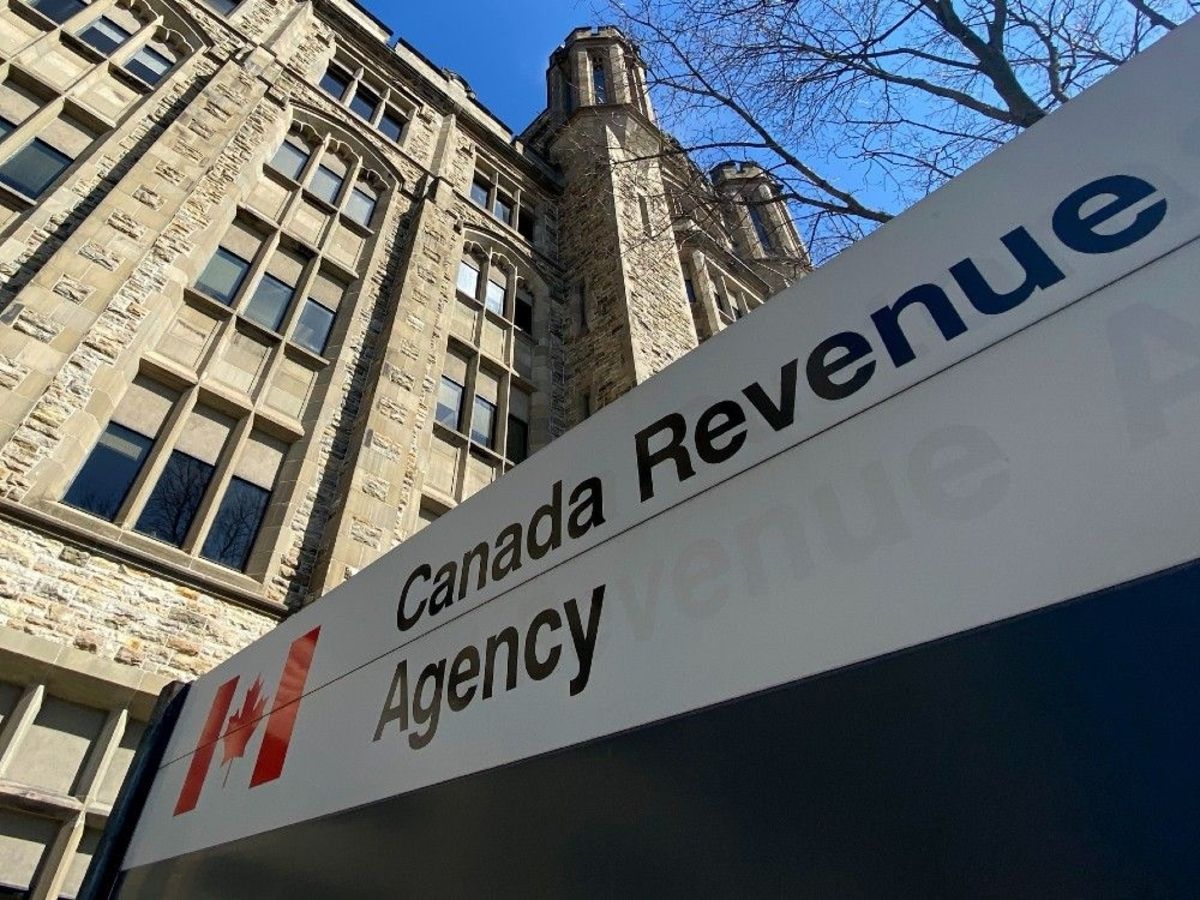
Jamie Golombek: It has become more challenging for some Canadians to claim a foreign tax credit, as the CRA is demanding more proof
We independently select everything we recommend. Buying through us may earn us a commission, which supports our work. Nobody wants to pay more than their fair share of tax.
So, imagine if you had to pay double tax. In other words, what if the same income was taxed twice, once abroad, and once again in Canada? You wouldn’t be pleased.
In fact, you may be so upset that you’re willing to take the tax man to court to fight it. And that’s exactly what one taxpayer did when the Canada Revenue Agency refused to grant her foreign tax credits for taxes she paid on investment income she earned outside of Canada. Before delving into the details of this recent case, decided earlier this month, let’s review Canada’s foreign tax credit system.
Claiming a foreign tax credit is the primary way Canadian residents can avoid paying double tax on foreign income. As Canadian residents, we’re taxable on our worldwide income. That means even income earned abroad, whether it be foreign employment income or foreign investment income, is subject to Canadian tax at domestic, progressive marginal tax rates.
But this foreign income, in most cases, is also subject to foreign tax in that foreign jurisdiction. To avoid paying double tax on the same income, you may be entitled to claim a foreign tax credit on your Canadian return for foreign taxes paid on that foreign income. For most of us, our only experience with claiming a foreign tax credit likely occurs if we earn foreign dividends, such as U.S. dividends, in a non-registered investment account.
Let’s say I own stock in a publicly traded U.S. company with a high dividend yield in my non-registered trading account. The dividend income would be subject to a 15 per cent nonresident withholding tax in the United States. I would then pay Canadian tax on the gross amount of the U.S. dividend income at my normal marginal rates when I file my Canadian return, but be entitled to claim a foreign tax credit for the nonresident tax withheld, thus avoiding double tax.
In recent years, however, it has become more challenging for some Canadian taxpayers to claim a foreign tax credit, as the CRA is now demanding additional proof that foreign taxes were paid. In some cases, the agency is requesting copies of foreign tax returns, along with transcripts or assessments from the foreign jurisdictions, showing that foreign tax was, indeed, owing and paid. It seems to no longer be sufficient to simply point to the withholding tax shown on a tax slip to be entitled to claim the foreign tax credit.
Which brings us to this most recent case. The taxpayer is a Canadian resident who holds investment accounts in the U.S. and Switzerland. When she filed her tax returns for her 2021 to 2024 taxation years, she claimed foreign tax credits for withholding taxes paid on dividend income that she earned on shares of German and Swiss companies in those accounts.
The CRA denied the foreign tax credits, arguing that it was not enough for the taxpayer to show that tax was withheld, but rather that the taxpayer needed to show that she actually had to pay tax to Germany and Switzerland. The taxpayer argued that the only way for her to possibly show this is to produce tax assessments from those countries. But the taxpayer does not have tax assessments from Germany or Switzerland because she earned too little income in those countries to justify the expense of having the foreign returns prepared.
The judge reviewed the facts of the case, noting that the CRA seems to be taking a position contrary to its own published administrative policy, as outlined in Income Tax Folio S5-F2-C1, Foreign Tax Credit. This folio sets out the documentary evidence that the CRA expects from a taxpayer claiming a foreign tax credit, and seems to specifically (at paragraph 1.45) contemplate a situation like the taxpayer’s where income tax is withheld at source. The folio states that if “a taxpayer’s foreign tax liability is settled by an amount withheld by the payer of the related income (that is, in a way which is analogous to tax under Part XIII of the Act), a copy of the foreign tax information slip is usually satisfactory.
In most other cases, a copy of the tax return filed with the foreign government is required together with copies of receipts or documents establishing payment.” The
Source and reference
reference to “Part XIII of the Act” is referring to Canada’s own Income Tax Act, and our withholding tax regime under that part of the Act, which imposes Canadian withholding taxes on Canadian dividend income paid to non-residents of Canada. As the judge noted, the taxpayer’s situation seems to be “certainly analogous to tax under Part XIII.” The CRA was unable to explain why the agency did not consider the foreign tax information slips provided by the taxpayer to be satisfactory. It didn’t appear to be due to any concerns about their authenticity or accuracy. Instead, the CRA referred to two prior Tax Court decisions where taxes had initially been withheld from income, but when the Canadian taxpayers filed their tax returns with the foreign government, it turned out that they did not have to pay any tax to the foreign government because they qualified for various credits. While the...
Read original source- Published
- Jul 15, 2026
- Updated
- Jul 15, 2026
- Source
- Financial Post
- Category
- Business
- Read time
- 4 min
Key facts
Why this matters locally
This business story matters locally because it may affect readers, businesses, commuters, families, or public services in British Columbia.
Local impact
BC Post links this item to British Columbia coverage so readers can follow related city updates, weather, traffic, events, and category news in one place.
Timeline
Source and credit
BC Post may summarize, organize, and add local context for reader clarity. Original reporting remains with the listed publisher.
Related Articles
View all Business
AI Market Trends: Q2 2026 Review and Forecast
Business
AI Market Trends: Q2 2026 Review and Forecast
 Business
Starchuk seeking judicial review of Surrey arena land-swap
Business
Starchuk seeking judicial review of Surrey arena land-swap
 Business
B.C.'s Massey Tunnel replacement doubles in cost to estimated $8.5 billion
Business
B.C.'s Massey Tunnel replacement doubles in cost to estimated $8.5 billion
 Business
This is the design of Coquitlam's new aquatic and community centre on the Fraser River
Business
This is the design of Coquitlam's new aquatic and community centre on the Fraser River
More Local Coverage
Latest news Politics
Powerful pro-life ad featuring boxing legend to air during final World Cup matches
Politics
Powerful pro-life ad featuring boxing legend to air during final World Cup matches
 Top
‘Entire city’ asked to help search for missing 11-year-old Parker: Calgary police
Top
‘Entire city’ asked to help search for missing 11-year-old Parker: Calgary police
 Local News
Cowichan sports shorts: rugby, hockey, biking
Local News
Cowichan sports shorts: rugby, hockey, biking