

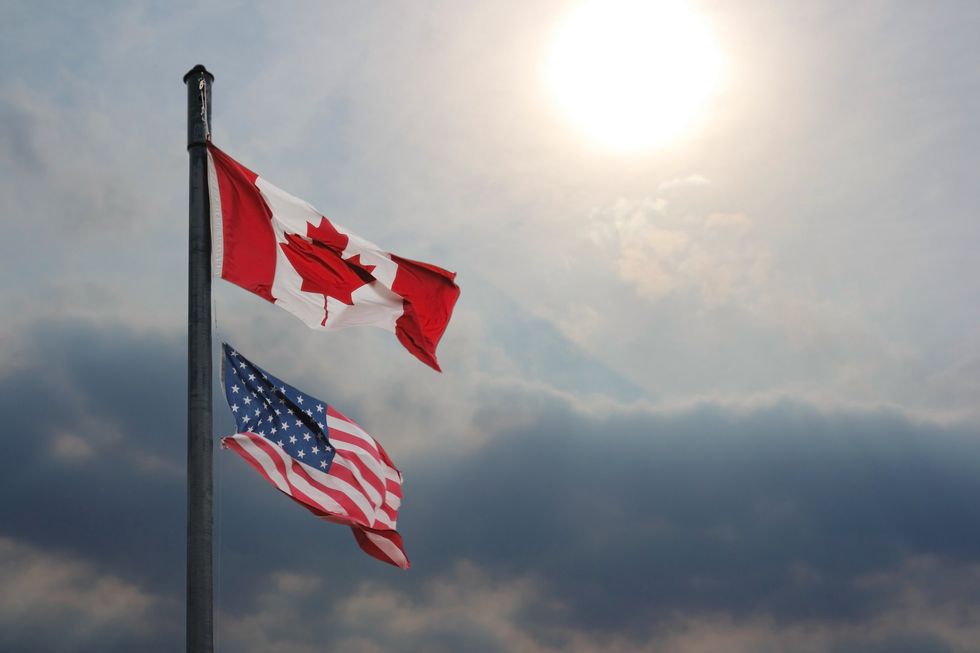
The days of springing forward and falling back might be numbered in the United States. On Tuesday, the House of Representatives passed the Sunshine Protection Act in a 308-117 vote, a bill that would lock the country into what's currently observed as daylight saving time , from March to November, year-round. Under the bill, individual states would be able to opt out before it takes effect. The vote landed at 308-117, with support from both parties. President Donald Trump has backed the bill, saying back in May that the current system of changing clocks costs Americans hundreds of millions of dollars a year in lost time and productivity. In a recent social media post, Trump called the passing of the act, "great news for America." Passing the House doesn't mean the bill is close to becoming law, though. It still has to get through the Senate, and that's where things get uncertain. Arkansas Senator Tom Cotton has already come out against it, pointing to the effect permanent daylight saving time would have on kids in northern states, who'd end up walking to school before sunrise for a good chunk of the winter. On the other side, supporters point to research linking the biannual clock change to worse sleep and more workplace and car accidents in the days after it happens, along with the argument that more evening daylight would be good for the economy. Some Canadian provinces have already made the jump While the US debates it, a couple of provinces west of Quebec have already made the change. British Columbia ended its clock changes back in March 2026, sticking permanently with the time it observes in summer. Alberta followed a few month later , adopting what Premier Danielle Smith branded "Alberta Time," also locking in the summer clock setting year-round. The Northwest Territories has said it plans to do the same. Yukon made a similar switch back in 2020, and Saskatchewan has effectively been on permanent daylight time for decades, since the province just runs on Central Standard Time all year instead of switching between zones. Quebec has floated the idea too, but hasn't gone any further than that. Back in October 2024, the provincial government ran a public poll asking residents whether they'd rather stick to one time year-round, the same question British Columbia and Alberta eventually acted on. Nothing has come of it since, and Quebecers set their clocks forward again this past March like every year before it. For now, nothing changes on this side of the border. Most of Canada's next clock change is already scheduled for November 1, 2026, when clocks fall back an hour, while BC and Alberta simply stay put.
The days of springing forward and falling back might be numbered in the United States. On Tuesday, the House of Representatives passed the Sunshine Protection Act in a 308-117 vote, a bill that would lock the country into what's currently observed as daylight saving time, from March to November, year-round. Under the bill, individual states would be able to opt out before it takes effect.
The vote landed at 308-117, with support from both parties. President Donald Trump has backed the bill, saying back in May that the current system of changing clocks costs Americans hundreds of millions of dollars a year in lost time and productivity. In a recent social media post, Trump called the passing of the act, 'great news for America.'[twitter_embed
https://twitter.com/TrumpTruthOnX/statuses/2077345040783884308 text='' name='' screen_name='TrumpTruthOnX' id='2077345040783884308' created_ts='' iframe_id='twitter-embed-2077345040783884308' expand=1 embed_desktop_width=550 embed_desktop_height=691 embed_mobile_width=375 embed_mobile_height=610] Passing the House doesn't mean the bill is close to becoming law, though. It still has to get through the Senate, and that's where things get uncertain.
Arkansas Senator Tom Cotton has already come out against it, pointing to the effect permanent daylight saving time would have on kids in northern states, who'd end up walking to school before sunrise for a good chunk of the winter.[twitter_embed https://twitter.com/TomCottonAR/statuses/2077418703407226909 text='' name='' screen_name='TomCottonAR' id='2077418703407226909' created_ts='' iframe_id='twitter-embed-2077418703407226909' expand=1 embed_desktop_width=550 embed_desktop_height=524 embed_mobile_width=375 embed_mobile_height=418] On the other side, supporters point to research linking the biannual clock change to worse sleep and more workplace and car accidents in the days after it happens, along with the argument that more evening daylight would be good for the economy.
Some Canadian provinces have already made the jumpWhile the US debates it, a couple of provinces west of Quebec have already made the change. British Columbia ended its clock changes back in March 2026, sticking permanently with the time it observes in summer. Alberta followed a few month later, adopting what Premier Danielle Smith branded 'Alberta Time,' also locking in the summer clock setting year-round.
The Northwest Territories has said it plans to do the same. Yukon made a similar switch back in 2020, and Saskatchewan has effectively been on permanent daylight time for decades, since the province just runs on Central Standard Time all year instead of switching between zones. Quebec has floated the idea too, but hasn't gone any further than that.
Back in October 2024, the provincial government ran a public poll asking residents whether they'd rather stick to one time year-round, the same question British Columbia and Alberta eventually acted on. Nothing has come of it since, and Quebecers set their clocks forward again this past March like every year before it. For now, nothing changes on this side of the border.
Most of Canada's next clock change is already scheduled for November 1, 2026, when clocks fall back an hour, while BC and Alberta simply stay put.
- Published
- Jul 15, 2026
- Updated
- Jul 15, 2026
- Source
- Mtl Blog
- Category
- Local News
- Read time
- 2 min
Key facts
Why this matters locally
This local news story matters locally because it may affect readers, businesses, commuters, families, or public services in British Columbia.
Local impact
BC Post links this item to British Columbia coverage so readers can follow related city updates, weather, traffic, events, and category news in one place.
Timeline
Source and credit
BC Post may summarize, organize, and add local context for reader clarity. Original reporting remains with the listed publisher.
Related Articles
View all Local News
Cowichan sports shorts: rugby, hockey, biking
Local News
Cowichan sports shorts: rugby, hockey, biking
 Local News
Cost of B.C. Massey tunnel replacement doubles from previous budget
Local News
Cost of B.C. Massey tunnel replacement doubles from previous budget
 Local News
Lions earn first win by handing Elks their first loss in 36-24 decision
Local News
Lions earn first win by handing Elks their first loss in 36-24 decision
 Local News
Consumer watchdog secures 4 ticketing undertakings during World Cup
Local News
Consumer watchdog secures 4 ticketing undertakings during World Cup
 Local News
Business leader says he hopes Greater Victoria gets fair share of submarine money
Local News
Business leader says he hopes Greater Victoria gets fair share of submarine money
More Local Coverage
Latest news Politics
Powerful pro-life ad featuring boxing legend to air during final World Cup matches
Politics
Powerful pro-life ad featuring boxing legend to air during final World Cup matches
 Top Stories
Yukon minerals work still under review despite federal announcement
Top Stories
Yukon minerals work still under review despite federal announcement