


The Town of Slave Lake is taking aggressive steps to repair its deteriorating road network after a harsh winter left the pavement in rough shape.
The Town of Slave Lake is taking aggressive steps to repair its deteriorating road network after a harsh winter left the pavement in rough shape. During the July 7 regular meeting, town council unanimously awarded the 2026 Mill and Overlay Program contract to E Construction Ltd., which submitted the winning bid of $866,400. Project manager Kush Patel presented the infrastructure report to council, explaining that above-average snow accumulation and repeated freeze-thaw cycles accelerated the destruction of the town’s asphalt.
The resulting damage is so extensive that routine public works patching is no longer an effective or economical solution. “The program will include milling existing asphalt surface, placing new asphalt overlays, and undertaking localized base repairs where required to restore roadway structure,” Patel said. He noted that moving toward permanent rehabilitation will extend the service life of the infrastructure and ultimately reduce long-term maintenance costs for the municipality.
The massive road repair initiative has a total approved budget of $1 million, which is being funded through a combination of the Canada Community Building Fund and municipal road reserves. The town issued a Request for Proposals on the Alberta Purchasing Connection in mid-June. Upon closing, four compliant proposals were received.
Ruel Concrete Ltd. submitted a bid of $1,050,365, Knelsen Sand & Gravel bid $1,027,500, and Paveit Construction Inc. bid $944,532.50. Administration evaluated the competing proposals using a detailed matrix that weighted price at 35 per cent, past experience on similar projects at 30 per cent, project schedule at 20 per cent, and the physical location of the asphalt supplier plant at 15 per cent. E Construction scored the highest overall.
Patel noted that the company has a reputable history of doing similar work in town over the last five years. They plan to bring in their heavy equipment on August 10 and wrap up the paving by August 24. Repair priority for the fresh asphalt will be given to high-volume traffic corridors.
The primary targeted sections include the southbound lane of Main Street adjacent to the Royal Bank, Caribou Trail between Main Street and Highway 88, and a section of 6 Ave. Southwest near the west approach to Sunset Plaza. Lower-volume residential streets, such as segments of 12 Ave.
Southeast, 9 St. Southeast, 6 St. Northwest, and 2 St. Northeast, are also on the potential repair list. However, Patel cautioned that the residential streets are subject to deletion depending on how much intensive base repair is required on the primary roads. Actual quantities of work and the final project scope will be determined by field measurements once the contractor assesses the sites.
In addition to the standard paving contract, administration asked council for permission to launch a pilot project to test a new technology called microsurfacing. The pilot will target a rapidly deteriorating stretch of Main Street between Highway 2 and 6 Ave. South.
Microsurfacing is a specialized coating made of crushed stone, cement, and an asphalt mixture. It is designed to make the road less slippery, fill in cracks, and level the surface so water drains properly. Patel explained that microsurfacing can extend the life of existing asphalt by seven to 10 years at just one-third the cost of a traditional mill and overlay.
“It greatly benefits the municipalities as they do not need to invest millions of dollars in a full road rehabilitation project and as such multiple roads sections can be completed in one budget year,” Patel said. He noted that the targeted stretch of Main Street is deteriorating fast but is not currently on the town’s 10-year capital plan for full rehabilitation, making it a perfect candidate for the preventative treatment. During the council debate, Councillor Kimberly Hughes asked for clarification regarding specific phrasing on the evaluation matrix.
She also questioned whether the pilot project needed to be approved under a separate motion, and confirmed that combining the pilot project with the paving contract would not push the town over its financial limit. Patel successfully clarified the mechanics of the matrix and assured council that the total cost for both the $866,400 E Construction contract and the microsurfacing pilot would comfortably remain under the approved $1-million budget cap. Following the presentation, Councillor Andrew Achoba moved the motions to formally award the paving contract and to grant administration the authority to proceed with the microsurfacing pilot project.
Both motions were carried unanimously by council. If the microsurfacing works well on Main Street, town administration will monitor how it holds up and may recommend a broader, town-wide program in future budget years.
- Published
- Jul 15, 2026
- Updated
- Jul 15, 2026
- Source
- The Record
- Category
- Crime
- Read time
- 3 min
Key facts
Why this matters locally
This crime story matters locally because it may affect readers, businesses, commuters, families, or public services in British Columbia.
Local impact
BC Post links this item to British Columbia coverage so readers can follow related city updates, weather, traffic, events, and category news in one place.
Timeline
Source and credit
BC Post may summarize, organize, and add local context for reader clarity. Original reporting remains with the listed publisher.
Related Articles
View all Crime
Video shows rescue of lone survivor from deadly B.C. helicopter crash
Crime
Video shows rescue of lone survivor from deadly B.C. helicopter crash
 Crime
A dozen cats are missing after New Westminster apartment fire that displaced roughly 100 residents
Crime
A dozen cats are missing after New Westminster apartment fire that displaced roughly 100 residents
 Crime
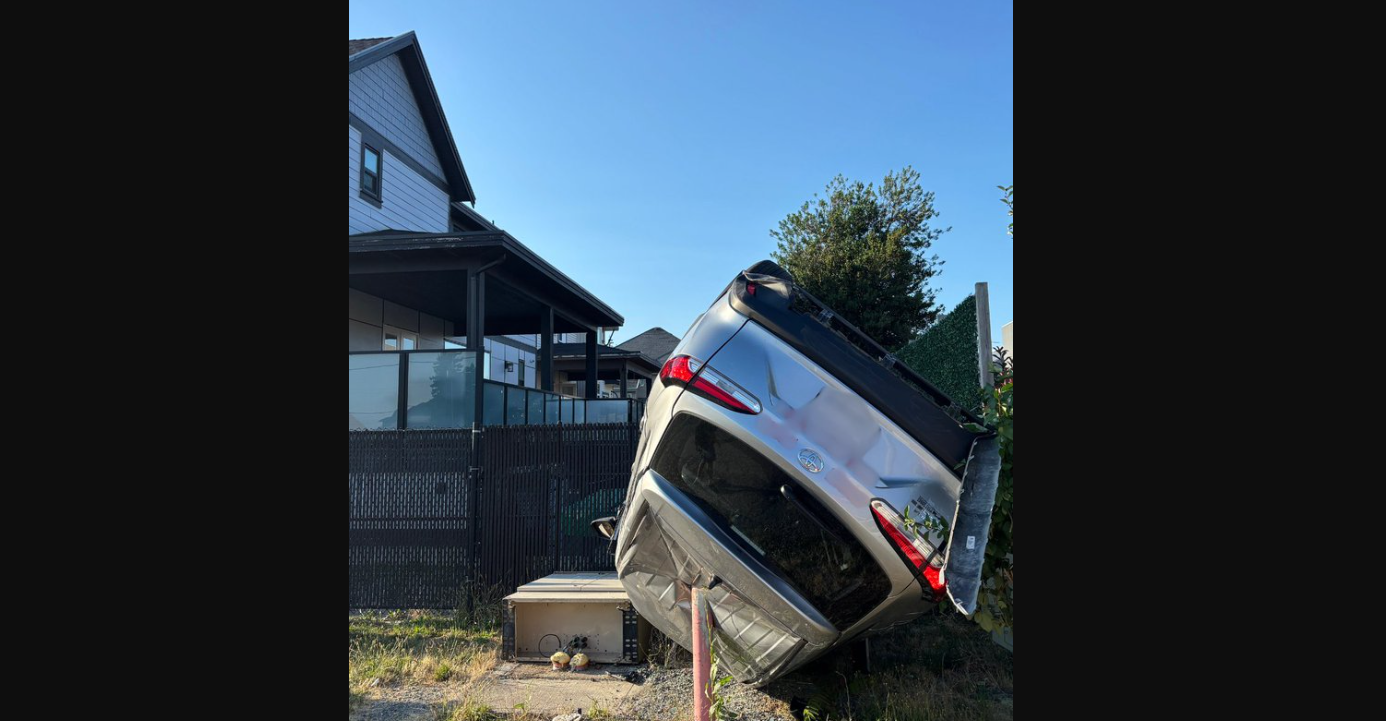
‘N’ driver involved in Abbotsford rollover crash, police say
Crime
‘N’ driver involved in Abbotsford rollover crash, police say
 Crime
Langley woman pleads for break on $49K fines after felling 11 trees
Crime
Langley woman pleads for break on $49K fines after felling 11 trees
 Crime
B.C. seeks forfeiture of alleged gangster’s properties worth more than $6.2 million
Crime
B.C. seeks forfeiture of alleged gangster’s properties worth more than $6.2 million
 Crime
Motorcycle impounded after new rider reaches ‘shocking speed’ on B.C. highway
Crime
Motorcycle impounded after new rider reaches ‘shocking speed’ on B.C. highway
More Local Coverage
Latest news Business
AI Market Trends: Q2 2026 Review and Forecast
Business
AI Market Trends: Q2 2026 Review and Forecast
 Politics
Powerful pro-life ad featuring boxing legend to air during final World Cup matches
Politics
Powerful pro-life ad featuring boxing legend to air during final World Cup matches