


TPU will be a part of the game-winning ball at the World Cup.
The 2026 FIFA World Cup’s final games this week will see a new game ball on the pitch, one that still relies on panels made from recycled thermoplastic polyurethane,but now featuring a golden palette in honor of the golden trophy that will be hoisted by the winners. The Adidas Trionda Final ball will still feature the same materials and construction as the colorful game ball that has been used throughout the tournament to ensure it plays the same. But the change in colors “reflects the magnitude of the tournament’s closing matches,” Adidas said in a news release.
The ball will be used in semifinal matches July 14 and 15, a play-off game on July 18 to determine the third-place team and the final on July 19. Versions of the Trionda Final already are on sale for 160 euros ($182), the same price for consumers as the model used during the rest of the tournament. Cooperating carmakers Japan’s auto industry wants to embrace cooperation for long-term survival.
Former Toyota CEO Koji Sato, now Japan’s newly appointed national car czar, says carmakers have added complexity and costs by its historic insistence on using individual standards for parts and materials — both steel and plastics — and instead should collaborate on common items needed by everyone. In an interview with Hans Greimel from our sister publication Automotive News , Sato pointed specifically at wiring harnesses as an example of cost savings that would give automakers more opportunities to compete on a global scale by embracing commonalities. The harness, typically made with plastics, organize cables and wires throughout a car.
Suppliers now make 70,000 wire harness variants to satisfy automaker requirements, making it difficult for them to automate production. If the auto industry can standardize basic vehicle architectures, suppliers can then invest in automation that Sato says can boost productivity more than tenfold. Working with BYD Materials also are on the minds of engineers and executives at one of China’s biggest automakers, BYD, which just joined a strategic partnership with Covestro.
The memorandum of understanding the companies signed is an “evolution” and moves beyond “traditional supply towards collaboration across the value chain, driven by a shared conviction that the future of mobility, energy and intelligent systems demands deep co-innovation,” Covestro said in a news release . The agreement calls for work on new energy vehicles, batteries and energy storage, and “next-generation technologies.” Those focus areas will encompass lightweight material development and selection, thermal management, intelligent electronics, cost efficiencies and aesthetics.
The connection with BYD, which has passed Tesla to become the world’s biggest EV maker, is important. “BYD’s expanding portfolio represents some of the most exciting and demanding material challenges of our time,” said Lily Wang, president of engineering plastics at Leverkusen, Germany-based Covestro. Start your day with a dive beyond industry headlines Subscribe to Kickstart
- Published
- Jul 15, 2026
- Updated
- Jul 15, 2026
- Source
- Plasticsnews
- Category
- Sports
- Read time
- 2 min
Key facts
Why this matters locally
This sports story matters locally because it may affect readers, businesses, commuters, families, or public services in British Columbia.
Local impact
BC Post links this item to British Columbia coverage so readers can follow related city updates, weather, traffic, events, and category news in one place.
Timeline
Source and credit
BC Post may summarize, organize, and add local context for reader clarity. Original reporting remains with the listed publisher.
Related Articles
View all Sports
Thoughts turn to legacy as full-time whistle nears for Vancouver's World Cup
Sports
Thoughts turn to legacy as full-time whistle nears for Vancouver's World Cup
 Sports
Swiss breakout star Manzambi and 2 others leave training ahead of World Cup clash with Colombia
Sports
Swiss breakout star Manzambi and 2 others leave training ahead of World Cup clash with Colombia
 Sports
Huge parade of naked cyclists promote 'less gas, more ass' in Vancouver
Sports
Huge parade of naked cyclists promote 'less gas, more ass' in Vancouver
 Sports
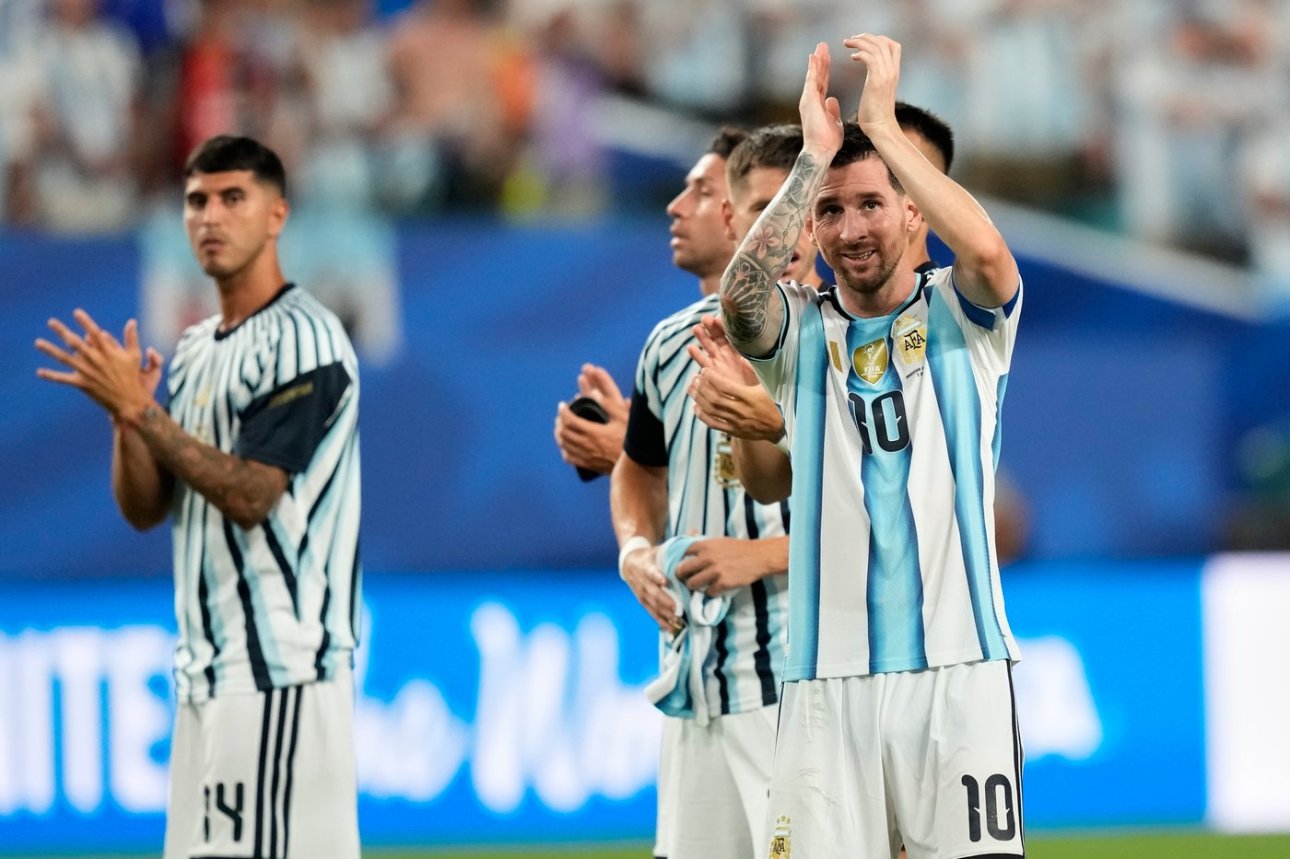
World Cup what to know: Argentina’s Lionel Messi faces Egypt’s Mohamed Salah for spot in quarters
Sports
World Cup what to know: Argentina’s Lionel Messi faces Egypt’s Mohamed Salah for spot in quarters
 Sports
Sidney teen to represent Canada at world paddling championships
Sports
Sidney teen to represent Canada at world paddling championships
 Sports
Annual Windsor bike show fuels support for 5 Windsor-Essex food banks
Sports
Annual Windsor bike show fuels support for 5 Windsor-Essex food banks
More Local Coverage
Latest news Politics
Powerful pro-life ad featuring boxing legend to air during final World Cup matches
Politics
Powerful pro-life ad featuring boxing legend to air during final World Cup matches
 Business
AI Market Trends: Q2 2026 Review and Forecast
Business
AI Market Trends: Q2 2026 Review and Forecast