


Columnist Wendy Elliott reviews Sea, Soil and Soul: Evolving Bay of Fundy Coastline.
Years ago, a dike was eroded in North Grand Pre near a scenic spot the locals call the Guzzle and what was uncovered was a dike that must have been created by Acadians. It was covered in tiny pieces of sod that had to have been hand cut. It wasn’t long before our giant tides washed them all away.
Related WENDY ELLIOTT: New novel challenges the world that might be WENDY ELLIOTT: Amazing what you find on the beach WENDY ELLIOTT: Community requires quality of life In 2015, Bria Stokesbury, then curator at the Kings County Museum, found an Acadian aboiteau or sluice in a stream in New Minas. At high tide, the aboiteau, carved from a tree trunk, closed up to prevent seawater from reaching the other side of a dike.
At low tide, a valve allowed marshy water to reach the open sea. Those are just a couple of the many discoveries that trace the long and complex relations between land and sea in the Minas Basin. So, I was pleased to be able to watch and learn from a new documentary recently called Sea, Soil and Soul: Evolving Bay of Fundy Coastline.
A group of student scientists, using funds provided by the Natural Sciences and Engineering Research Council of Canada (NSERC), presented the film in Wolfville. The group undertakes critical research on salt marshes. Based locally and across the broader Bay of Fundy, their research focuses on ecosystem services, coastal protection, climate change adaptation, and biodiversity.
Aside from its long agricultural history, the Bay of Fundy is also globally known for its extreme tides, rising up to 16 metres (52 feet). This enormous daily influx of up to 160 billion tonnes of water shapes a dramatic, ever-evolving coastline. The documentary begins with archeologist Jonathan Fowler speaking about our relationship with the environment naturally and culturally and how we need to foster awareness.
Acknowledging the complexity and history that exists, he says, leads to a great chain of stories and relationships that are key to this research. I’d read about Danika Van Proosdij, also a professor at Saint Mary’s University in Halifax, who is at the forefront of wetlands restoration projects in this province. She has already overseen the restoration of more than 400 hectares.
It was great to see her in person. Salt marshes and wetlands Protecting land from potentially disastrous flooding and erosion can be aided by re-establishing salt marshes. Van Proosdij, who directs the Saint Mary’s TransCoastal Adaptations Centre for Nature-Based Solutions, is targeting wetlands that can be restored.
Her work has a focus on fallow agricultural land. Old dikes are removed or set back and the natural vegetation of a tidal estuary is allowed to grow back. The new wetland helps reduce flooding and erosion.
It also provides a lot of habitat for fish and other organisms, while sequestering carbon and reducing greenhouse gas emissions. According to a Dalhousie University report, there are about 80,000 acres of salt marsh land in Nova Scotia, of which roughly 43,000 acres have been diked for agricultural use. Yet increasing demands are being placed on these lands for recreation, wild rice cultivation, and aquaculture.
At the same time, some of these areas are being eroded by dredging and filling operations. The Salt Marsh Working Group was formed way back in 1976 in an effort to bring together information about salt marshes in Nova Scotia. Those scientists were aware that coastal communities were facing rising sea levels and stronger storm surges caused by global climate change.
Today we know even more that there can be difficult decisions that have to be made about how to protect and preserve farmland, wild habitat and the Maritime way of life in a changing world. It was terrific to see a raft of knowledgeable folks in this documentary, including Gerald Gloade, a cultural educator with the Mi’kmawey Debert Cultural Centre. One of the strong takeaways I got from the film was the advice not to put additional structures or buildings into tidal areas.
Important habitat It won’t be long until the Bay of Fundy hosts migrating shorebirds once again. The Minas Basin was designated a globally significant shorebird habitat well over three decades ago, but more needs to be done for the migrating birds that arrive in August. Our region is part of the Western Hemisphere Shorebird Reserve Network, which is an international group working to protect shore birds.
The decline in what were once tens of thousands of migratory shorebirds – mainly semipalmated sandpipers – could well be due to an inability to feed extensively. They need to double their body weight while stopping here. That speaks to the state of the shoreline and human disruption on the beaches.
Environmental uncertainty is challenging the food resources and weather the shorebirds face. They represent just one aspect of the huge amount of diversity present on the scenic coastline we call home. That’s why fostering awareness is so important.
Wendy Elliott is a former reporter for the Kentville Advertiser and Hants Journal. She lives in Wolfville.
- Published
- Jul 16, 2026
- Updated
- Jul 16, 2026
- Source
- Pniatlantic
- Category
- Environment
- Read time
- 4 min
Key facts
Why this matters locally
This environment story matters locally because it may affect readers, businesses, commuters, families, or public services in British Columbia.
Local impact
BC Post links this item to British Columbia coverage so readers can follow related city updates, weather, traffic, events, and category news in one place.
Timeline
Source and credit
BC Post may summarize, organize, and add local context for reader clarity. Original reporting remains with the listed publisher.
Related Articles
View all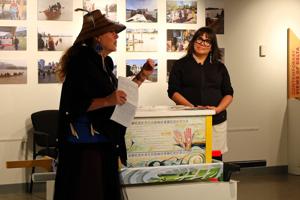 Environment
A powerful movement of healing arrives at Delta’s Discovery Centre
Environment
A powerful movement of healing arrives at Delta’s Discovery Centre
 Environment
50-hectare wildfire burns between Clearwater and 100 Mile House
Environment
50-hectare wildfire burns between Clearwater and 100 Mile House
 Environment
Metro Vancouver issues air quality warning as wildfire smoke drifts in
Environment
Metro Vancouver issues air quality warning as wildfire smoke drifts in
 Environment
Vancouver forecast in 'sweet spot' but hot temperatures on the way
Environment
Vancouver forecast in 'sweet spot' but hot temperatures on the way
 Environment
Mark Carney's new climate doctrine
Environment
Mark Carney's new climate doctrine
 Environment
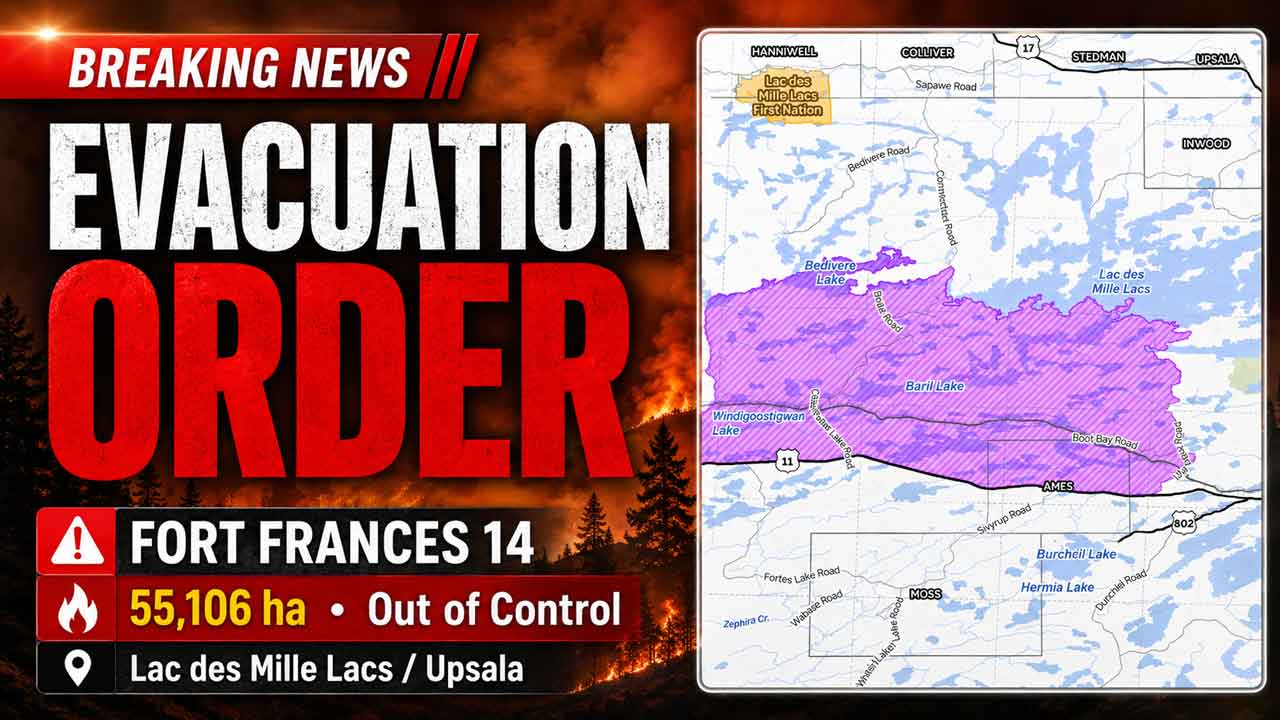
Updated Evacuation Information for Wildfire Fort Frances 14 (July 17 2026)
Environment
Updated Evacuation Information for Wildfire Fort Frances 14 (July 17 2026)
More Local Coverage
Latest news Politics
Powerful pro-life ad featuring boxing legend to air during final World Cup matches
Politics
Powerful pro-life ad featuring boxing legend to air during final World Cup matches
 Business
AI Market Trends: Q2 2026 Review and Forecast
Business
AI Market Trends: Q2 2026 Review and Forecast