

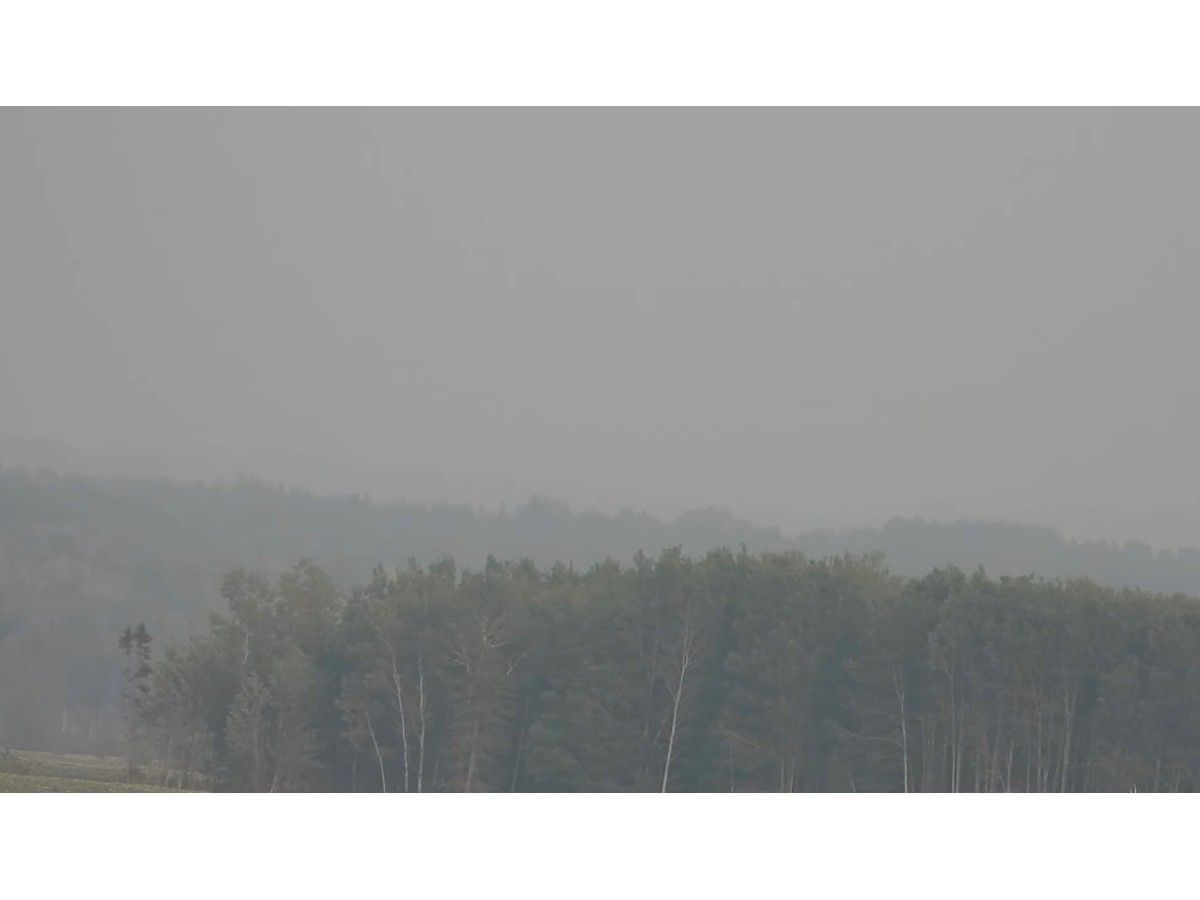
The thick blanket of wildfire smoke that left many New Brunswickers smelling and even tasting smoke in the air Tuesday did more than reduce visibility – it also helped keep potentially stronger thunderstorms from developing. Jill Maepea, a meteorologist with Environment and Climate Change Canada, said a cold front moving through the province shifted winds [...]
Article content The thick blanket of wildfire smoke that left many New Brunswickers smelling and even tasting smoke in the air Tuesday did more than reduce visibility – it also helped keep potentially stronger thunderstorms from developing. Jill Maepea, a meteorologist with Environment and Climate Change Canada, said a cold front moving through the province shifted winds to the northwest, carrying smoke from large wildfires burning in Ontario across much of New Brunswick on Tuesday. She said the same weather system had been expected to trigger severe thunderstorms, but the smoke became one of the factors that prevented many of those storms from forming.
Maepea said the smoke cooled and stabilized the atmosphere enough to reduce the energy available for thunderstorms, which in turn helped diminish what had been expected to be a more active day. While the smoky skies – pushed east from wildfires in northwestern Ontario – drew widespread attention on social media, New Brunswick escaped the worst of it. Air quality in Toronto Wednesday was rated at 10-plus, the highest and worst the index can reach.
Still, Environment Canada issued air quality statements overnight Tuesday into Wednesday for northwestern parts of New Brunswick as smoke mixed down to the surface. Maepea said residents can expect smoky conditions to come and go throughout the remainder of the week as a “persistent westerly wind” continues to transport smoke eastward. “We’re going to see it kind of like a seesaw effect for probably all this week,” she said.
Maepea said during the daytime, warmer temperatures and stronger circulation in the atmosphere often keeps much of the smoke higher overhead. At night, however, winds become lighter and the atmosphere stabilizes, allowing more smoke to settle closer to the ground. “We often don’t get the smoke at the surface during the day,” she said.
“But at nighttime that wind tends to die down and we don’t get as much mixing.” Maepea added that means people may continue noticing smoky skies or the smell of smoke, particularly during overnight and early morning hours. She noted that smelling smoke does not necessarily mean air quality has reached unhealthy levels.
“You will smell it, but it doesn’t maybe necessarily mean it’s incredibly poor at that point,” she said. Maepea said Environment Canada monitors air quality across the province and issues advisories when conditions warrant, particularly for people most vulnerable to smoke exposure. Residents with asthma, chronic lung disease or other respiratory conditions are encouraged to monitor the Air Quality Health Index and limit strenuous outdoor activity if advisories are issued.
Maepea said smoke episodes are likely to become a recurring feature this summer as large wildfires continue burning in central Canada. “This is probably going to be an ongoing issue because I don’t see those fires going anywhere anytime soon,” she said, but she added the smoke does have one silver lining. “It will make for very pretty sunsets and sunrises.”
- Published
- Jul 15, 2026
- Updated
- Jul 15, 2026
- Source
- The Tj News
- Category
- Environment
- Read time
- 2 min
Key facts
Why this matters locally
This environment story matters locally because it may affect readers, businesses, commuters, families, or public services in British Columbia.
Local impact
BC Post links this item to British Columbia coverage so readers can follow related city updates, weather, traffic, events, and category news in one place.
Timeline
Source and credit
BC Post may summarize, organize, and add local context for reader clarity. Original reporting remains with the listed publisher.
Related Articles
View all Environment
Metro Vancouver issues air quality warning as wildfire smoke drifts in
Environment
Metro Vancouver issues air quality warning as wildfire smoke drifts in
 Environment
A powerful movement of healing arrives at Delta’s Discovery Centre
Environment
A powerful movement of healing arrives at Delta’s Discovery Centre
 Environment
Vancouver forecast in 'sweet spot' but hot temperatures on the way
Environment
Vancouver forecast in 'sweet spot' but hot temperatures on the way
 Environment
Spanish Mountain Gold Reports 69.20 Metres of 0.74 g/t Gold and 77.85 Metres of 0.70 g/t Gold as Part of Its Feasibility Study Drill Program
Environment
Spanish Mountain Gold Reports 69.20 Metres of 0.74 g/t Gold and 77.85 Metres of 0.70 g/t Gold as Part of Its Feasibility Study Drill Program
 Environment
Mark Carney's new climate doctrine
Environment
Mark Carney's new climate doctrine
 Environment
EU Excludes Soybean Seed from Deforestation Rules
Environment
EU Excludes Soybean Seed from Deforestation Rules
More Local Coverage
Latest news Politics
Powerful pro-life ad featuring boxing legend to air during final World Cup matches
Politics
Powerful pro-life ad featuring boxing legend to air during final World Cup matches
 Local News
Cowichan sports shorts: rugby, hockey, biking
Local News
Cowichan sports shorts: rugby, hockey, biking