


Smoke isn’t the only concern. Here’s what forecasters expect through the weekend.
As of Friday morning, Environment Canada had issued an orange-level air quality warning – the second-highest level in its three-colour system – indicating conditions likely to cause significant health impacts. Ontario’s Air Quality Health Index rated London at 10+, the highest level on the scale and representing a very high health risk. Geoff Coulson, a meteorologist with Environment Canada, said conditions are likely to improve somewhat Saturday, with showers and thunderstorms expected in the London region.
But poor air quality is expected to continue into Sunday and early next week, with the potential for yellow-level air quality warnings – the lowest level in Environment Canada’s three-colour system – indicating hazardous conditions that may still pose health risks. “The underlying issue remains the same, that we have many, many fires burning out of control in Northwestern Ontario and a wind still coming in from that area, in particular, to Southwestern Ontario,” he said. “The issue may improve somewhat off and on Saturday, but we could still be looking at some poor air quality conditions on Sunday as well.”
As of Friday, Coulson said there were 193 fires burning in Ontario, with most in northwestern Ontario. Of those, 171 were out of control. In addition, Coulson said thunderstorms expected in the London region could bring heavy rain, large hail and damaging wind gusts.
“We may see, as the day goes on Saturday, severe thunderstorm watches or warnings being issued for specific parts of Southwestern Ontario,” he said. “Once the forecasters get a better idea of who could be under the risk of the strongest thunderstorms, it won’t just be an air quality concern on Saturday.” Coulson urged people to continue checking Environment Canada forecasts, noting air quality in the London area is monitored hour by hour.
EVENTS, FACILITIES AFFECTED Meanwhile, for the third day in a row on Friday, the City of London has closed all outdoor recreation, sporting amenities, programs and facilities. In an update Friday morning, the city said events would continue to be cancelled because of poor air quality, including Friday Night Salsa at Dundas Place. “We look forward to resuming our outdoor programming once it is safe to do so,” the city wrote.
In an emailed response to Free Press questions, the city said cancellations by independent sports leagues would be announced by those organizations. However, leagues that rely on city facilities will not be able to use them while the closures remain in effect. Chanderdat said there was no word yet on rescheduling the game, as officials were still working out the logistics.
“Our thoughts are with everyone up north dealing with this firsthand – that’s the most important thing right now,” he said. “You know, we’re seeing the secondary effects of it, and it’s bad here, right? So I couldn’t even imagine the people having to deal with that.”
Chanderdat said there was no word yet on whether Saturday’s game in Barrie against the Barrie Baycats would be cancelled, saying that decision would be up to the home team. As for Friday night’s Rock the Park show, a spokesperson told The Free Press on Friday morning that “everything is a go as of right now,” but could not provide a timeline for another update. “We kind of have to call it within the next few hours.
It’s not just like we have to call it at 6 o’clock and say, ‘No, we’re not going,’” she said. HEALTH RISKS REMAIN In an interview Thursday with The Free Press, Alex Summers, medical officer of health with the Middlesex-London Health Unit, said the air quality was the worst the region had seen in recent memory. He said everyone faces some risk, but it is greater for people with underlying health conditions, those 65 and older, children and women who are pregnant.
He said the biggest concern is short-term health effects, including eye, nose and throat irritation. “These can progress, less commonly, to things like shortness of breath or chest pain, and that’s why we really want folks to be aware of their symptoms, particularly if they’re at higher risk,” he said. With files from Free Press reporter Allison Young
- Published
- Jul 17, 2026
- Updated
- Jul 17, 2026
- Source
- Lfpress
- Category
- Environment
- Read time
- 3 min
Key facts
Why this matters locally
This environment story matters locally because it may affect readers, businesses, commuters, families, or public services in British Columbia.
Local impact
BC Post links this item to British Columbia coverage so readers can follow related city updates, weather, traffic, events, and category news in one place.
Timeline
Source and credit
BC Post may summarize, organize, and add local context for reader clarity. Original reporting remains with the listed publisher.
Related Articles
View all Environment
50-hectare wildfire burns between Clearwater and 100 Mile House
Environment
50-hectare wildfire burns between Clearwater and 100 Mile House
 Environment
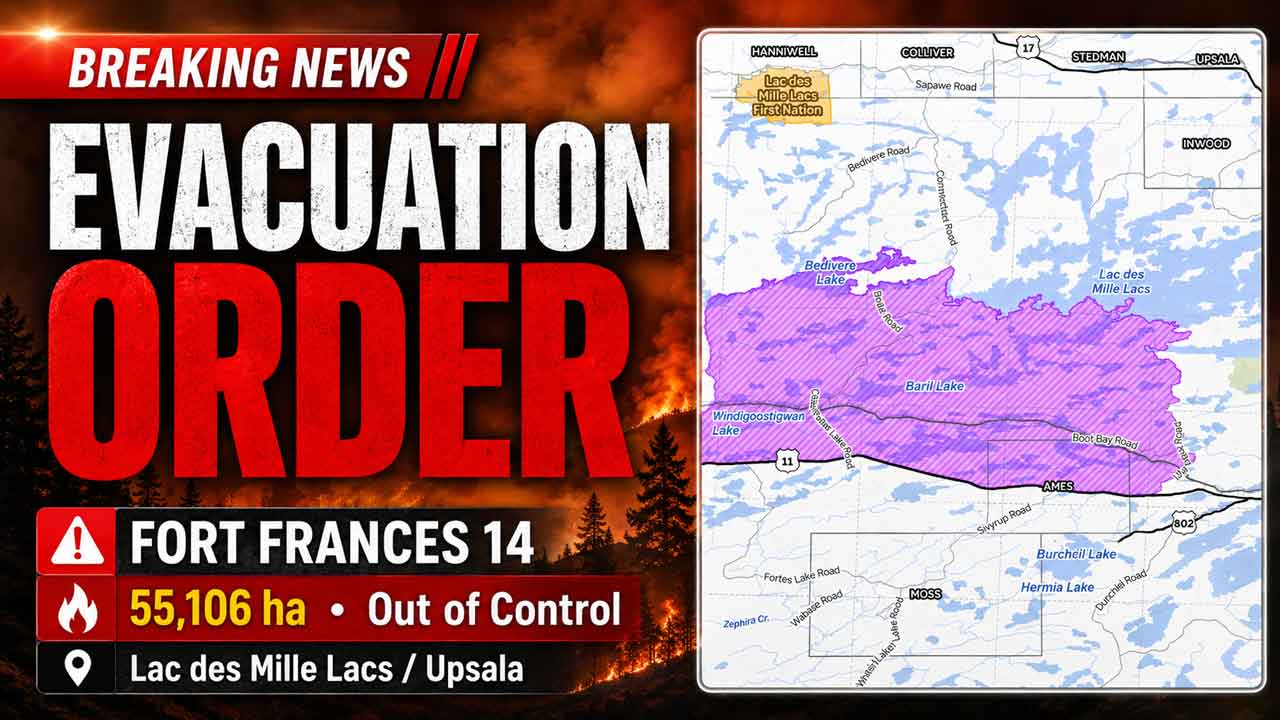
Updated Evacuation Information for Wildfire Fort Frances 14 (July 17 2026)
Environment
Updated Evacuation Information for Wildfire Fort Frances 14 (July 17 2026)
 Environment
A powerful movement of healing arrives at Delta’s Discovery Centre
Environment
A powerful movement of healing arrives at Delta’s Discovery Centre
 Environment
EU Excludes Soybean Seed from Deforestation Rules
Environment
EU Excludes Soybean Seed from Deforestation Rules
 Environment
Metro Vancouver issues air quality warning as wildfire smoke drifts in
Environment
Metro Vancouver issues air quality warning as wildfire smoke drifts in
 Environment
Vancouver forecast in 'sweet spot' but hot temperatures on the way
Environment
Vancouver forecast in 'sweet spot' but hot temperatures on the way
More Local Coverage
Latest news Business
AI Market Trends: Q2 2026 Review and Forecast
Business
AI Market Trends: Q2 2026 Review and Forecast
 Politics
Powerful pro-life ad featuring boxing legend to air during final World Cup matches
Politics
Powerful pro-life ad featuring boxing legend to air during final World Cup matches