


Evacuation orders have been issued for multiple communities in northwestern Ontario due to threats from nearby wildfires, as the region contends with heat warnings and smoky skies. Here's what we know about the situation, as wildland firefighter crews battle more than 120 confirmed blazes.
Wildfires prompt multiple evacuations in northwestern Ontario amid extreme heat 128 confirmed wildfires in the region as of Monday night Evacuation orders have been issued for multiple communities in northwestern Ontario due to threats from nearby wildfires, as the region contends with heat warnings and smoky skies. Residents of Armstrong and Whitesand First Nation were ordered to evacuate late Monday night, Ontario Provincial Police (OPP) North West Region said in a Facebook post shortly before 10:30 p.m. ET. Just after 12:15 a.m. ET Tuesday, Lac des Mille Lacs First Nation and communities were also ordered to evacuate.
“Residents in the following areas are encouraged to prepare for a possible evacuation due to the evolving wildfire situation: - Ignace. - Crystal Lake. - Highway 633 area. “No evacuation order is currently in place for these areas, however, residents in some locations may have been directly advised by emergency personnel to evacuate as a precaution.
Please continue to monitor for any updates,” the OPP said. There were 128 confirmed wildfires in the northwest as of Monday night, with smoke from active fires in Canada and the United States visible in many parts of the region, according to Ontario’s Aviation, Forest Fire and Emergency Services. Air quality alerts are in effect for: - City of Thunder Bay. -
Atikokan — Upsala — Quetico. - Superior West. - Lake Nipigon — Wabakimi. As of Monday night, the OPP said the following road closures were in place due to wildfires: - Highway 11: all lanes closed between Highway 633 and Highway 623 (east of Atikokan). - Highway 599: southbound closed between Highway 516 and Mishkeegogamang First Nation.
Burn bans are in effect in several communities. Residents can check with their local municipal fire departments to see whether a burn ban is in place where they live. Wildland fire hazards range from low to extreme throughout the region, with the Thunder Bay, Dryden, Fort Frances and Kenora sectors seeing extreme hazard levels, as well as the southern portions of the Sioux Lookout and Red Lake districts.
City of Thunder Bay responds to extreme heat A multi-day heat event is expected to continue Tuesday in much of the northwest, including Thunder Bay. Conditions are expected to persist through Tuesday evening and possibly into Wednesday. “Today's maximum temperatures approached 40 C in some areas.
Tuesday will still be hot, but may be several degrees cooler than today,” Environment and Climate Change Canada says. As such, the City of Thunder Bay has expanded support for the community’s most vulnerable. “With the increased risk for people experiencing homelessness and those living in encampments, the city has implemented additional response measures.
That includes supporting extended hours at cooling centres in the north and south cores from July 13 to July 15 at: - PACE, 409 George St.: open until 10 p.m. ET. - Elevate NWO, 106 Cumberland St. N.: open until 9 p.m. ET. “Please check in regularly on family members, neighbours and community members who may be at risk and help connect them with cooling resources and other supports,” the city said in a Facebook post Monday evening. Environment and Climate Change Canada warns people to watch for signs of heat exhaustion, such as headache, nausea, dizziness, thirst, dark urine and intense fatigue.
“When there is an extreme heat event occurring with wildfire smoke, prioritize keeping cool,” the agency says.
- Published
- Jul 14, 2026
- Updated
- Jul 14, 2026
- Source
- Cbc
- Category
- Environment
- Read time
- 3 min
Key facts
Why this matters locally
This environment story matters locally because it may affect readers, businesses, commuters, families, or public services in British Columbia.
Local impact
BC Post links this item to British Columbia coverage so readers can follow related city updates, weather, traffic, events, and category news in one place.
Timeline
Source and credit
BC Post may summarize, organize, and add local context for reader clarity. Original reporting remains with the listed publisher.
Related Articles
View all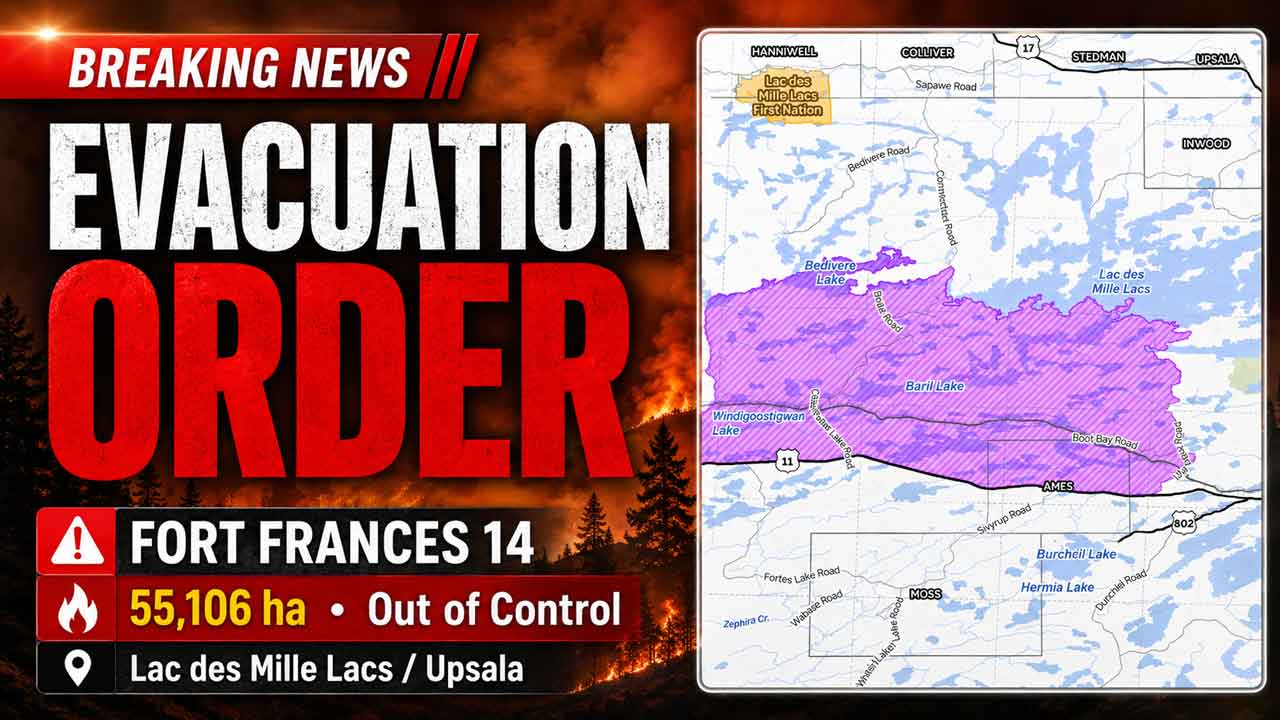 Environment
Updated Evacuation Information for Wildfire Fort Frances 14 (July 17 2026)
Environment
Updated Evacuation Information for Wildfire Fort Frances 14 (July 17 2026)
 Environment
50-hectare wildfire burns between Clearwater and 100 Mile House
Environment
50-hectare wildfire burns between Clearwater and 100 Mile House
 Environment
2 wildfires north of Anahim Lake currently out-of-control
Environment
2 wildfires north of Anahim Lake currently out-of-control
 Environment
Port Coquitlam mayor launches program that removes graffiti on public property within 48 hours
Environment
Port Coquitlam mayor launches program that removes graffiti on public property within 48 hours
 Environment
A powerful movement of healing arrives at Delta’s Discovery Centre
Environment
A powerful movement of healing arrives at Delta’s Discovery Centre
 Environment
'Fending for ourselves' after Manitoba wildfire forces evacuation: O-Pipon-Na-Piwin leaders
Environment
'Fending for ourselves' after Manitoba wildfire forces evacuation: O-Pipon-Na-Piwin leaders
More Local Coverage
Latest news Business
AI Market Trends: Q2 2026 Review and Forecast
Business
AI Market Trends: Q2 2026 Review and Forecast
 Politics
Powerful pro-life ad featuring boxing legend to air during final World Cup matches
Politics
Powerful pro-life ad featuring boxing legend to air during final World Cup matches
 Top
‘Entire city’ asked to help search for missing 11-year-old Parker: Calgary police
Top
‘Entire city’ asked to help search for missing 11-year-old Parker: Calgary police