


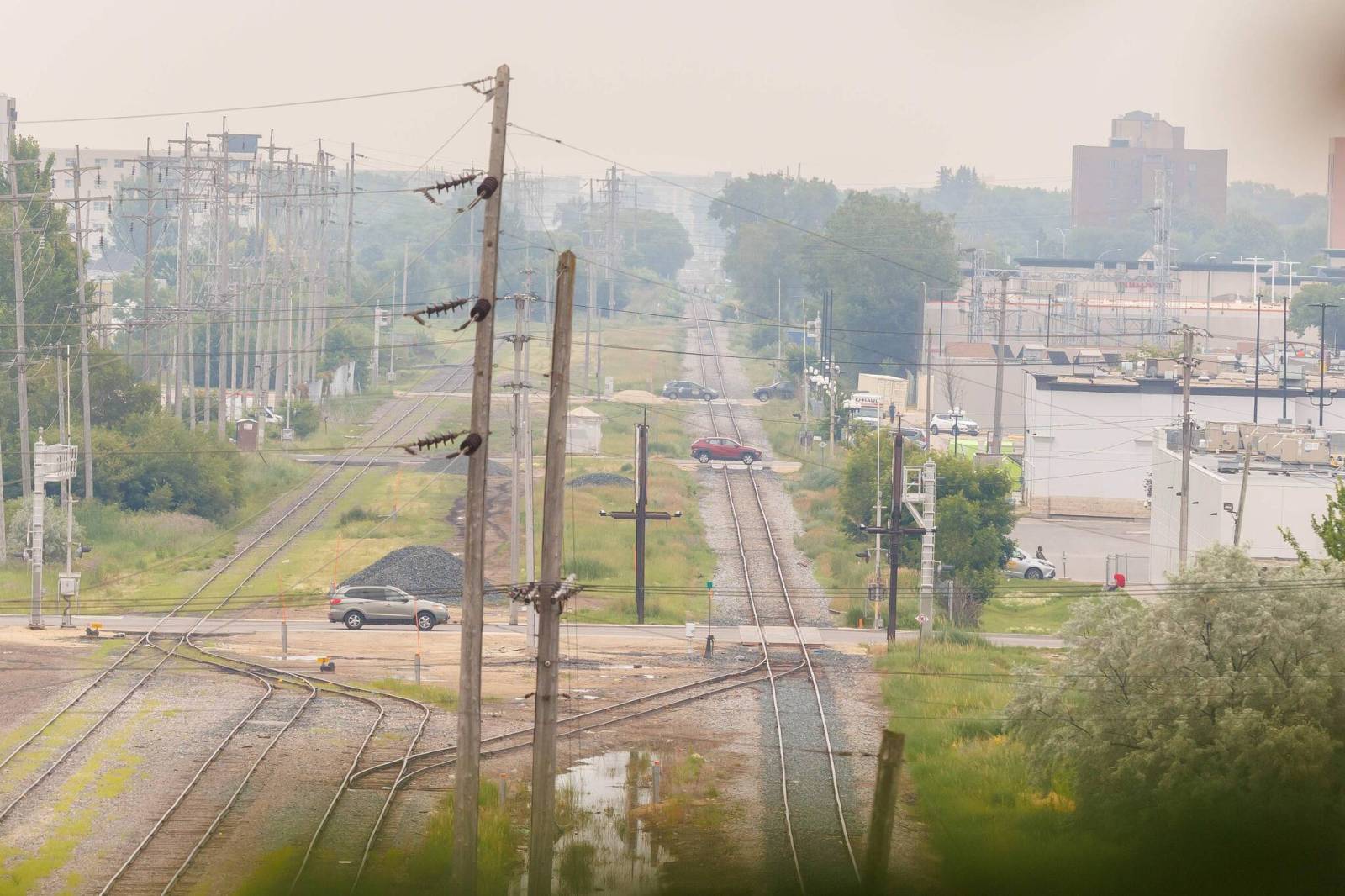
Forest fire smoke billowing through southern Ontario and multiple U.S. states is packed with potent particles.
TORONTO - fire smoke billowing through southern Ontario and multiple U.S. states is packed with potent particles. “The main pollutant being PM2.5, it’s the most harmful airborne pollutant on the planet that kills more people than any other airborne pollutants,” said Glory Dolphin Hammes, the CEO of IQAir North America. This week, Toronto’s University Health Network reported an 80 per cent increase in emergency room visits for patients suffering from respiratory illness and air-quality sensitivity.
Symptoms included shortness of breath, coughing, congestion, and non-cardiac chest pain. “People just don’t realize how much air quality affects their health and it’s not just respiratory health it’s also cardiovascular,” adds Hammes. With poor air quality levels spiking, experts recommend taking several proactive steps to protect yourself and your family.
Measures to protect yourself from wildfire smoke While it might be seen as an unwelcome throwback to the pandemic, wearing a high-quality mask can filter out harmful particles. “Especially individuals who are sensitive (to the smoke) but it’s important for all of us to wear a good respirator type mask, like an N95 or a KN95,” said Jeffrey Siegel, a professor at the University of Toronto. Hammes told CTV News that it needs to be a high-quality mask to work.
“I see people walking around on this unhealthy day with a surgical mask on,” Hammes said. “A surgical mask does not protect the wearer from the pollutants in the air.” Limiting strenuous outdoor labour as well as exercising outside is another simple step you can take to protect your health.
“Working out is usually great for your health, but outside, in these air-quality conditions, it will have the opposite effect, Hammes said. “It will actually exacerbate respiratory or any heart conditions that might be present.” Staying cool indoors when possible, also provides an added layer of protection.
“When you’re inside, the basic strategy is to use things like portable (air) filters if you have one, Siegel said. “Alternatively if you have a central forced system, making sure you have a good filter there.” There are also multiple smartphone applications, including that IQAir AirVisual app, that you can download that promises to provide individuals with real-time, air quality readings in Canada or abroad.
Experts who spoke to CTV News reiterated one main takeaway: your home, apartment, or indoor workplace is your sanctuary when air quality is poor. Whenever possible, shelter in place.
- Published
- Jul 16, 2026
- Updated
- Jul 16, 2026
- Source
- Cp24
- Category
- Canada
- Read time
- 2 min
Key facts
Why this matters locally
This canada story matters locally because it may affect readers, businesses, commuters, families, or public services in British Columbia.
Local impact
BC Post links this item to British Columbia coverage so readers can follow related city updates, weather, traffic, events, and category news in one place.
Timeline
Source and credit
BC Post may summarize, organize, and add local context for reader clarity. Original reporting remains with the listed publisher.
Related Articles
View all Canada
Vaughn Palmer: NDP was asked four years ago to rescue B.C.'s pulp mills. It didn't
Canada
Vaughn Palmer: NDP was asked four years ago to rescue B.C.'s pulp mills. It didn't
 Canada
Port of Vancouver expansion project referred to Canada’s Major Projects Office
Canada
Port of Vancouver expansion project referred to Canada’s Major Projects Office
 Canada
Vancouver working to avoid ‘the great sigh’ following FIFA World Cup excitement
Canada
Vancouver working to avoid ‘the great sigh’ following FIFA World Cup excitement
 Canada
‘Weather whiplash’ leaves Winnipeg businesses sore
Canada
‘Weather whiplash’ leaves Winnipeg businesses sore


