

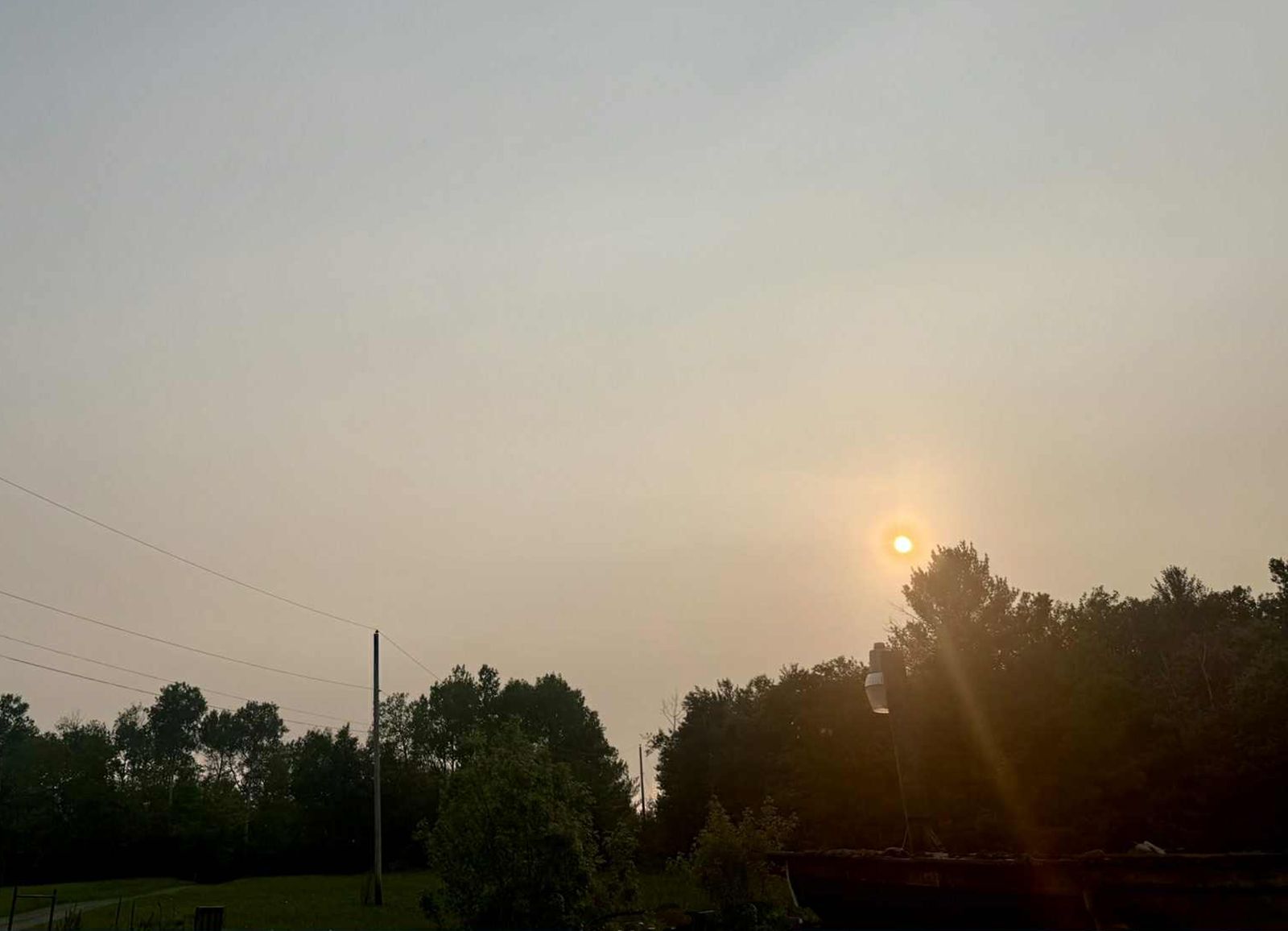
Public Health Sudbury and Districts reminds people that wildfire smoke can pose health risks
Article content Environment and Climate Change Canada has issued an air quality statement for Greater Sudbury and surrounding communities as smoke from ongoing wildfires continues to affect the region. The advisory covers Greater Sudbury, Manitoulin Island, West Nipissing, French River, Espanola, Massey, Killarney, Chapleau and Missinaibi Lake. Recommended Videos Public Health Sudbury and Districts is reminding residents that wildfire smoke can pose health risks, particularly for vulnerable groups, including older adults, pregnant people, infants and young children, smokers, people who work or exercise outdoors, and those with existing heart, lung, cancer or diabetes-related conditions.
“Mild symptoms from wildfire smoke can usually be treated at home and may include a mild cough, headache, and eye, nose, or throat irritation,” said Adam Ranger, environmental support officer with Public Health Sudbury and Districts’ Health Protection Division. People experiencing more serious symptoms are encouraged to seek medical advice through Health811 by visiting health811.ontario.ca or calling 811. In an emergency, call 911.
“Watch out for severe cough, wheezing, difficulty breathing, asthma attacks, dizziness, chest pain, and irregular heartbeat,” Ranger said. Health officials say the best way to protect yourself is to limit exposure to smoke. People are encouraged to reduce strenuous outdoor activity, keep windows and doors closed, and use a portable air purifier when possible.
Those who must spend time outdoors may benefit from wearing a well-fitted NIOSH-certified N95 or elastomeric respirator to reduce exposure to fine smoke particles. Additional recommendations include: * Checking the Air Quality Health Index (AQHI) before heading outdoors and signing up for alerts through the WeatherCAN app. * Using the highest-quality furnace or ventilation filter recommended by the manufacturer, ideally a MERV 13-rated filter.
* Spending time in air-conditioned public spaces such as community centres, libraries or shopping malls if indoor air quality at home is poor. * Paying attention to mental health and well-being during prolonged smoke events.
Officials note that air quality conditions can change quickly and residents should continue monitoring forecasts and advisories. For more information, visit phsd.ca or airqualityontario.com, or contact Public Health at 705-522-9200.
- Published
- Jul 14, 2026
- Updated
- Jul 14, 2026
- Source
- Thesudburystar
- Category
- Environment
- Read time
- 2 min
Key facts
Why this matters locally
This environment story matters locally because it may affect readers, businesses, commuters, families, or public services in British Columbia.
Local impact
BC Post links this item to British Columbia coverage so readers can follow related city updates, weather, traffic, events, and category news in one place.
Timeline
Source and credit
BC Post may summarize, organize, and add local context for reader clarity. Original reporting remains with the listed publisher.
Related Articles
View all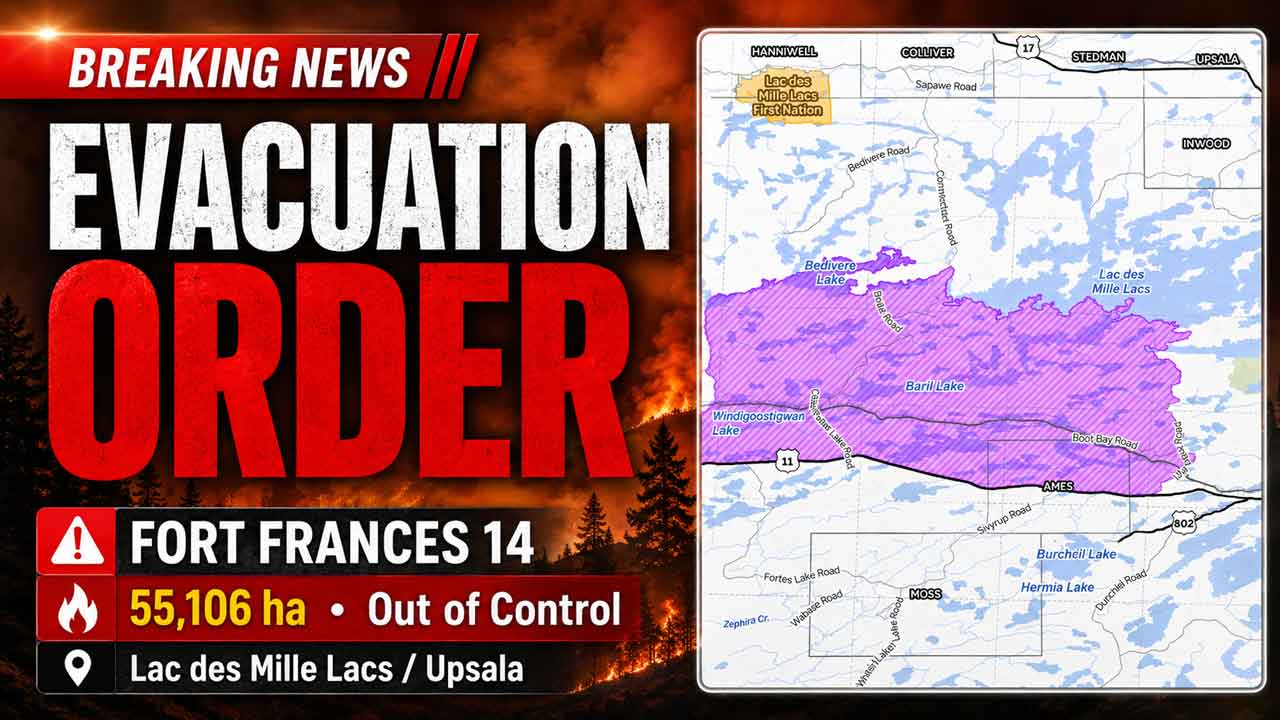 Environment
Updated Evacuation Information for Wildfire Fort Frances 14 (July 17 2026)
Environment
Updated Evacuation Information for Wildfire Fort Frances 14 (July 17 2026)
 Environment
50-hectare wildfire burns between Clearwater and 100 Mile House
Environment
50-hectare wildfire burns between Clearwater and 100 Mile House
 Environment
2 wildfires north of Anahim Lake currently out-of-control
Environment
2 wildfires north of Anahim Lake currently out-of-control
 Environment
Port Coquitlam mayor launches program that removes graffiti on public property within 48 hours
Environment
Port Coquitlam mayor launches program that removes graffiti on public property within 48 hours
 Environment
A powerful movement of healing arrives at Delta’s Discovery Centre
Environment
A powerful movement of healing arrives at Delta’s Discovery Centre
 Environment
'Fending for ourselves' after Manitoba wildfire forces evacuation: O-Pipon-Na-Piwin leaders
Environment
'Fending for ourselves' after Manitoba wildfire forces evacuation: O-Pipon-Na-Piwin leaders
More Local Coverage
Latest news Business
AI Market Trends: Q2 2026 Review and Forecast
Business
AI Market Trends: Q2 2026 Review and Forecast
 Politics
Powerful pro-life ad featuring boxing legend to air during final World Cup matches
Politics
Powerful pro-life ad featuring boxing legend to air during final World Cup matches
 Top
‘Entire city’ asked to help search for missing 11-year-old Parker: Calgary police
Top
‘Entire city’ asked to help search for missing 11-year-old Parker: Calgary police