


From courtroom confessions to Dark Harbour's drying stones, New Brunswick's love affair with dulse runs deep
Article content If reports of criminal activity are a good way to judge a thing’s popularity, by the turn of the century dulse was exceptionally popular. The Evening Times newspaper reported in 1905 that Saint John shop owner Mrs. Sinclair had Johnny Elliott and Eddie Walsh charged with stealing money and dulse from her shop. At their trial, the two young boys (who refused to refer to Sinclair by name, instead calling her “The Old Hag”) denied taking the money but admitted to stealing the dulse.
The judge, however, considered dulse-theft fair game, stating: “It was common for Saint John people to help themselves to other people’s dulse.” He not only dismissed the case but also admitted to a little dulse-theft of his own, declaring that: “If such charges were always brought to court, he might be in Dorchester (prison) himself.” Later that same summer, a particularly hapless reporter from Michigan visited Saint John.
She’d never seen the ocean before and was “excited to take in the scenery,” only to be completely enveloped in fog. Shocked at seeing locals eating dulse, she gamely collected and ate her own. “Why, this is great!”
a local reporter for the Daily Telegraph quoted her saying, before adding to his readers in parentheses: “(it was just common, everyday seaweed).” It was during the First World War that dulse became more popular and commercialized. Charlotte County men fighting in the trenches longed for it.
New Brunswick responded by developing a way to seal dulse for freshness, and creating a state-sponsored dulse monopoly, wary that a foreign entity would swoop in and profit from dulse demand. In the 1920s and ’30s, dulse demand grew exponentially. So did the number of articles penned by baffled American reporters travelling to dulse’s homeland to see what all the fuss was about.
The best dulse came from Dark Harbour, Grand Manan. In 1937, American reporter Anne E. Perkins voyaged to Dark Harbour to find fresh dulse, which, she wrote, was more than just a food on the island: “On Grand Manan, mothers often use seaweed as a pacifier for babies, many of whom develop a lifelong taste for dulse.” She arrived on Grand Manan to find a decidedly modern island home to some 3,000 people.
It even had electricity. (Power had only first arrived on the island three years earlier, and few homes were yet hooked up.) The first thing she noticed was that the one road running the length of the island’s east side was in exceptionally good shape.
(This was actually an era-specific sign of poverty – during the Great Depression, New Brunswickers who were unable to pay their taxes could do roadwork instead.) Crime, Perkins heard, was practically unheard of. Once, she was told, when the island’s lone sheriff went on vacation, he gave the island’s only prisoner a key to the jail, in case of fire.
Although Prohibition was over and done with in Canada by 1937, liquor remained banned on Grand Manan. “A drunken man is almost a curiosity,” Perkins wrote, noting: “the nearest place that liquor may be bought is in St. Stephens.” The largest population centre on the island was North Head, where amenities were centred, including a library, dentist, barber, bank, schools, churches, post offices, a hotel, boarding houses, and what Perkins called “movies of an unpretentious nature.”
“North Head residents regard it as quite gay and metropolitan, in comparison with quiet other places,” she wrote. By contrast, the quietest part of Grand Manan was Dark Harbour. Perkins wrote: “Dark Harbour is well named for the shadows cast by the surrounding cliffs, but is no longer a harbour.
Dark Harbour is a lagoon enclosed by a natural sea-wall, with towering headlands on either side.” Dark Harbour was on the west side of the island. Virtually all of the people on Grand Manan lived on the east side, but from May to November, dulse gatherers would venture to Dark Harbour to work.
“Fresh dulse is reddish brown in colour and rubbery in texture,” Perkins observed. Finally, Anne E. Perkins got to try dulse. After all that, she found she didn’t much care for it, writing: “I thought it vastly over-estimated as a delicacy.”
Politely, she attributed this to “not having been brought up to eat it from childhood.” In 1934, a reporter from the Eastport Sentinel newspaper described dulse harvesting methods: “It is gathered and spread upon the absolutely clean rocks of the sea wall. It is spread by a peculiar twist of the fingers so that the leaves do not lay flat on the rocks underneath ...
an art not easily acquired. The dried dulse is spread (like) a large carpet and rolled the length of its side, say 20 feet or more.” On a recent trip to Grand Manan, I found that dulsing hasn’t changed that much.
On the road to Dark Harbour, Wayne and Jordan Greene of Greene Sea Harvest showed me the modern methods. They harvest it in Dark Harbour, run it through a difficult-to-explain homemade contraption they call a “dulse-shaker” to clean and fluff the dulse up, explaining that it worked better at getting sand out than fluffing it by hand on a wooden table. Then they spread it in the sun on large stones from the harbour, over a net that improves airflow beneath.
“It’s like a hairdryer,” Wayne Greene told me. He suggested that, though it only became commercialized during the First World War, the edibility of dulse had first been discovered by survivors of the many shipwrecks off Grand Manan who had lived off it. While we spoke, car after car of locals stopped by to ask if it was dry yet.
“A few hours yet,” he told them, explaining to me that dulse takes five to eight hours to dry. Ninety years after Anne E. Perkins’ visit, some things about dulse haven’t changed. “Our sun and the wind makes Dark Harbour the best conditions to dry dulse in,” Greene told me, “the best conditions in the world.”
The story of the most famous dulsars, the Dark Harbour Hermits, appears in the book ‘Backyard History: Forgotten Stories From Atlantic Canada’s Past.’ Get yours at backyardhistory.ca/books
- Published
- Jul 15, 2026
- Updated
- Jul 15, 2026
- Source
- The Tj News
- Category
- Top
- Read time
- 5 min
Key facts
Why this matters locally
This top story matters locally because it may affect readers, businesses, commuters, families, or public services in British Columbia.
Local impact
BC Post links this item to British Columbia coverage so readers can follow related city updates, weather, traffic, events, and category news in one place.
Timeline
Source and credit
BC Post may summarize, organize, and add local context for reader clarity. Original reporting remains with the listed publisher.
Related Articles
View all Top
Rock the Lake celebrated its ninth year at Prospera Place this past weekend
Top
Rock the Lake celebrated its ninth year at Prospera Place this past weekend
 Top
Million-dollar contract awarded for Surrey Sport & Leisure Complex renos
Top
Million-dollar contract awarded for Surrey Sport & Leisure Complex renos
 Top
MLA Jordan Kealy to face jury in sexual assault case
Top
MLA Jordan Kealy to face jury in sexual assault case
 Top
BCWS aircraft helping Kamloops firefighters battle grass fire above Shuswap Road
Top
BCWS aircraft helping Kamloops firefighters battle grass fire above Shuswap Road
 Top
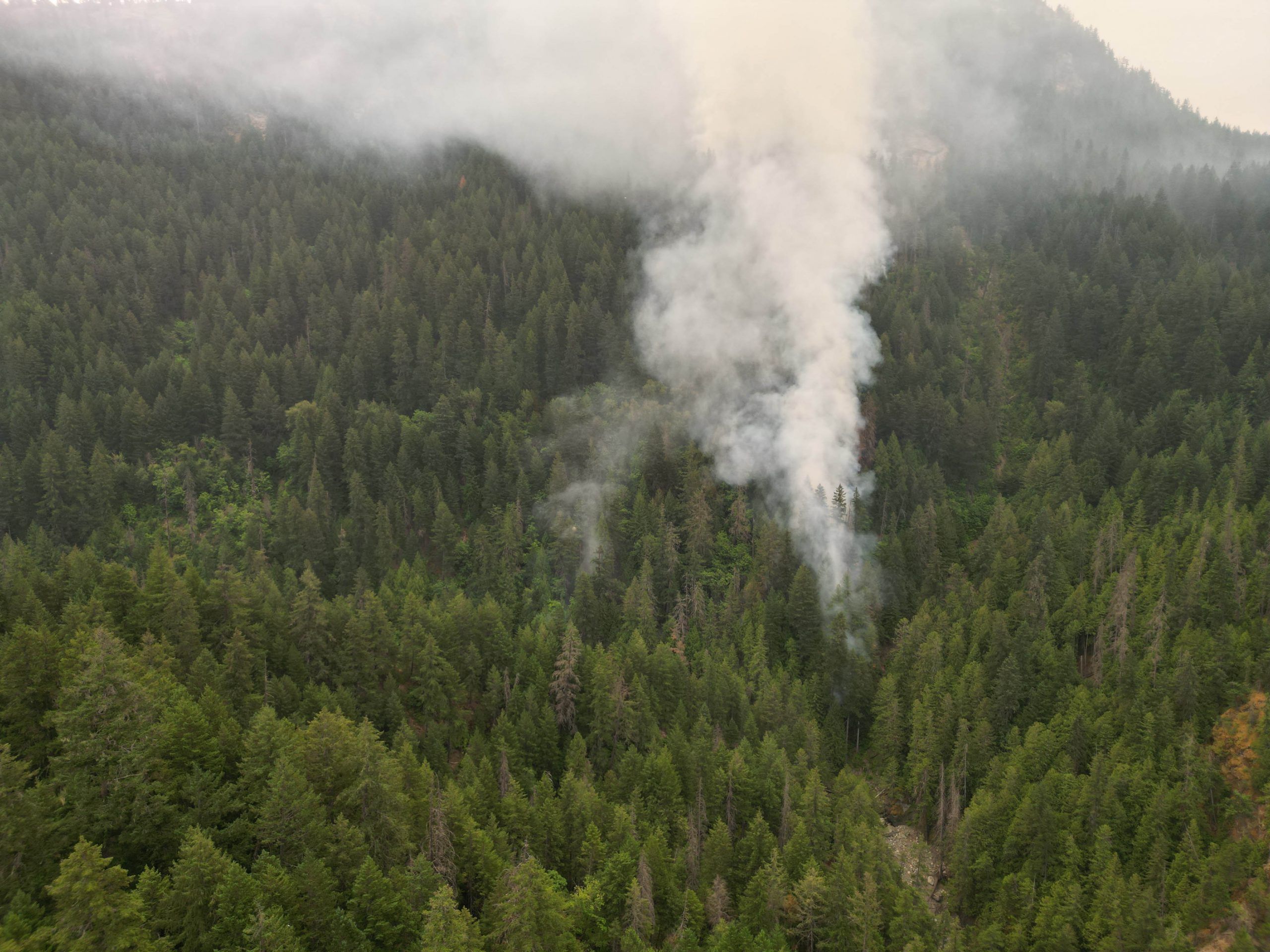
Brunswick Creek wildfire grows, leads to air quality warning in east Fraser Valley
Top
Brunswick Creek wildfire grows, leads to air quality warning in east Fraser Valley
 Top
'A sacred place': Delta park to get dedicated ash-scattering site
Top
'A sacred place': Delta park to get dedicated ash-scattering site
More Local Coverage
Latest news Business
AI Market Trends: Q2 2026 Review and Forecast
Business
AI Market Trends: Q2 2026 Review and Forecast
 Politics
Powerful pro-life ad featuring boxing legend to air during final World Cup matches
Politics
Powerful pro-life ad featuring boxing legend to air during final World Cup matches