


A brief period of intense heat is being followed by thunderstorms across southern B.C., raising concerns that lightning could ignite fires in already dry forests.
Lightning raises wildfire concerns for B.C.'s southern Interior Experts warn thousands of lightning strikes could produce dozens of new wildfire starts A short burst of intense heat is pushing temperatures into the high 30s across parts of B.C.’s southern Interior, just as thunderstorms and lightning move into the region. Environment and Climate Change Canada has issued heat warnings for the Okanagan Valley, Lillooet, the South Thompson and the Shuswap. Daytime highs are expected to reach the mid to high 30s, with overnight temperatures in the high teens.
The heat is expected to peak Thursday and ease by several degrees Friday. But forecasters and wildfire experts say the shift could create another concern, with lightning arriving over a region that has been drying for weeks. Environment Canada meteorologist Colin Fong said a warm subtropical air mass moving north is behind the rise in temperatures.
“When you have warm overnight temperatures, that's a concern because that means there's less cooling and less relief from the daytime heat,” Fong said. Warm nights give the body less time to recover before temperatures rise again the next day, he said. “Vulnerable populations like the older population or even the younger population ... tend to be more sensitive to the heat as well,” Fong said.
The Okanagan could also approach daily temperature records, with some locations forecast to come within about one degree of previous highs. “It does have a potential of setting a daily temperature record,” Fong said, referring especially to the Okanagan. Temperatures will cool Friday as a weather system brings showers and thunderstorms, although highs will remain in the upper 20s or low 30s in many areas.
Fong said the thunderstorms could become more significant than the heat itself. The larger concern may be the dryness of the southern Interior and how receptive fuels are to ignition. “With the thunderstorms coming in, those fuels could be ignited, and that could turn out to be kind of the bigger story than the actual heat itself,” Fong said.
Some storms may bring lightning without enough rain reaching the ground to provide meaningful relief. 100 new fires in a day not impossible Mike Flannigan, a professor of wildland fire at Thompson Rivers University, said that at this time of year, every 100 lightning strikes could start one or two fires. “If we get thousands of lightning strikes, it's not impossible to get 100 new fire starts in a day, which is just mind boggling,” Flannigan said.
He said dry conditions can extend below the forest floor into deeper organic material and heavier fallen logs. Once ignited, those fuels can smoulder for long periods and become harder to extinguish. Some lightning-caused fires may remain hidden for a day or two before becoming visible.
Those are known as holdover fires. Flannigan said significant lightning could continue for several days, possibly lasting about a week.
- Published
- Jul 15, 2026
- Updated
- Jul 15, 2026
- Source
- Cbc
- Category
- Environment
- Read time
- 2 min
Key facts
Why this matters locally
This environment story matters locally because it may affect readers, businesses, commuters, families, or public services in British Columbia.
Local impact
BC Post links this item to British Columbia coverage so readers can follow related city updates, weather, traffic, events, and category news in one place.
Timeline
Source and credit
BC Post may summarize, organize, and add local context for reader clarity. Original reporting remains with the listed publisher.
Related Articles
View all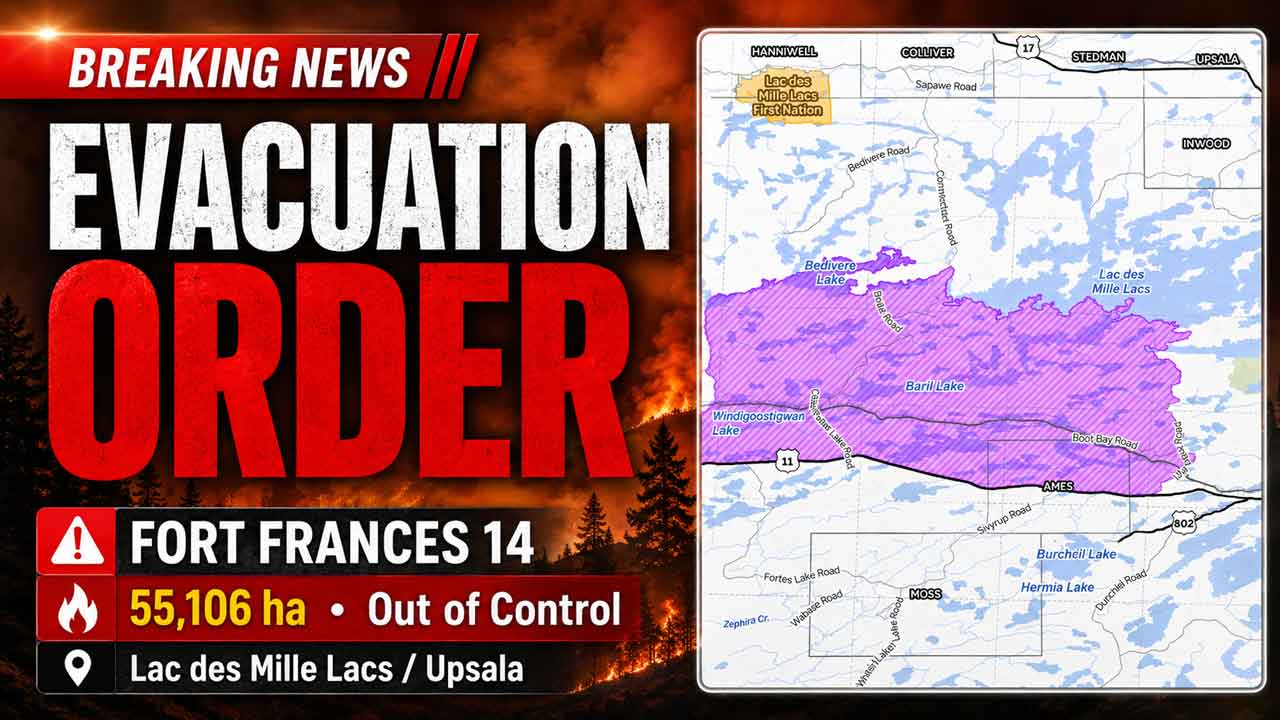 Environment
Updated Evacuation Information for Wildfire Fort Frances 14 (July 17 2026)
Environment
Updated Evacuation Information for Wildfire Fort Frances 14 (July 17 2026)
 Environment
50-hectare wildfire burns between Clearwater and 100 Mile House
Environment
50-hectare wildfire burns between Clearwater and 100 Mile House
 Environment
2 wildfires north of Anahim Lake currently out-of-control
Environment
2 wildfires north of Anahim Lake currently out-of-control
 Environment
A powerful movement of healing arrives at Delta’s Discovery Centre
Environment
A powerful movement of healing arrives at Delta’s Discovery Centre
 Environment
Port Coquitlam mayor launches program that removes graffiti on public property within 48 hours
Environment
Port Coquitlam mayor launches program that removes graffiti on public property within 48 hours
 Environment
'Fending for ourselves' after Manitoba wildfire forces evacuation: O-Pipon-Na-Piwin leaders
Environment
'Fending for ourselves' after Manitoba wildfire forces evacuation: O-Pipon-Na-Piwin leaders
More Local Coverage
Latest news Business
AI Market Trends: Q2 2026 Review and Forecast
Business
AI Market Trends: Q2 2026 Review and Forecast
 Politics
Powerful pro-life ad featuring boxing legend to air during final World Cup matches
Politics
Powerful pro-life ad featuring boxing legend to air during final World Cup matches
 Local News
Cowichan sports shorts: rugby, hockey, biking
Local News
Cowichan sports shorts: rugby, hockey, biking