

Several rare birds have already been spotted this summer in NL, while cones and berries mean there will be plenty of food sources
A couple of columns ago, I mentioned how the number of visiting bird watchers increases the probability of rare birds being found during the summer. In mid-June a rare tricoloured heron was discovered in Lockston Path Provincial Park by a birder from Pennsylvania. It was not a new bird for the provincial list, but it was the first time it was seen for a good many Newfoundland and Labradorian birders.
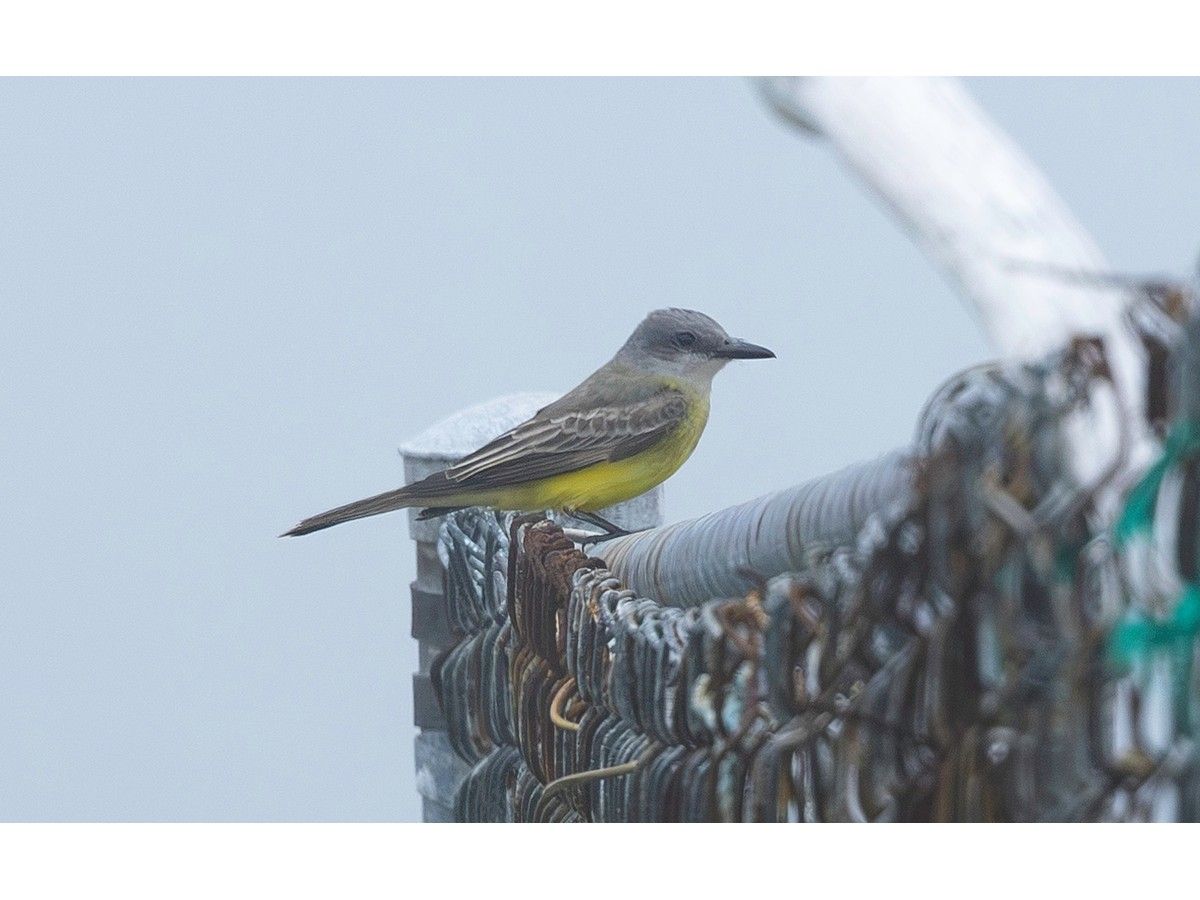
Well, it happened again. This time, it was a bird tour group led by Chris Charlesworth from British Columbia that found the rare bird, and it was a big one. It was a tropical kingbird at the St. Shotts Light Station on July 4, a first-ever for the province.
Where is the tropical kingbird normally found? The tropical kingbird is common throughout the Central American countries and north into southern Texas. Despite its southern range, it does have a long-standing record of wandering well to the north.
It has previously been seen in Canada at British Columbia, Ontario, New Brunswick and Nova Scotia. Charlesworth, being an active birder, knew the importance of getting the word out quickly to the Newfoundland birding group. It was already mid-afternoon when they discovered the kingbird with a bright yellow belly.
St. Shotts is a two-hour drive from St. John’s. Eight Newfoundland birders got there before dark and saw the prize bird. The very foggy conditions made finding it most difficult.
Photography challenges were nearly impossible. It was no doubt the foggiest conditions this and most other tropical kingbirds have ever experienced! The kingbird was catching large insects on the ground, including bees.
It had the thick bill required to subdue these large insects. This was no whimp of a kingbird. The next morning, 15 or so hopeful observers looked in vain for the rare kingbird.
Even when the fog lifted, the brazen yellow-breasted kingbird was not to be found. Why did this kingbird come here? The previous week, the whole eastern half of the United States was experiencing an intense heat wave accompanied by a prevailing southwest air flow.
Most likely, this weather helped lift the kingbird to Newfoundland. Where it went the next day is anyone’s guess. Rare grosbeak spotted in Goulds Meanwhile, at Bidgoods Park in Goulds, another bird tour group of birdwatchers led by local Newfoundlander Jared Clarke glimpsed what turned out to be another far western bird, a black-headed grosbeak.
If it were not for a photograph taken by a tour participant just before it flew off, we would never have known for sure what it was. It was only the third record of black-headed grosbeak for Newfoundland and Labrador. Was there any connection between the appearance of the tropical kingbird and black-headed grosbeak at the same time?
We will watch to see if a pattern develops down the road. Birdwatching always has some awesome little mysteries to figure out. Signs of plentiful food sources a boon for birdwatchers Other parts of the birding world are more predictable, like the current influx of white-winged crossbills across the province.
It was exciting to note the development of a substantial cone crop on the balsam fir and white spruce trees during the month of June. It is now obvious we are in for a truly bumper cone crop. In past years, when there was an impending big cone crop, white-winged crossbills magically began appearing.
And it has happened again this year. The crossbills began showing up in mid-June. By mid-July, they are widespread, with the males singing and displaying.
They want to initiate nesting now because they know there will be an abundance of food for the young crossbills in fall, soon after they leave the nest. Not only is there a good cone crop ahead, but the abundance of flowers on the dogberry trees indicates a bountiful crop of berries down the line. The hills will be red with berries this fall.
Between the cones and the berries, there will be an abundance of food in the woods this fall and winter. The woods will be alive with birds. But hey, we will talk more about this in a few months.
These are like birds in the bank. We have some important summer to enjoy first. We are still enjoying the capelin season and the associated birds.
It has been an OK capelin spawning season so far on the Avalon Peninsula. They have spawned at most beaches where they traditionally do so, but perhaps not as often or in such large numbers as in a really good year. Related bird-watching activities have been a bit sparse.
Good numbers of shearwaters have been seen off Cape Spear and Cape Race, but for brief periods of time rather than for days at a time. We have until the end of July, at least, to enjoy the birdwatching benefits that come with the capelin.
- Published
- Jul 13, 2026
- Updated
- Jul 13, 2026
- Source
- Pniatlantic
- Category
- Weather
- Read time
- 4 min
Key facts
Why this matters locally
This weather story matters locally because it may affect readers, businesses, commuters, families, or public services in British Columbia.
Local impact
BC Post links this item to British Columbia coverage so readers can follow related city updates, weather, traffic, events, and category news in one place.
Timeline
Source and credit
BC Post may summarize, organize, and add local context for reader clarity. Original reporting remains with the listed publisher.
Related Articles
View all Weather
Markets don’t care what you paid: The dangers of getting too attached to a stock
Weather
Markets don’t care what you paid: The dangers of getting too attached to a stock
 Weather
Welcome to the climate emergency, Kingston
Weather
Welcome to the climate emergency, Kingston
 Weather
7 'coolcation' destinations around the world to beat the summer heat
Weather
7 'coolcation' destinations around the world to beat the summer heat
 Weather
'No happy medium': Cape Breton farms adapt to weather extremes
Weather
'No happy medium': Cape Breton farms adapt to weather extremes
 Weather
U17 Astros open Provincials with 15-0 and 8-1 wins
Weather
U17 Astros open Provincials with 15-0 and 8-1 wins
 Weather
Calgary weather: Daytime highs in the high 20s for most of this week
Weather
Calgary weather: Daytime highs in the high 20s for most of this week
More Local Coverage
Latest news Politics
Powerful pro-life ad featuring boxing legend to air during final World Cup matches
Politics
Powerful pro-life ad featuring boxing legend to air during final World Cup matches
 Business
AI Market Trends: Q2 2026 Review and Forecast
Business
AI Market Trends: Q2 2026 Review and Forecast