

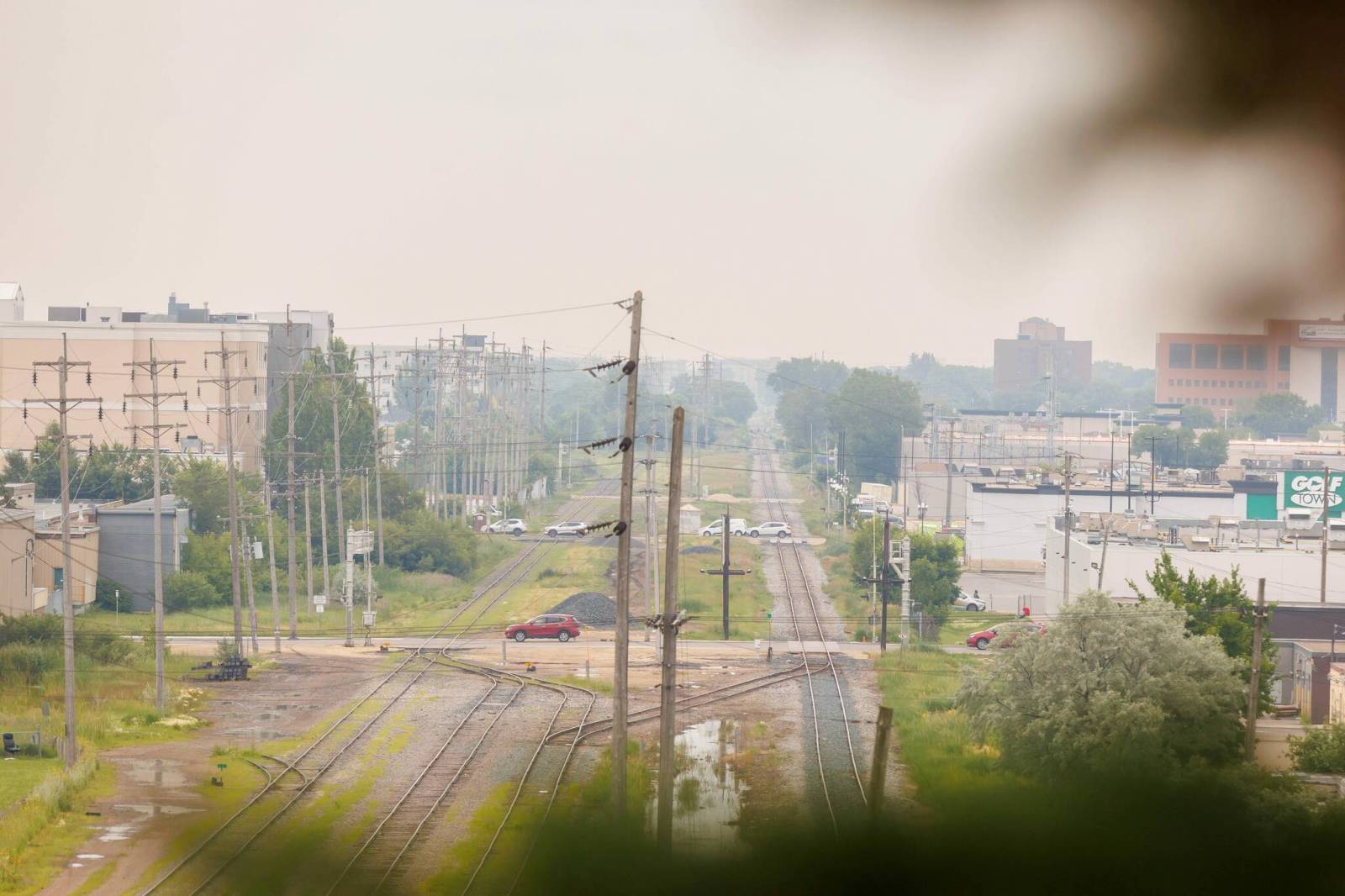
The magnitude of climate change denial slapped me in the face in — of all places — the grassy parking lots at the Winnipeg Folk Festival. Back for a visit [...]
To continue reading, please subscribe: Digital Subscription One year of digital access for only $205* - Enjoy unlimited reading on winnipegfreepress.com - Read the E-Edition, our digital replica newspaper - Access News Break, our award-winning app - Play interactive puzzles To continue reading, please subscribe: Add Free Press access to your Brandon Sun subscription for only an additional $1 for the first 4 weeks* The magnitude of climate change denial slapped me in the face in — of all places — the grassy parking lots at the Winnipeg Folk Festival.
Back for a visit to see my daughter and hear some live music, I found myself weaving through row upon row of vehicles stacked on the hard-packed fields of Birds Hill park, east of the main Folk Festival site. We had strategically parked at the far east end of that lot to avoid being caught in the crush of fans trying to leave after the last show. Unfortunately, that made a simple trip back to the car to restock on sunscreen a bit of a hike.
It was early afternoon, and so hot that it admittedly it was hard to breathe. The weather app on my phone claimed it was 39 C and I had no reason to doubt it.
As I snaked my way though the cars, I started to notice something remarkable: several of the cars I was passing were idling. Some had people inside leaning face-first towards the air conditioning vents in a desperate bid to get some relief from the heat. But at least two vehicles did not appear to have passengers inside.
I peered through windows of two SUVs, engines labouring to keep the air conditioning on, and could not see anyone. If you’ve lived in Manitoba, you know that idling vehicles in a parking lot is not unusual. In the winter, people leave their vehicles idling to ensure they are warm when we get inside; in the summer, you don’t have to look hard to find people sitting in idling vehicles, eating a sandwich or talking on the phone, to escape the heat.
But I had never seen someone leave a vehicle unattended, air conditioning blasting away, in the middle of a summer when “heat domes” have become part of our daily vernacular and wildfire smoke is more the rule than the exception. In the face of those two disturbing trends, how could we be so casual about idling our cars? Largely because a) it’s something we’ve always done and b) because we are living in climate change denial.
Surveys typically find that about half of all Canadian vehicle owners admit to idling to beat the cold or heat. We do this even though automobile manufacturers and government regulators say that idling is the least effective way of warming or cooling a car. Subject matter experts recommend driving a car in the winter to generate warmth, or driving with the windows down to vent hot air to improve the performance of air conditioning in the summer.
Contrary to what your uncle who can change the oil in his own car tells you, idling burns way more gasoline than turning it off and re-starting it. Sitting in place, engine running, is one the most wasteful and damaging things you can do to or with your vehicle. So, why would we continue to do something so wasteful and ineffective at a time when gasoline is so expensive and climate change driven by CO2 emissions, much of it from automobiles, is raising temperatures and triggering extreme weather events?
Put all those things together and you would think that a broad consensus would have been forged to take all possible steps to reduce our consumption of fossil fuels. Like, not leaving your car unattended, running, and with the air conditioner blasting. Not so.
Recent studies on the psychology of climate change denial suggest that we idle, and do other stupid things that contribute to climate change, for convenience, political ideology or to avoid facing the awful truth that we may have pushed the planet past the point where it can be saved. Most psychologists who have studied this phenomenon think that effective communication that connects our daily habits with climate change will eventually get us all pulling in the same direction. Honouring that advice, here are some truly astonishing and alarming things about extreme heat and wildfires.
The Canadian Climate Institute says the wildfire season starts earlier, lasts longer and is growing so big and intense, they defy our better efforts at containment. There have been so many incredibly intense fires that some — called zombie fires — burn underground throughout the winter. How does climate change contribute to all this?
The increased heat dries out our forests, making them more susceptible to fire. Things are so warm and dry now across Canada that the likelihood of large, severe fires has more than doubled in recent years. These same findings can be found in climate science agencies around the world that study the impacts of rising temperatures from carbon emissions.
Even NASA in the United States is singing with this chorus, which is saying something given the U.S. is being led by climate change deniers. So, rather than denying the reality of climate change, why not try something different? Use a fan, dunk your head in a bucket of water, find shade, or even increase your intake of cool treats.
But for goodness sake, turn off your vehicle. It’s killing us. dan.lett@freepress.mb.ca Dan Lett is a columnist for the Free Press, providing opinion and commentary on politics in Winnipeg and beyond.
Born and raised in Toronto, Dan joined the Free Press in 1986. Read more about Dan. Dan’s columns are built on facts and reactions, but offer his personal views through arguments and analysis.
The Free Press’ editing team reviews Dan’s columns before they are posted online or published in print — part of the our tradition, since 1872, of producing reliable independent journalism. Read more about Free Press’s history and mandate, and learn how our newsroom operates. Our newsroom depends on a growing audience of readers to power our journalism.
If you are not a paid reader, please consider becoming a subscriber. Our newsroom depends on its audience of readers to power our journalism. Thank you for your support.
- Published
- Jul 17, 2026
- Updated
- Jul 17, 2026
- Source
- Winnipeg Free Press
- Category
- Canada
- Read time
- 5 min
Key facts
Why this matters locally
This canada story matters locally because it may affect readers, businesses, commuters, families, or public services in British Columbia.
Local impact
BC Post links this item to British Columbia coverage so readers can follow related city updates, weather, traffic, events, and category news in one place.
Timeline
Source and credit
BC Post may summarize, organize, and add local context for reader clarity. Original reporting remains with the listed publisher.
Related Articles
View all Canada
Port of Vancouver expansion project referred to Canada’s Major Projects Office
Canada
Port of Vancouver expansion project referred to Canada’s Major Projects Office
 Canada
Wildfire crews on alert as lightning arrives in parts of tinder-dry B.C.
Canada
Wildfire crews on alert as lightning arrives in parts of tinder-dry B.C.
 Canada
B.C. officials brace for increased wildfire activity from dry lightning
Canada
B.C. officials brace for increased wildfire activity from dry lightning
More Local Coverage
Latest news Local News
Cowichan sports shorts: rugby, hockey, biking
Local News
Cowichan sports shorts: rugby, hockey, biking
 Top Stories
Yukon minerals work still under review despite federal announcement
Top Stories
Yukon minerals work still under review despite federal announcement
 Top Stories
Hotel bookings during World Cup down from last year, but B.C. minister sees positives
Top Stories
Hotel bookings during World Cup down from last year, but B.C. minister sees positives