

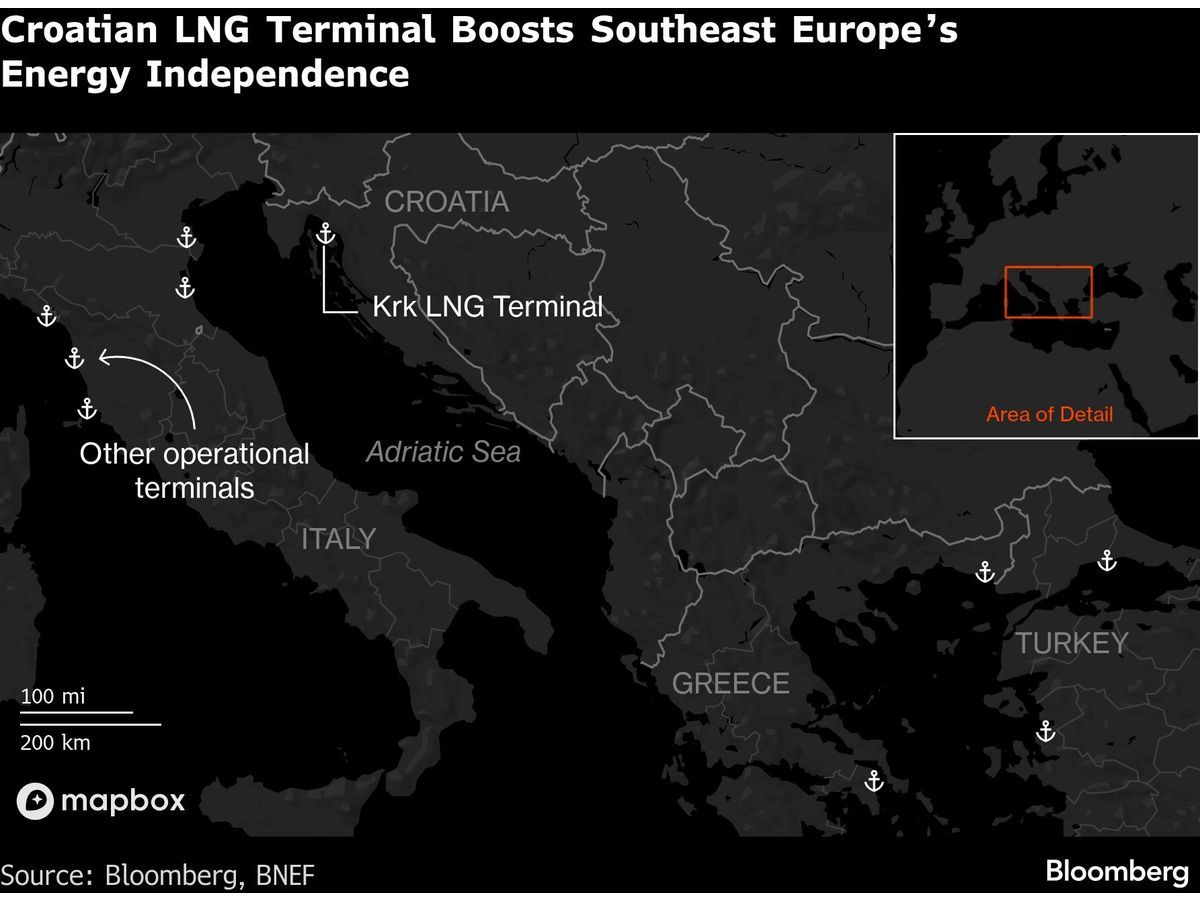
Croatia plans to expand capacity at its sole liquefied natural gas terminal by almost 30%, potentially boosting energy supplies to Ukraine.
(Bloomberg) — Croatia plans to expand capacity at its sole liquefied natural gas terminal by almost 30%, potentially boosting energy supplies to Ukraine. Commercial capacity at the terminal, situated on the Adriatic island of Krk, is set to increase by 1 billion cubic meters a year to 4.5 billion a year in early 2027, LNG Croatia Managing Director Ivan Fugas said in an interview. “We plan to hold an auction for increased capacity in the first quarter next year, with the contracts lasting until 2040,” Fugas said in Zagreb.
“Our terminal’s expansion could best serve Ukraine.” Several countries in eastern Europe have said they’re looking for more options to import LNG in an effort to diversify supplies, lower prices and boost energy security. Ukraine, in particular, relies on shipments from the European Union when demand spikes in winter and when Russian attacks disrupt its own output.
“LNG Croatia’s prices are among the lowest in Europe, especially if you make a comparison on the basis of joint terminal and pipeline costs,” Fugas said. “If in the auction next year we sell all the capacity, we may consider adding even more capacity, but that decision has to be made at the state level.” The company’s existing customers, which include local energy firms and a couple of Hungarian companies, have already booked capacity until 2036, according to Fugas.
About two-thirds of that gas will come from the US, around 11% from Trinidad and Tobago and about 9% from Algeria, he said. “The war in the Middle East so far hasn’t affected deliveries at all,” Fugas said, though “that could change if the situation persists in the long term.” —With assistance from Elena Mazneva and Slav Okov.
- Published
- Jul 15, 2026
- Updated
- Jul 15, 2026
- Source
- Financial Post
- Category
- Top
- Read time
- 1 min
Key facts
Why this matters locally
This top story matters locally because it may affect readers, businesses, commuters, families, or public services in British Columbia.
Local impact
BC Post links this item to British Columbia coverage so readers can follow related city updates, weather, traffic, events, and category news in one place.
Timeline
Source and credit
BC Post may summarize, organize, and add local context for reader clarity. Original reporting remains with the listed publisher.
Related Articles
View all Top
Rock the Lake celebrated its ninth year at Prospera Place this past weekend
Top
Rock the Lake celebrated its ninth year at Prospera Place this past weekend
 Top
Million-dollar contract awarded for Surrey Sport & Leisure Complex renos
Top
Million-dollar contract awarded for Surrey Sport & Leisure Complex renos
 Top
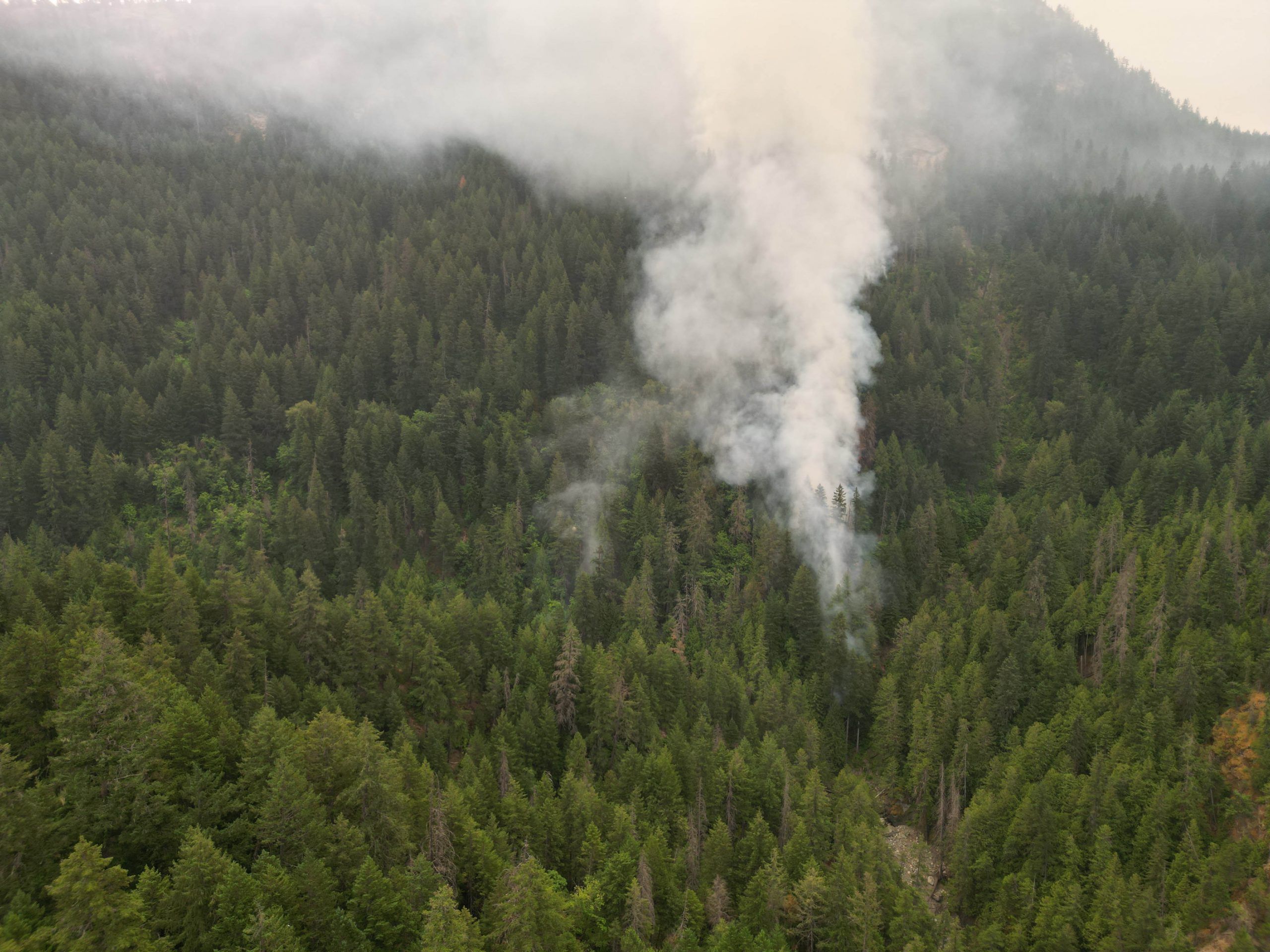
Brunswick Creek wildfire grows, leads to air quality warning in east Fraser Valley
Top
Brunswick Creek wildfire grows, leads to air quality warning in east Fraser Valley
 Top
'A sacred place': Delta park to get dedicated ash-scattering site
Top
'A sacred place': Delta park to get dedicated ash-scattering site
 Top
MLA Jordan Kealy to face jury in sexual assault case
Top
MLA Jordan Kealy to face jury in sexual assault case
 Top
BCWS aircraft helping Kamloops firefighters battle grass fire above Shuswap Road
Top
BCWS aircraft helping Kamloops firefighters battle grass fire above Shuswap Road
More Local Coverage
Latest news Business
AI Market Trends: Q2 2026 Review and Forecast
Business
AI Market Trends: Q2 2026 Review and Forecast
 Politics
Powerful pro-life ad featuring boxing legend to air during final World Cup matches
Politics
Powerful pro-life ad featuring boxing legend to air during final World Cup matches
 Local News
Cowichan sports shorts: rugby, hockey, biking
Local News
Cowichan sports shorts: rugby, hockey, biking