

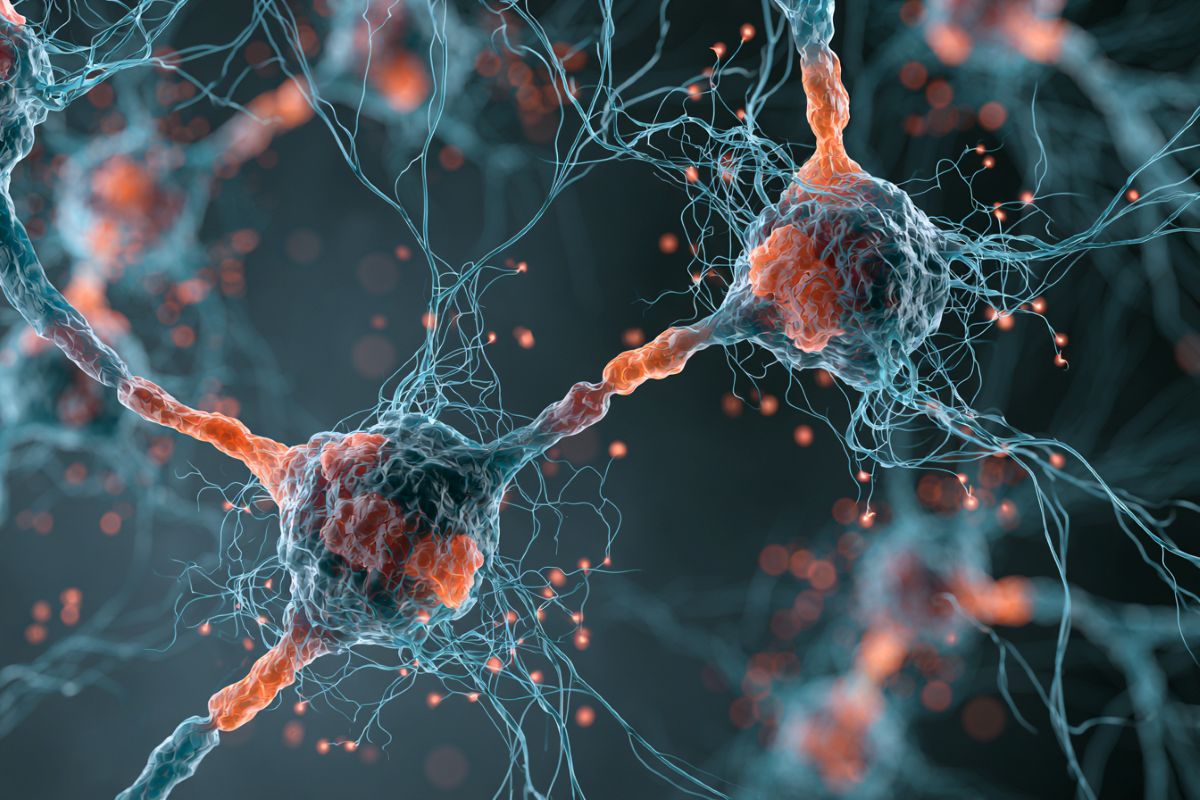
Electroconvulsive therapy (ECT)-like stimulation induces a durable state of cellular dematuration and epigenetic nuclear reprogramming in mature, post-mitotic neurons.
Summary: Researchers engineered a highly specialized patterned stimulation protocol called REPOPS (Repeated Electroconvulsive-like Patterned Optical/Electrical Stimulation) in murine models to precisely mirror the neural activation patterns of ECT. The empirical data unmasked a stunning structural transformation: intensive ECT-like stimulation coaxes fully mature, non-dividing adult neurons to undergo an active process of cellular dematuration. By entering a state of nuclear reprogramming driven unexpectedly by the cell-cycle protein Cyclin B, mature neurons fundamentally reshape their identity, winding back their genetic clocks to resemble highly plastic, early postnatal developmental states.
Key Facts The Cellular Dematuration Framework: Genome-wide transcriptomic profiling unmasked that REPOPS forces mature, fully differentiated adult neurons to suppress their adult genetic markers. Instead, they reactivate gene expression blueprints that match early postnatal development. Widespread genome-wide chromatin mapping confirmed long-lasting structural changes in chromatin accessibility, proving this youthful state is epigentically locked in place for over a month.
Unexpected Post-Mitotic Cell Cycle Re-entry: The most jaw-dropping molecular discovery was that adult neurons, cells that are strictly post-mitotic and can never divide again, suddenly expressed gene networks typically reserved exclusively for the G2/M division phase of proliferating cells. The neurons displayed clear physical hallmarks of mitosis, including widespread histone phosphorylation, the breakdown of the nuclear lamina protective skin, and pronounced chromatin condensation. Cyclin B Isolated as the Molecular Driver: To prove this cell-cycle activation was driving the structural shift rather than acting as a random byproduct, Miyakawa’s lab deployed targeted genome-editing technology.
Mice engineered to lack Cyclin B (the core molecular key required to cross the G2/M phase boundary) exhibited a total failure of nuclear reprogramming and showed zero behavioral improvements following stimulation, identifying Cyclin B as the absolute gatekeeper of ECT efficacy. The “Intermediate State” of Heightened Plasticity: Calcium-flux live imaging in actively behaving mice revealed that REPOPS does not simply act as an on/off switch for neural circuits. Instead, it coaxes the brain into a unique “intermediate state” of intense plasticity.
The network completely shifted how it encoded information, selectively suppressing spatial coding maps while heavily boosting speed-related navigation tracking for over two weeks. Human Validation in the Dentate Gyrus: Transitioning from mice to humans, the team’s reanalysis of postmortem brain tissue from deceased patients with major depression revealed an identical biological footprint. Individuals who had undergone ECT treatments prior to their passing displayed the exact same immature-like gene expression patterns within the dentate gyrus (the primary gateway of the hippocampus) compared to non-ECT patients, confirming human translation.
A Double-Edged Sword for Neurology: Professor Miyakawa emphasizes that this newly uncovered intermediate state is a powerful, highly flexible biological tool. While this extreme boost in structural plasticity is precisely what allows an injured brain to break free from severe depression, the team warns that if the exact same nuclear reprogramming occurs under incorrect or overly aggressive conditions (such as advanced neurodegeneration or epilepsy), it could spin out of control and drive severe pathology.
Source and reference
Source: Fujita Health University Nearly 90 years after Ugo Cerletti and Lucio Bini introduced electroconvulsive therapy (ECT), brain stimulation therapies such as ECT and Repetitive Transcranial Magnetic Stimulation (rTMS) are common in psychiatry because they are highly effective for treating depression and schizophrenia, yet their cellular mechanisms remain poorly understood. The team introduced REPOPS, a form of patterned stimulation in mice designed to mimic key features of ECT-like neuronal activation. Mice subjected to REPOPS showed increased locomotor activity and reduced depression-like behavior, revealing stimulation-induced lasting behavioral changes similar to ECT-like states. At the cellular level, the stimulation induced a state of cellular dematuration, in which adult neurons had gene expression patterns resembling those seen in early postnatal development. Stimulation...
Read original source- Published
- Jul 17, 2026
- Updated
- Jul 17, 2026
- Source
- Neuroscience News
- Category
- Technology
- Read time
- 7 min
Key facts
Why this matters locally
This technology story matters locally because it may affect readers, businesses, commuters, families, or public services in British Columbia.
Local impact
BC Post links this item to British Columbia coverage so readers can follow related city updates, weather, traffic, events, and category news in one place.
Timeline
Source and credit
BC Post may summarize, organize, and add local context for reader clarity. Original reporting remains with the listed publisher.
Related Articles
View all Technology
Transformer-manufacturing company to shut down its Chilliwack facility
Technology
Transformer-manufacturing company to shut down its Chilliwack facility
 Technology
Quebec announces plan to train more aerospace workers as demand surges
Technology
Quebec announces plan to train more aerospace workers as demand surges
 Technology
Apple’s Lawsuit Could Choke OpenAI’s iPhone Rival Before It Even Ships
Technology
Apple’s Lawsuit Could Choke OpenAI’s iPhone Rival Before It Even Ships
 Technology
Spectro Cloud Raises $100 Million Series D to Help Customers Move AI Infrastructure Into Production Across Enterprise, Public Sector, Neocloud and Sovereign Cloud Environments
Technology
Spectro Cloud Raises $100 Million Series D to Help Customers Move AI Infrastructure Into Production Across Enterprise, Public Sector, Neocloud and Sovereign Cloud Environments
 Technology
GO train users could face delays, cancellations due to ‘crew constraints’: Metrolinx
Technology
GO train users could face delays, cancellations due to ‘crew constraints’: Metrolinx
 Technology
Texting a stranger works better to fight loneliness than talking to an AI chatbot
Technology
Texting a stranger works better to fight loneliness than talking to an AI chatbot
More Local Coverage
Latest news Business
AI Market Trends: Q2 2026 Review and Forecast
Business
AI Market Trends: Q2 2026 Review and Forecast
 Politics
Powerful pro-life ad featuring boxing legend to air during final World Cup matches
Politics
Powerful pro-life ad featuring boxing legend to air during final World Cup matches