


The regional district is working to address ongoing water supply challenges amid a historic drought
Emergency operations centre activated to help with North Okanagan water shortage Published 5:00 pm Saturday, July 11, 2026 As an unprecedented drought grips the region, the Regional District of North Okanagan (RDNO) has activated an emergency operations centre to help manage Stage 3 water restrictions and deal with serious water shortages. The emergency operations centre was activated and assigned a task number through Emergency Management and Climate Readiness, allowing staff to investigate available provincial support and coordinate with partner agencies, the RDNO said in a media release Friday, July 10.
The RDNO recognized the region’s dependence on agriculture and said it is working closely with the Ministry of Agriculture and Food, and has hired two dedicated agricultural positions to support outreach, communication and coordination with producers. The regional district has also retained an irrigation specialist to work with major agricultural water users on irrigation scheduling strategies in order to maximize water efficiency while minimizing impacts on crop production, the RDNO said. “Since implementing Stage 3 watering restrictions, (RDNO) staff have been working to address ongoing water supply challenges, support impacted residents and agricultural producers, and identify both immediate and long-term solutions to improve water system resilience,” the press release states.
Stage 3 water restrictions were put in place June 4 and place significant water use limits on agriculturalists, who are now only able to use 30 per cent of their annual allotment prorated from June 14, with water service to be shut off once this limit is reached. Other domestic water use has also been limited, such as washing cars for aesthetic purposes and watering lawns. For those failing to comply with the restrictions, verbal warnings are being issued followed by fines, and potentially water shut-offs for those who persistently contravene.
“While Stage 3 restrictions were necessary to protect our water supply, we recognize the hardship they create,” said Stacey Raftus, RDNO communications officer. “Our staff, partners, and contractors have been working to explore options to increase water supply, support agriculture, and help our communities through this challenging period.” RDNO staff are pursuing opportunities to add to the local water supply, including: • Bringing the Antwerp Deep Well online to help offset declining levels in Duteau Reservoir •
Investigating the feasibility of bringing the Antwerp Shallow Well online • Advancing approvals, engineering, and operational planning to explore connecting the City of Vernon Water Reclamation Centre’s Spray Irrigation Program with Goose Lake Reservoir • Assessing the potential to transfer water from Swan Lake to Goose Lake Reservoir • Working closely with the City of Vernon and District of Coldstream on water conservation plans and priorities These initiatives require regulatory review, engineering assessment, and operational planning, the RDNO said.
“Staff continue to advance this work as quickly as possible while ensuring necessary provincial and federal approvals and environmental considerations are addressed.” While these measures are intended to help address immediate concerns, the RDNO is also focused on longer-term solutions to strengthen water supply reliability and improve drought resilience. Staff said it is working with provincial agencies, local governments, the agricultural sector, and community partners to reduce the impacts of future drought
eventsThe RDNO also said it recognizes that prolonged drought conditions and water restrictions can place significant stress on individuals, families, and businesses, particularly within the agricultural community. Mental health and wellness resources are available for farmers and ranchers through the Ministry of Agriculture and Food. “Water shortages affect more than our landscapes and crops — they affect people,” said Raftus.
“We encourage everyone to take care of themselves, reach out for support when needed, and continue checking in on friends, neighbours, and fellow community members.” AgSafe BC provides free and confidential mental wellness resources, counselling services, training, and support for members of the B.C. agriculture industry. Visit agsafebc.ca for more information.
Agricultural information session upcoming, plus other resources Greater Vernon Water is inviting all agricultural customers to attend an information session at Coldstream Community Hall Tuesday, July 21 at 5 p.m. This meeting will provide an update on current conditions and Stage 3 Water Restrictions. Utility staff, agricultural specialists, and customers will review progress and discuss ongoing efforts.
For farmers, water allocation sharing is being made possible. Agriculturalists can fill out the water allocation adjustment form to apply for the transfer of allocation with another property owner. Both properties must have farm classification to participate.
Partial transfers are permitted, and allocations may be split between one or more eligible properties. Greater Vernon Water has external support available to help agricultural customers share water allocations. If farmers do not expect to use their reduced allocation this season, they can transfer all or part of their remaining allocation to another agricultural customer.
If they need additional water to get through the season, they can contact the agricultural coordinator to be potentially matched with a customer who may have allocation available. The agricultural coordinator can be reached at jess.washtock@gmail.com or 250-804-9260. Producers who are experiencing feed shortages may be able to access feed assistance through the BC Cattlemen’s Association.
Visit cattlemen.bc.ca/accestofeed.htm for more information. Agriculturalists who have crop insurance coverage can contact their Ministry of Agriculture and Food Production Insurance representative by email at 1-888-332-3352. Crop losses occurring as a result of drought and/or regulatory orders issued in relation to drought are covered if you are enrolled in the program.
- Published
- Jul 11, 2026
- Updated
- Jul 11, 2026
- Source
- Penticton Western News
- Category
- Environment
- Read time
- 4 min
Key facts
Why this matters locally
This environment story matters locally because it may affect readers, businesses, commuters, families, or public services in British Columbia.
Local impact
BC Post links this item to British Columbia coverage so readers can follow related city updates, weather, traffic, events, and category news in one place.
Timeline
Source and credit
BC Post may summarize, organize, and add local context for reader clarity. Original reporting remains with the listed publisher.
Related Articles
View all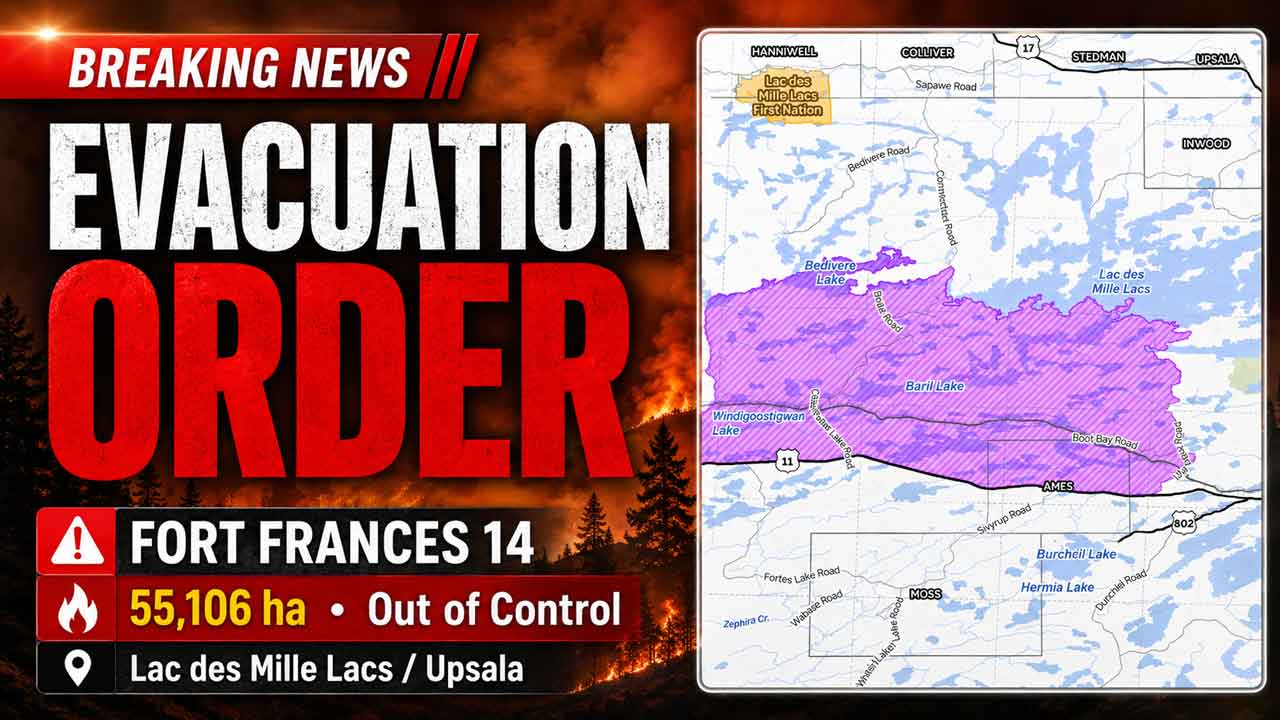 Environment
Updated Evacuation Information for Wildfire Fort Frances 14 (July 17 2026)
Environment
Updated Evacuation Information for Wildfire Fort Frances 14 (July 17 2026)
 Environment
50-hectare wildfire burns between Clearwater and 100 Mile House
Environment
50-hectare wildfire burns between Clearwater and 100 Mile House
 Environment
2 wildfires north of Anahim Lake currently out-of-control
Environment
2 wildfires north of Anahim Lake currently out-of-control
 Environment
A powerful movement of healing arrives at Delta’s Discovery Centre
Environment
A powerful movement of healing arrives at Delta’s Discovery Centre
 Environment
Port Coquitlam mayor launches program that removes graffiti on public property within 48 hours
Environment
Port Coquitlam mayor launches program that removes graffiti on public property within 48 hours
 Environment
'Fending for ourselves' after Manitoba wildfire forces evacuation: O-Pipon-Na-Piwin leaders
Environment
'Fending for ourselves' after Manitoba wildfire forces evacuation: O-Pipon-Na-Piwin leaders
More Local Coverage
Latest news Business
AI Market Trends: Q2 2026 Review and Forecast
Business
AI Market Trends: Q2 2026 Review and Forecast
 Politics
Powerful pro-life ad featuring boxing legend to air during final World Cup matches
Politics
Powerful pro-life ad featuring boxing legend to air during final World Cup matches
 Top
‘Entire city’ asked to help search for missing 11-year-old Parker: Calgary police
Top
‘Entire city’ asked to help search for missing 11-year-old Parker: Calgary police