


Shark experts weigh in on the earlier and more frequent great white sightings in Nova Scotian waters.
Two great white sharks were spotted swimming 800 metres from the shore near Rissers Beach in Petite Rivière, N.S., on Sunday. “Where I am tends to be a place where great white sharks like to frequent. So, I enjoy filming them as a hobby.
I like putting the drone up and seeing if I can find one,” says Dr. Alex de Saint Sardos, who caught the sharks on his drone. “It’s really exciting when you find a shark.” For five years, de Saint Sardos has been filming great white sharks around the Green Bay area.
He says there is a short filming window as the weather and visibility can makes things difficult. But even with a short time frame, he has captured videos of between eight to 10 great whites every summer. Download the CTV News App for breaking news alerts and video on all the top stories “They are just great white sharks; I haven’t filmed any other sharks.
Sometimes I film blue fin tuna and this year sunfish, which I have never seen before, and sometimes big schools of fish and seals,” says de Saint Sardos. He says he looks forward to shark season every year and feels grateful that he’s able to capture the visuals to share with others. He shared the drone footage on his Instagram page .
“Usually, they are just swimming in circles or swimming around. Sometimes they are going from A to B, they’re typically not far from shore. They are usually like 200 to 600 metres from shore.
They are not out in the deep ocean water that I find them, and they aren’t already right in close where people are waiting and swimming,” he explains This year he says shark season seemed to start earlier, spotting them in June as opposed to the normal start in August. Shark expert Neil Hammerschlag says he, too, has noticed the shark sightings earlier this year. “I think that’s probably because the waters kind of warmed early.
Interestingly, the waters were quite cold this spring and then in July the waters warmed up,” says Hammerschlag. The most common sharks in the waters around Nova Scotia are blue sharks, porbeagle, mako and great whites. Hammerschlag has studied sharks for years and says great whites are becoming more prevalent around Nova Scotia’s coasts.
“It’s not that there are more great whites, it’s that the great whites that are within the North Atlantic I think they are spending more time in Nova Scotian waters particularly because they have discovered that we have a healthy ecosystem here, a lot of food and a lot of seals,” says Hammerschlag. For those looking to get up close and personal with these sharks they can contact Hammerschlag to check out the Atlantic Shark Exhibitions . Retired veterinarian and marine biologist Chris Harvey-Clark says record seal numbers are one of the main reasons they’re seeing so many sharks, as well as the protection that came into effect in Canada and the United States in 1997.
“And of course 25 years to maturity we are at the tailpipe of that now, all those little sharks that were protected and survived are now big sharks making little sharks, so you have two demographics colliding, you have more sharks because they were protected and you have almost unlimited food to the border,” says Harvey-Clark. The number of sharks tagged are just a fraction of them out in the water. “There is a shark recapture ratio you can do, it’s like bird banders, used to estimate bird population.
And that figure would put it into the thousands of sharks, something around 5,200 sharks along the entire coastline. It’s not hundreds though, it’s in the thousands,” says Harvey-Clark. There are a number of things these experts say attract sharks to certain areas, a few being lots of seal activity, large groups of fish, whale carcass, and anglers out fishing.
They advise people to stay out of the water in low light periods like dusk or dawn. If you do encounter a shark, Hammerschlag says don’t panic, swim away, and maintain eye contact with the shark. He explains that humans are not something sharks have on their menu, but in the wrong situation you could put yourself at risk of being mistaken as their prey.
“Shark food runs away from sharks so if you maintain your position and if it moves left follow it left, if it moves right, follow it right. That’s because they are ambush predators and like to sneak up on prey, so if you let it know you see it there it often gets uncomfortable and will swim away,” says Hammerschlag. Harvey-Clark says avoid areas where fishermen are cleaning their equipment or areas where there are birds at sea.
“Often what we find is it’s just one pass and they’re gone, but if they are persistently around you or circling you or staying near you, that’s really an incentive to keep your eye on it and get out of the water as quickly as you can,” says Harvey-Clark. Harvey-Clark explains that sharks’ hearing is quite strong and they can detect panicked splashing. If you encounter a shark in a specific area, inform others around you and stay away from that sight for at least four hours.
For more Nova Scotia news, visit our dedicated provincial page
- Published
- Jul 14, 2026
- Updated
- Jul 14, 2026
- Source
- Ctv News
- Category
- Environment
- Read time
- 4 min
Key facts
Why this matters locally
This environment story matters locally because it may affect readers, businesses, commuters, families, or public services in British Columbia.
Local impact
BC Post links this item to British Columbia coverage so readers can follow related city updates, weather, traffic, events, and category news in one place.
Timeline
Source and credit
BC Post may summarize, organize, and add local context for reader clarity. Original reporting remains with the listed publisher.
Related Articles
View all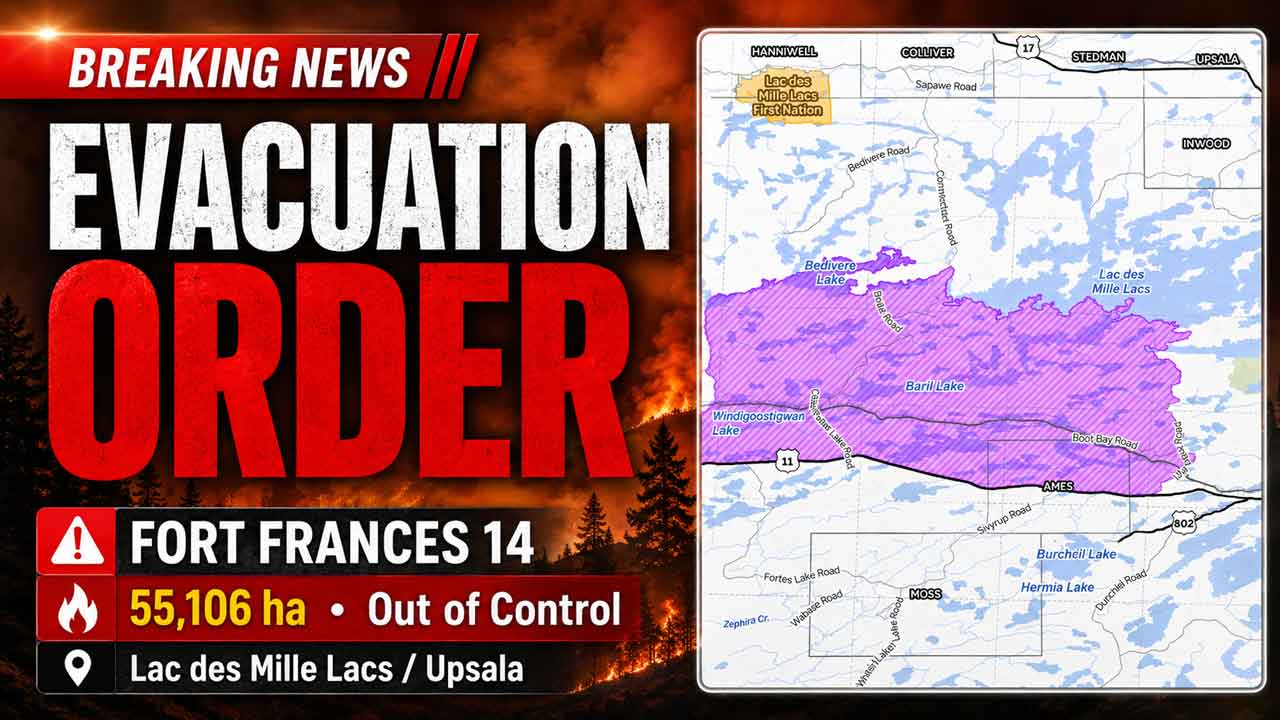 Environment
Updated Evacuation Information for Wildfire Fort Frances 14 (July 17 2026)
Environment
Updated Evacuation Information for Wildfire Fort Frances 14 (July 17 2026)
 Environment
50-hectare wildfire burns between Clearwater and 100 Mile House
Environment
50-hectare wildfire burns between Clearwater and 100 Mile House
 Environment
A powerful movement of healing arrives at Delta’s Discovery Centre
Environment
A powerful movement of healing arrives at Delta’s Discovery Centre
 Environment
Port Coquitlam mayor launches program that removes graffiti on public property within 48 hours
Environment
Port Coquitlam mayor launches program that removes graffiti on public property within 48 hours
 Environment
'Fending for ourselves' after Manitoba wildfire forces evacuation: O-Pipon-Na-Piwin leaders
Environment
'Fending for ourselves' after Manitoba wildfire forces evacuation: O-Pipon-Na-Piwin leaders
 Environment
2 wildfires north of Anahim Lake currently out-of-control
Environment
2 wildfires north of Anahim Lake currently out-of-control
More Local Coverage
Latest news Business
AI Market Trends: Q2 2026 Review and Forecast
Business
AI Market Trends: Q2 2026 Review and Forecast
 Politics
Powerful pro-life ad featuring boxing legend to air during final World Cup matches
Politics
Powerful pro-life ad featuring boxing legend to air during final World Cup matches
 Local News
Cowichan sports shorts: rugby, hockey, biking
Local News
Cowichan sports shorts: rugby, hockey, biking