


High Prairie School Division is dealing with a major problem: too many students are missing school. To fix this, the board is tightening its attendance rules to get kids back in the classroom.
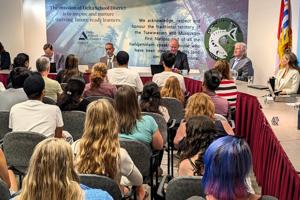
High Prairie School Division is dealing with a major problem: too many students are missing school. To fix this, the board is tightening its attendance rules to get kids back in the classroom. During a regular board meeting on June 16, Attendance Officer Lisa Palko told trustees that parents are often keeping their kids out of class for non-essential reasons.
“We have had children missing school for snuggle time or because parents have a day off work so their child should stay at home to cuddle,” Palko said during the meeting. “It is just a different system of parenting.” The absenteeism numbers presented at the meeting were alarmingly high.
Palko noted that at a single school in Slave Lake, 61 per cent of students in Grades 7 through 12 have missed more than 10 per cent of the school year. The issue begins early in a child’s education. Data showed that 45 per cent of kids in the primary grades are also hitting that 10 per cent absence mark.
Alberta Education generally defines chronic absenteeism as a student missing 10 per cent or more of the school year. Educational research consistently notes that missing this much school can severely impact a child’s ability to learn basic reading and math skills—a concern mirrored by the board. Palko said school principals are sending warning letters to families, but the responses are mixed.
Some parents react with anger, while others offer up a long list of excuses, often blaming medical issues or pointing fingers at school staff. Getting help from the province has proven to be a slow and frustrating process. Palko sent four severe cases to the provincial attendance board in April, but was told the government would not review them until October.
Furthermore, the province usually waits until a student has missed 60 to 70 per cent of the school year before stepping in to help. “By the time students have already been away up to 70 per cent of the time, we are not going to get anywhere with that system,” Palko said. Because of this lack of timely provincial support, the school division is changing its own policies.
For the upcoming school year, the board is dropping its threshold for chronic absence from 15 per cent down to 10 per cent to match provincial standards. Principals will now be required to send warning letters every month. Additionally, teachers will call the families of students with poor attendance records in late August, setting clear expectations before the new school year even begins.
In addition, the board officially accepted the resignation of Superintendent Murray Marran. He will leave his post on Sept. 1, 2026. To find his replacement, the board agreed to spend up to $50,000 to hire an outside consultant.
Until a permanent hire is made, Deputy Superintendent Pam Heckbert will take over as acting superintendent starting Sept. 1. The board also talked about the heavy administrative workload caused by new provincial privacy rules. The division’s technology team recently had to log 96 different items—ranging from visitor sign-in sheets to educational software programs—to comply with the law.
Marran said recent data breaches at other organizations mean the school division must write detailed privacy impact statements to protect student and staff information. The board looked at buying a $70,000 yearly software program to manage all this data, but trustees expressed a strong desire to keep the money in the local community instead. “At this point in time, if I have to pay $70,000 to a computer program or $70,000 to somebody local in the community that really needs a job, I am weighing in on the human side right now,” one trustee said.
“I am sick of being held accountable to some random large company.” For capital projects, the board approved spending up to $65,000 to upgrade computer network switches at Georges P. Vanier School. This upgrade is necessary to keep the school’s internet and internal networks running smoothly.
Administrators are also looking into starting a private Class 5 driving school for local students. Marran said there are not enough driving instructors currently operating in the area. If the division can secure the necessary certified instructors, vehicles, and insurance, the driving school could be up and running by early fall.
During the correspondence portion of the meeting, the board reviewed a letter from the Pembina Hills School Division regarding the unfairness of classroom complexity funding for rural schools. They also reviewed an email from the province detailing updates to literacy and math screening rules connected to Bill 6.
- Published
- Jul 15, 2026
- Updated
- Jul 15, 2026
- Source
- The Record
- Category
- Education
- Read time
- 3 min
Key facts
Why this matters locally
This education story matters locally because it may affect readers, businesses, commuters, families, or public services in British Columbia.
Local impact
BC Post links this item to British Columbia coverage so readers can follow related city updates, weather, traffic, events, and category news in one place.
Timeline
Source and credit
BC Post may summarize, organize, and add local context for reader clarity. Original reporting remains with the listed publisher.
Related Articles
View all Education
Canada extends direct-to-permanent-residence pathway for French-speaking students
Education
Canada extends direct-to-permanent-residence pathway for French-speaking students
 Education
Inside Capilano University's first student housing building at its main campus in North Vancouver
Education
Inside Capilano University's first student housing building at its main campus in North Vancouver
 Education
A Vancouver Teen’s Mission to Bring Endometriosis Education to Schools
Education
A Vancouver Teen’s Mission to Bring Endometriosis Education to Schools
 Education
Burnsview Secondary students pioneer school district's first AI policy
Education
Burnsview Secondary students pioneer school district's first AI policy
 Education
Centurion Foundation Launches National Higher Education Real Estate Platform
Education
Centurion Foundation Launches National Higher Education Real Estate Platform
 Education
FYI Program strengthens UVic students’ sense of belonging
Education
FYI Program strengthens UVic students’ sense of belonging
More Local Coverage
Latest news Business
AI Market Trends: Q2 2026 Review and Forecast
Business
AI Market Trends: Q2 2026 Review and Forecast
 Politics
Powerful pro-life ad featuring boxing legend to air during final World Cup matches
Politics
Powerful pro-life ad featuring boxing legend to air during final World Cup matches