

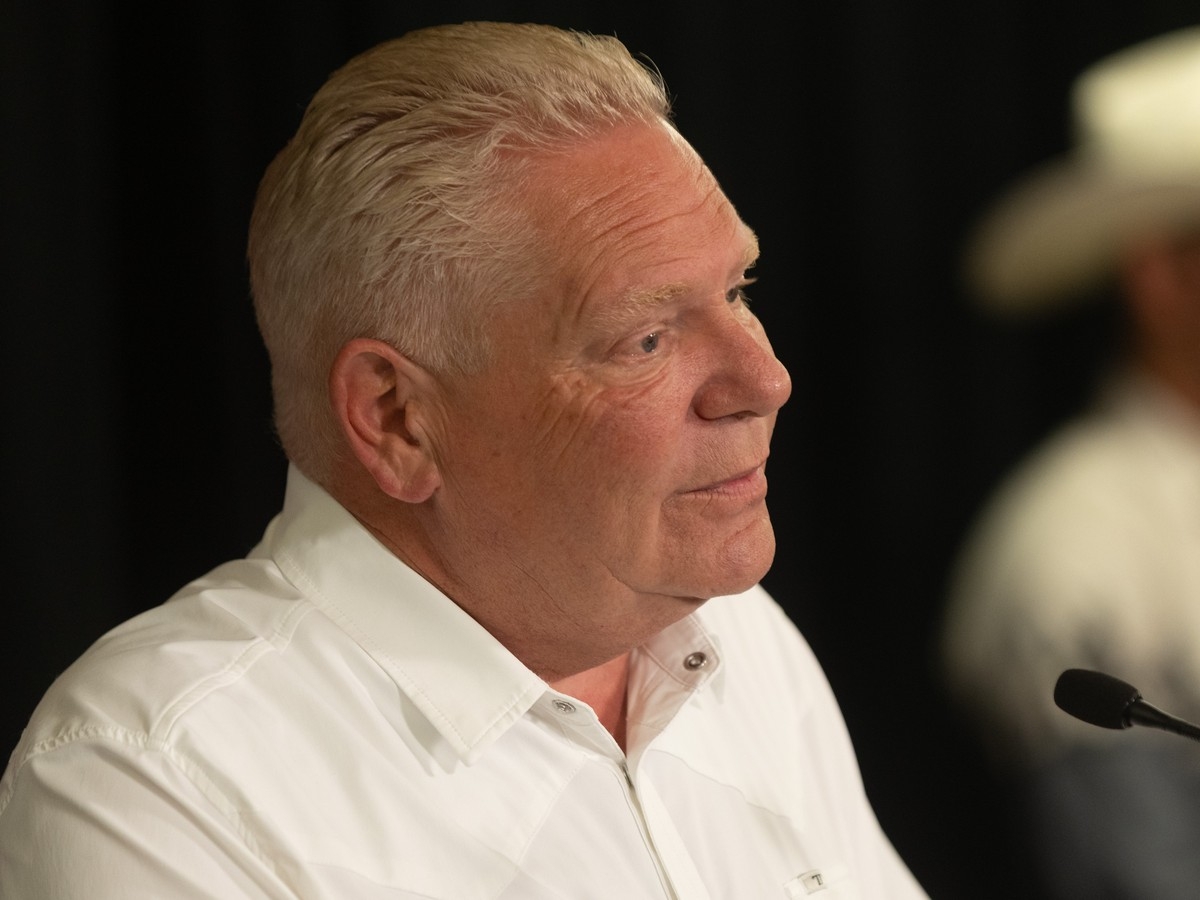
Premier Doug Ford vows to close any loopholes after a ruling extends Ontario Works eligibility to a migrant without legal status.
Article content A member of Ontario’s Social Benefits Tribunal has ruled that a migrant living in Canada illegally is entitled to welfare benefits in Ontario. It’s a decision that is being denounced by many, including Ontario’s Premier Doug Ford. The case, first reported by the National Post, involves a man who came to Canada in 1997 on a work permit.
When that permit expired, he remained in the country illegally and supported himself working cash jobs, another violation of the law. In October 2025, he was denied benefits under the Ontario Works program because he had no legal immigration status in Canada. Remarkably, and contrary to what many would consider common sense, tribunal member Eric Brown of Waterloo overturned that decision and granted the man access to welfare benefits.
In doing so, Brown ignored the clear intent of the province’s regulations and relied on expansive dictionary definitions to justify his conclusion. Ontario Regulation 134/98 states that visitors and tourists are not eligible for Ontario Works, the province’s welfare program. In his decision, Brown argued that the unnamed applicant did not qualify as either a visitor or a tourist.
“Dictionary definitions of tourist generally center around those travelling for pleasure or interest. While visitors are identified as persons who go to see or stay in a person or place, with the consensus being for a temporary period,” Brown wrote. Brown went on to accept the argument that the man did not meet the definition of either a tourist or a visitor “given the sheer length of time and the roots the Appellant had established while in Canada.”
Brown’s interpretation stretches the regulations Elsewhere in his ruling, Brown acknowledged that the applicant was living in Canada illegally. “The Tribunal does concur with the Respondent’s position that the Appellant has no status in Canada and is here illegally. However, the Tribunal agrees with the Appellant’s position that these are not prerequisites for OW assistance given the language within section 6 of the Regulation, only that the Appellant not fall under one of the three exclusionary criteria,” Brown wrote.
The regulation clearly establishes eligibility for citizens, permanent residents and asylum claimants. Brown’s ruling effectively argues that because people living in Canada illegally are not explicitly excluded, they are therefore eligible for benefits. Premier Ford disagrees and has signalled a willingness to change the rules.
“Our government will always be there to support people on hard times — but that doesn’t include people living in Canada illegally. If provincial regulations need to be changed to make that crystal clear, we’ll change them,” Ford posted on social media. Ford should not have to amend the regulations, but it is encouraging that he is prepared to do so to prevent similar rulings in the future.
The only way to arrive at Brown’s conclusion is to disregard common sense and distort the plain meaning of the regulation. A ruling with broader political consequences This decision risks politicizing welfare and other social services for illegal migrants in much the same way the issue has become politically charged in the United States. In fact, that may have been the objective all along.
The lawyer representing the applicant is Josh Carson, a staff lawyer with the Hamilton Community Legal Clinic, an activist group. The clinic receives more than 86% of its funding from the province. Taxpayer-funded resources were therefore being used to challenge the province before a provincial tribunal in an effort that could expand access to taxpayer-funded benefits.
That just doesn’t seem right. Ford should also examine Ontario’s legal aid system After closing the loophole opened by this tribunal ruling, Ford should turn his attention to Ontario’s activist legal aid system. If publicly funded legal clinics are using taxpayer money to challenge government policies in ways that expand spending commitments, then taxpayers deserve greater scrutiny of how those funds are being used and whether the system is serving its intended purpose.
- Published
- Jul 13, 2026
- Updated
- Jul 13, 2026
- Source
- Toronto Sun
- Category
- Politics
- Read time
- 3 min
Key facts
Why this matters locally
This politics story matters locally because it may affect readers, businesses, commuters, families, or public services in British Columbia.
Local impact
BC Post links this item to British Columbia coverage so readers can follow related city updates, weather, traffic, events, and category news in one place.
Timeline
Source and credit
BC Post may summarize, organize, and add local context for reader clarity. Original reporting remains with the listed publisher.
Related Articles
View all Politics
Powerful pro-life ad featuring boxing legend to air during final World Cup matches
Politics
Powerful pro-life ad featuring boxing legend to air during final World Cup matches
 Politics
Vaughn Palmer: David Eby's slow and expensive step toward involuntary care
Politics
Vaughn Palmer: David Eby's slow and expensive step toward involuntary care
 Politics
Corus rebuts misinformation about future of Global News in Alberta after layoffs
Politics
Corus rebuts misinformation about future of Global News in Alberta after layoffs
 Politics
Pitt Meadows to host information session for city council candidates
Politics
Pitt Meadows to host information session for city council candidates
 Politics
Traditional Catholic response to Cupich’s suicide distortion
Politics
Traditional Catholic response to Cupich’s suicide distortion
 Politics
‘No consequences’: East Van woman says she was targeted by hate-motivated assault
Politics
‘No consequences’: East Van woman says she was targeted by hate-motivated assault
More Local Coverage
Latest news Business
AI Market Trends: Q2 2026 Review and Forecast
Business
AI Market Trends: Q2 2026 Review and Forecast
 Local News
Cowichan sports shorts: rugby, hockey, biking
Local News
Cowichan sports shorts: rugby, hockey, biking