

Opinion: The urgency is readily evident in street disorder and threats to public safety in community after community in B.C.
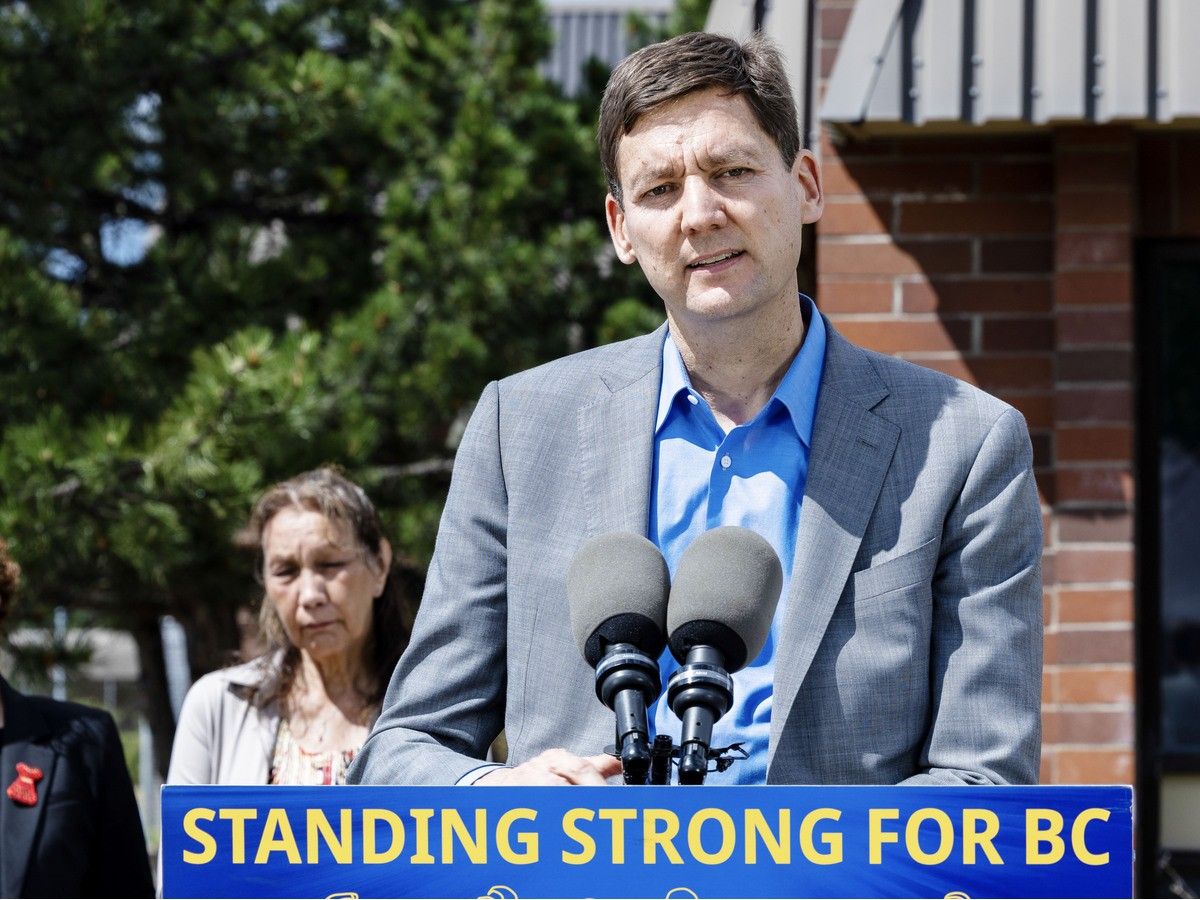
VICTORIA — Premier David Eby recently announced two care facilities for people needing involuntary treatment for severe mental health and addiction issues, building on a promise he first made four years ago. “The question of how our system is going to accommodate this population is a pressing one, and an urgent one,” Eby said last week in announcing a new 72-bed facility in Prince George and a 60-bed expansion at a site in Surrey. “The need for us as a province, as a country, to grapple with this has not gone away,” the premier continued.
“If anything, the urgency has gone up.” The urgency is readily evident in street disorder and threats to public safety in community after community. But urgent is not the right word to describe Eby’s timetable for implementation of involuntary care.
The move to involuntary care was one of the first promises Eby made in launching his bid for the NDP leadership in the summer of 2022. He backed off after becoming premier in the face of legal concerns and opposition from experts in the field. The initiative regained momentum two years ago when Eby recruited psychiatrist Dr. Daniel Vigo as the province’s chief scientific adviser on psychiatry, toxic drugs, mental health and addictions.
Vigo was on hand at the premier’s news conference in Prince George last Friday to provide an update on progress so far. He and the premier both noted that one of the first moves was a directive to emergency room doctors and other physicians, clarifying their authority to hold someone for treatment under the Mental Health Act. “Any physician in any part of the province can exercise this authority to remove the final barrier to care,” said Vigo.
“It was frequently framed, this involuntary care, as a question of restriction of liberty. It’s quite the opposite. The Act provides this life-saving, and I would say, rights-enabling form of care.”
The other major breakthrough was in the treatment facilities themselves, from mental health units in correction facilities to the first dozen-and-a-half purpose-built beds in secure home-like treatment facilities. “The impact of the mental health unit in corrections has been remarkable,” said Vigo. “More than 50 of the most complex and behaviourally challenging patients in B.C. received timely psychiatric care, which has not only radically improved their own mental health and well-being, but also increased treatment compliance throughout the correctional population, transforming the everyday living conditions and safety of inmates and correction officers.
“Average time to psychiatric care was cut to nearly a tenth of what it was before, with use of force only in a tenth of the cases.” As for the approved homes: “Each person treated is not only getting the right level of care — putting an end to years, sometimes decades, of being locked up in a hospital room — but also ceases to block more than 2,000 bed days on average per person for services they neither require nor benefited from.” Vigo has witnessed the results first hand.
“The visits I have made — I’ve seen the same people before and after the treatment was delivered — the transformation is so radical.” “Finally, the tide is turning on the public health emergency provoked by synthetic drugs,” said Vigo. “I am confident that with the unwavering leadership of Premier Eby, the encouraging signs we are seeing will be consolidated, scaled up, and become irreversible.”
Word is getting around too. Following the announcement regarding Prince George and Surrey, Vancouver Mayor Ken Sim demanded to know why his city was left out. A local government organization representing some 37 communities in the southern Interior put out a call this week for the government to expand voluntary and involuntary care in their region.
The main obstacles to expanding the program are resources, including staff, funding, and a lack of readily usable sites. For the Prince George facility alone, the Northern Health Authority will have to recruit a staff of 150 trained professionals, roughly two for every one of the 72 beds in the facility. Then there’s the expense.
The province has budgeted $150 million to get Prince George and Surrey up and running, which works out to $1.1 million per bed. That is the cost for renovation of existing space. The province chose that route in order to expedite availability, although even then it will take two full years before the Prince George site is at full capacity.
Starting from scratch in all-new stand-alone facilities will be much more expensive, Eby conceded. Which had me thinking about the government’s decision to stall (or “re-pace”) a half-dozen long-term care facilities because of costs in the range of $1.8 million per bed. “Our goal is to find facilities like this one that don’t require green-field new-build construction, but enable us to move a little bit faster because of the urgency of the crisis that we face,” Eby said in Prince George.
His way of telling other municipalities what the government is looking for in siting the expansion of involuntary care.
- Published
- Jul 15, 2026
- Updated
- Jul 15, 2026
- Source
- Vancouver Sun
- Category
- Politics
- Read time
- 4 min
Key facts
Why this matters locally
This politics story matters locally because it may affect readers, businesses, commuters, families, or public services in British Columbia.
Local impact
BC Post links this item to British Columbia coverage so readers can follow related city updates, weather, traffic, events, and category news in one place.
Timeline
Source and credit
BC Post may summarize, organize, and add local context for reader clarity. Original reporting remains with the listed publisher.
Related Articles
View all Politics
Pitt Meadows to host information session for city council candidates
Politics
Pitt Meadows to host information session for city council candidates
 Politics
Funding local governments to speed up delivery of homes
Politics
Funding local governments to speed up delivery of homes
 Politics
Randhawa slams 2nd ‘questionable’ land purchase by City of Surrey
Politics
Randhawa slams 2nd ‘questionable’ land purchase by City of Surrey
 Politics
Hundreds of enthusiatic supporters attend Surrey Mayor Brenda Locke’s fundarising dinner
Politics
Hundreds of enthusiatic supporters attend Surrey Mayor Brenda Locke’s fundarising dinner
 Politics
West Vancouver mayor seeks second consecutive term in re-election bid
Politics
West Vancouver mayor seeks second consecutive term in re-election bid
 Politics
Former Mission mayor seeks dismissal of defamation lawsuit
Politics
Former Mission mayor seeks dismissal of defamation lawsuit
More Local Coverage
Latest news Local News
Cowichan sports shorts: rugby, hockey, biking
Local News
Cowichan sports shorts: rugby, hockey, biking
 Top Stories
Yukon minerals work still under review despite federal announcement
Top Stories
Yukon minerals work still under review despite federal announcement