

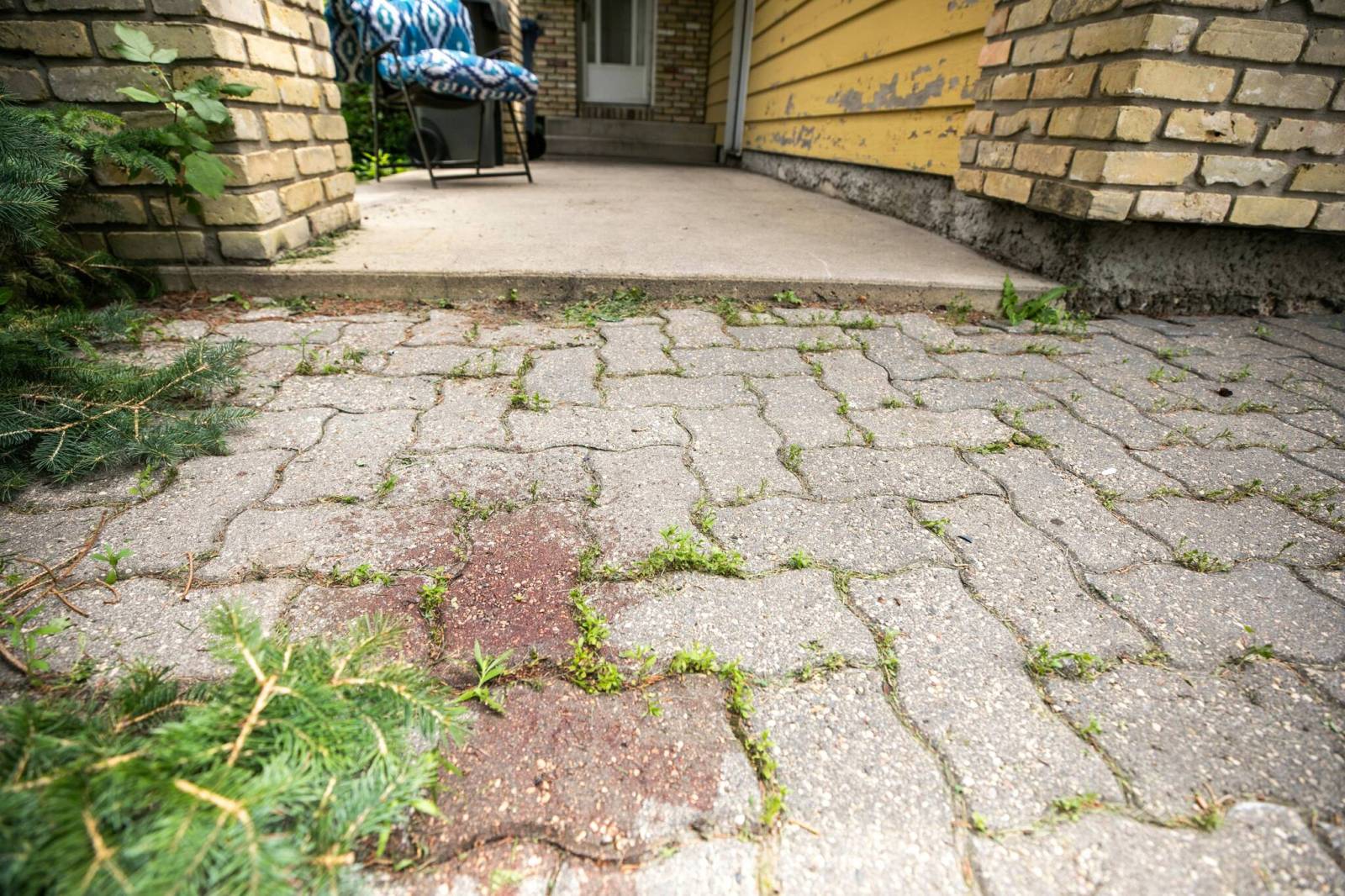
It was the fateful moment when death became almost inevitable.
To continue reading, please subscribe: Digital Subscription One year of digital access for only $205* - Enjoy unlimited reading on winnipegfreepress.com - Read the E-Edition, our digital replica newspaper - Access News Break, our award-winning app - Play interactive puzzles To continue reading, please subscribe: Add Free Press access to your Brandon Sun subscription for only an additional $1 for the first 4 weeks* It was the fateful moment when death became almost inevitable. On Monday, a man called 911 at 8:40 p.m. to report that his brother, who had lifelong mental health issues, was suffering from a crisis and had locked himself in the Linden Woods home they shared.
Winnipeg police did not respond, nor did anyone from the Alternative Response to Citizens in Crisis, a hybrid unit involving a plainclothes police officer and a mental health professional. The man called 911 again at 10 p.m., indicating he was still locked out of his house and his brother was yelling at him through the front window. This is where we reach the aforementioned fateful moment, when a cry for help is transformed into a lethal confrontation.
Specifically, it’s that moment when, following the second 911 call, the Winnipeg Police Service decided the situation was too volatile for ARCC and instead dispatched uniformed officers. Police arrived at the house and tried unsuccessfully to get the man to surrender. At 10:35 p.m., the man came out holding what police described as an “edged weapon.”
At this moment, police shot the man and he died later in hospital. Although there are unique circumstances in this incident, including the delay in responding to the first call, it is not unfair to say that the decision to stand down ARCC ultimately put this man’s life in grave danger. We know this is a fair comment because it is the same moment in other incidents when the WPS decided that dispatching uniformed police was the only option to respond to someone suffering from a mental health crisis.
It should be said that the police should not be condemned for the outcome. Under the terms of the Mental Health Act, peace officers are the only authorized responders for mental health crises. And because they are not mental health professionals, police can only employ the training and procedures they use when they confront someone who poses a danger to someone else or themselves.
The really frustrating part of this is why we cannot devise a better, safer way to help people who largely have not committed any crimes? Why do we continue to dispatch responders who are compelled to use lethal force when things escalate? As it stands, this two-dimensional response puts the onus on someone in crisis to somehow regain control of their faculties and surrender to uniformed officers without any hint of emotion or violent behaviour.
Put another way, we are demanding that people who are overwhelmed by irrational thoughts and emotions somehow behave rationally or face a high likelihood they will lose their lives at the hands of the people sent to help them. There will always be exceptions to this situation that justify the use of lethal force. In May, a man being pursued by the violent offender apprehension unit fled and rammed a police vehicle.
He later barricaded himself inside a King Edward Street home, taking two teenaged girls hostage, and pointed a firearm at police. The police tactical team rescued both girls and in the process, shot and killed the suspect. In this instance, the suspect was armed, known to be violent, tried to kill police by ramming their car and then took two hostages.
If there are incidents where police have no option but lethal force, this might be one of them. The incident on Monday was, however, not an incident in which lethal force needed to be employed. If police or ARCC had responded sooner, or if perhaps police and ARCC responded and worked in tandem, there is a strong possibility the man’s life could have been spared.
We’re going to need a lot more information to know that for sure. Did this incident involve uniformed police or the tactical team? Did the officers at the scene make any meaningful contact with the man?
Did authorities try to use his brother to get him to surrender? Why weren’t police officers wearing body cams? They were during other recent shootings.
Was ARCC even considered after the first call when the man in the house was, by his brother’s account, unwilling to leave but otherwise peaceful? As has been the case in so many other similar incidents, this information is not immediately available. What we do know, however, is that even though police employed the best intentions, they were really just repeating a pattern and approach that far too often results in someone being shot to death.
The NDP government, which is in charge of health, including mental health, knows that we need a different way of responding to mental health crises. The WPS and the RCMP also know the need for an alternative response and would prefer that they had to do less of this kind of thing. Unfortunately, it appears that acknowledging a problem and providing a solution are two very different things.
For the time being, both the province and police seem satisfied to wait for that next fateful moment when fateful decisions are made, the wrong people are dispatched, and another person in crisis loses their life. dan.lett@freepress.mb.ca Dan Lett is a columnist for the Free Press, providing opinion and commentary on politics in Winnipeg and beyond. Born and raised in Toronto, Dan joined the Free Press in 1986.
Read more about Dan. Dan’s columns are built on facts and reactions, but offer his personal views through arguments and analysis. The Free Press’ editing team reviews Dan’s columns before they are posted online or published in print — part of the our tradition, since 1872, of producing reliable independent journalism.
Read more about Free Press’s history and mandate, and learn how our newsroom operates. Our newsroom depends on a growing audience of readers to power our journalism. If you are not a paid reader, please consider becoming a subscriber.
Our newsroom depends on its audience of readers to power our journalism. Thank you for your support.
- Published
- Jul 15, 2026
- Updated
- Jul 15, 2026
- Source
- Winnipeg Free Press
- Category
- Crime
- Read time
- 5 min
Key facts
Why this matters locally
This crime story matters locally because it may affect readers, businesses, commuters, families, or public services in British Columbia.
Local impact
BC Post links this item to British Columbia coverage so readers can follow related city updates, weather, traffic, events, and category news in one place.
Timeline
Source and credit
BC Post may summarize, organize, and add local context for reader clarity. Original reporting remains with the listed publisher.
Related Articles
View all Crime
Video shows rescue of lone survivor from deadly B.C. helicopter crash
Crime
Video shows rescue of lone survivor from deadly B.C. helicopter crash
 Crime
A dozen cats are missing after New Westminster apartment fire that displaced roughly 100 residents
Crime
A dozen cats are missing after New Westminster apartment fire that displaced roughly 100 residents
 Crime
‘N’ driver involved in Abbotsford rollover crash, police say
Crime
‘N’ driver involved in Abbotsford rollover crash, police say
 Crime
B.C. seeks forfeiture of alleged gangster’s properties worth more than $6.2 million
Crime
B.C. seeks forfeiture of alleged gangster’s properties worth more than $6.2 million
 Crime
Langley woman pleads for break on $49K fines after felling 11 trees
Crime
Langley woman pleads for break on $49K fines after felling 11 trees
 Crime
Motorcycle impounded after new rider reaches ‘shocking speed’ on B.C. highway
Crime
Motorcycle impounded after new rider reaches ‘shocking speed’ on B.C. highway
More Local Coverage
Latest news Business
AI Market Trends: Q2 2026 Review and Forecast
Business
AI Market Trends: Q2 2026 Review and Forecast
 Politics
Powerful pro-life ad featuring boxing legend to air during final World Cup matches
Politics
Powerful pro-life ad featuring boxing legend to air during final World Cup matches