

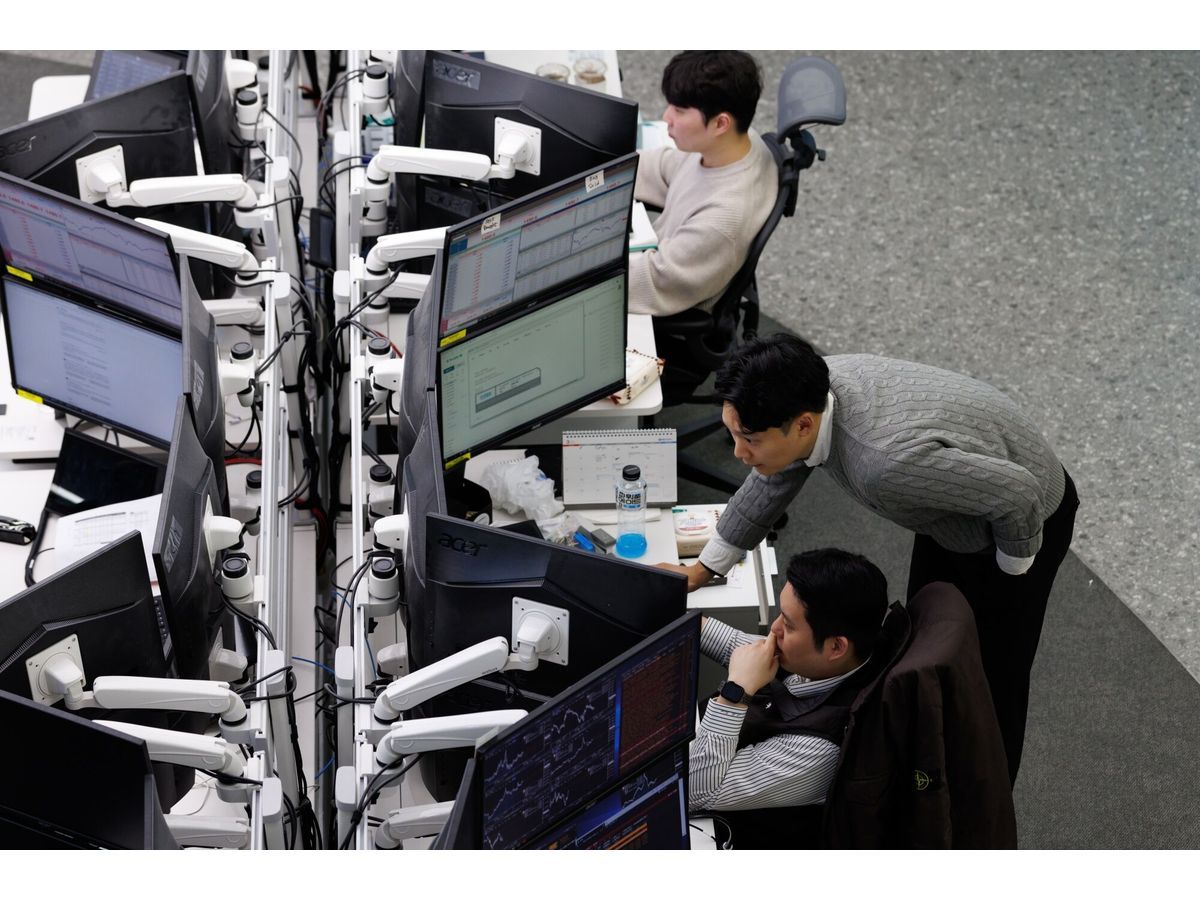
Emerging-market stocks slumped, with a key gauge headed for a technical correction on mounting concerns the outlook for artificial intelligence no longer justifies the industry’s elevated valuations.
(Bloomberg) — Emerging-market stocks slumped, with a key gauge headed for a technical correction on mounting concerns the outlook for artificial intelligence no longer justifies the industry’s elevated valuations. MSCI’s stock gauge for developing markets dropped as much as 2.8% to 1,617.21, extending losses from a bull-market peak to 10% in intraday trading on Friday. A close at or below 1,622.49 would confirm a correction.
Chip stocks had recently wrapped up their best-ever quarter, extending a surge driven by insatiable demand for artificial intelligence. But the sector has faced turbulence in the past few weeks on concerns about competition, possible overcapacity and whether the billions of dollars in AI investments will pay off. The overall move across asset classes today “reflects a classic ‘risk off’ swing in trading,” said Scotiabank strategists Shaun Osborne.
“The equity screens are a sea of red on renewed concerns about the tech/chip cycle and escalating US/Iran attacks.” Benchmark stock indexes in Japan and Taiwan, both heavy on technology shares, plunged at least 4% each. AI bellwether Taiwan Semiconductor Manufacturing Co. slid after a lofty spending forecast, even as earnings beat estimates.
“Growing concerns over semiconductor valuations following their vertiginous rise through the end of June has pushed investors toward greater caution,” said Rajeev De Mello, global macro portfolio manager at Gama Asset Management SA. “Seasonally thinner liquidity during the Northern Hemisphere summer has amplified the selloff.” The region-wide plunge in equities came even as South Korea’s Kospi index — the poster boy of the blistering AI rally and a gauge that’s seen wild swings — was closed for a holiday.
Despite the selloff, traders continue to plow cash into the BlackRock’s $22.4 billion iShares MSCI South Korea ETF, known by its ticker EWY. The fund, which allocates roughly a quarter of its portfolio to Korea-listed SK Hynix shares, has seen over $2.8 billion in inflows this week, heading for its best weekly inflow on record, according to data compiled by Bloomberg. The latest round of hostilities between the US and Iran pushed crude oil prices higher, stoking concerns about inflation and strained public finances for fuel importers.
Oil rose above $87 per barrel after Axios reported that the US is sending dozens of refueling planes to Israel, raising expectations of a near-term escalation in the conflict that has roiled energy markets. In the latest round of hostilities, Iran attacked Kuwaiti water and power plants, with many power-generation units sustaining damage. That came after the US carried out another wave of strikes on Iran, hitting targets including defense sites, in a sixth straight day of hostilities.
Meanwhile, a gauge of EM currencies fell 0.3%, with the South African rand and the Mexican peso among the worst performers, while Bloomberg’s Dollar Spot Index gained 0.1%. Elsewhere, Mozambique is making progress toward a debt restructuring deal with China and is seeking a new International Monetary Fund program this year, President Daniel Chapo said. —With assistance from Ravil Shirodkar.
- Published
- Jul 17, 2026
- Updated
- Jul 17, 2026
- Source
- Financial Post
- Category
- Technology
- Read time
- 2 min
Key facts
Why this matters locally
This technology story matters locally because it may affect readers, businesses, commuters, families, or public services in British Columbia.
Local impact
BC Post links this item to British Columbia coverage so readers can follow related city updates, weather, traffic, events, and category news in one place.
Timeline
Source and credit
BC Post may summarize, organize, and add local context for reader clarity. Original reporting remains with the listed publisher.
Related Articles
View all Technology
Transformer-manufacturing company to shut down its Chilliwack facility
Technology
Transformer-manufacturing company to shut down its Chilliwack facility
 Technology
Quebec announces plan to train more aerospace workers as demand surges
Technology
Quebec announces plan to train more aerospace workers as demand surges
 Technology
Apple’s Lawsuit Could Choke OpenAI’s iPhone Rival Before It Even Ships
Technology
Apple’s Lawsuit Could Choke OpenAI’s iPhone Rival Before It Even Ships
 Technology
Spectro Cloud Raises $100 Million Series D to Help Customers Move AI Infrastructure Into Production Across Enterprise, Public Sector, Neocloud and Sovereign Cloud Environments
Technology
Spectro Cloud Raises $100 Million Series D to Help Customers Move AI Infrastructure Into Production Across Enterprise, Public Sector, Neocloud and Sovereign Cloud Environments
 Technology
GO train users could face delays, cancellations due to ‘crew constraints’: Metrolinx
Technology
GO train users could face delays, cancellations due to ‘crew constraints’: Metrolinx
 Technology
Texting a stranger works better to fight loneliness than talking to an AI chatbot
Technology
Texting a stranger works better to fight loneliness than talking to an AI chatbot
More Local Coverage
Latest news Business
AI Market Trends: Q2 2026 Review and Forecast
Business
AI Market Trends: Q2 2026 Review and Forecast
 Politics
Powerful pro-life ad featuring boxing legend to air during final World Cup matches
Politics
Powerful pro-life ad featuring boxing legend to air during final World Cup matches