

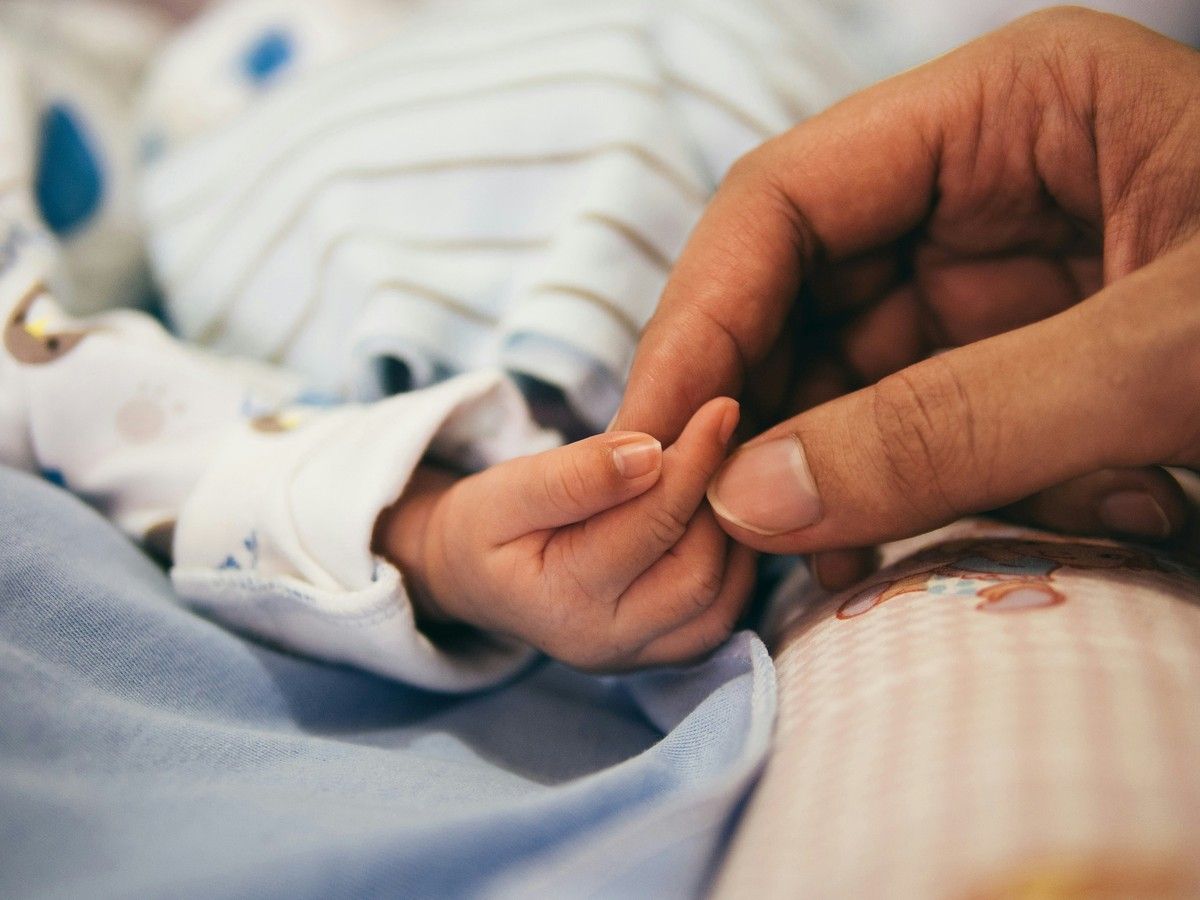
Province's child death review committee urges parents to follow scientific advice, even if hundreds of millions of moms and dads don't
Article content An alarming number of New Brunswick infants have died due to unsafe sleeping practices, with authorities pointing the finger at social media as a culprit. The province’s child death review committee and the office of the chief coroner released a report Monday stating that over the last five years, 20 infants in New Brunswick have died when unsafe sleeping practices were a contributing factor or direct contributor to the tragedies. The report blames social media for promoting a worldwide practice – babies sleeping in the same bed or sofa with their parents – rather than following the recommendations of Canadian health experts.
The issue in question is the alarming numbers of New Brunswick infants that die due to unsafe sleeping practice. New Brunswick Child Death Review Committee They say the safest place for sleeping infants is in their own cribs, placed on their backs. Emily Caissy, the committee chairperson and the province’s deputy chief coroner, told reporters on Monday too many parents are relying on social media opinion, rather than scientific research.
“Some of that advice is not found in any kind of research,” she said from Moncton in a press conference by Zoom. “Although well intended, sometimes it doesn’t provide good and solid information.” The report was unambiguous in its findings.
“The issue in question is the alarming numbers of New Brunswick infants that die due to unsafe sleeping practice, or where unsafe sleeping practice is deemed a contributing factor,” states the report, dated March 26 but only released by the provincial government on Monday. “One thing that the committee could not ignore is the influence of social media in today’s culture,” it states. “Social media platforms such as TikTok and Instagram amplified narratives portraying co-sleeping as natural, bonding, and convenient.
These are in contrast with Canadian health guidelines.” Of the 20 deaths, 16, or 80 per cent, were directly attributable to unsafe sleeping practices, the report says. The youngest case reviewed was a six-day-old infant, the oldest a child of 18 months.
But the victims were overwhelmingly early infants. A one-and-a-half-year-old was considered an outlier and removed to calculate the average age of death of the babies, making the average age at the time of death just short of three months old. Social workers with the Department of Social Development were involved with the families of 10 of the babies who eventually died, half the total.
But the
Source and reference
authors say there was a range of parents who lost their kids, and you couldn’t point to them belonging to one socio-economic group. Alarmingly, the report notes that the 20 represented more than one-third of all infant deaths in New Brunswick over a period from Jan. 1, 2020, to Sept. 11, 2025. The committee members, including a couple of doctors, recommend better education for parents and more training for social workers and health-care workers to combat the problem. The child death review committee, which deliberates behind closed doors, examines young deaths investigated by the coroner’s office and the death of every child who was at some point in the care of the province. The report contrasts social media narratives with official Canadian health guidelines, noting they don’t stack up. For instance, it states that co-sleeping on social media is portrayed as “natural, bonding, and...
Read original source- Published
- Jul 13, 2026
- Updated
- Jul 13, 2026
- Source
- The Tj News
- Category
- Politics
- Read time
- 6 min
Key facts
Why this matters locally
This politics story matters locally because it may affect readers, businesses, commuters, families, or public services in British Columbia.
Local impact
BC Post links this item to British Columbia coverage so readers can follow related city updates, weather, traffic, events, and category news in one place.
Timeline
Source and credit
BC Post may summarize, organize, and add local context for reader clarity. Original reporting remains with the listed publisher.
Related Articles
View all Politics
Powerful pro-life ad featuring boxing legend to air during final World Cup matches
Politics
Powerful pro-life ad featuring boxing legend to air during final World Cup matches
 Politics
Vaughn Palmer: David Eby's slow and expensive step toward involuntary care
Politics
Vaughn Palmer: David Eby's slow and expensive step toward involuntary care
 Politics
Corus rebuts misinformation about future of Global News in Alberta after layoffs
Politics
Corus rebuts misinformation about future of Global News in Alberta after layoffs
 Politics
Pitt Meadows to host information session for city council candidates
Politics
Pitt Meadows to host information session for city council candidates
 Politics
‘No consequences’: East Van woman says she was targeted by hate-motivated assault
Politics
‘No consequences’: East Van woman says she was targeted by hate-motivated assault
 Politics
Hundreds of enthusiatic supporters attend Surrey Mayor Brenda Locke’s fundarising dinner
Politics
Hundreds of enthusiatic supporters attend Surrey Mayor Brenda Locke’s fundarising dinner
More Local Coverage
Latest news Business
AI Market Trends: Q2 2026 Review and Forecast
Business
AI Market Trends: Q2 2026 Review and Forecast
 Local News
Cowichan sports shorts: rugby, hockey, biking
Local News
Cowichan sports shorts: rugby, hockey, biking