


The District’s new community agreements policy aims to provide multi-year stability for local groups, but requires proposals to be submitted 14 months in advance.
Council gave feedback on implementation of a new process at the District that aims to provide more fairness and certainty for non-profit groups that have funded agreements with the municipality. District staff presented a Community Agreements Policy implementation update and council members offered feedback at the meeting on July 7. Background This presentation and discussion came about because the council had asked for more information on the implementation of the community agreements policy and whether it is possible to implement the policy for the 2027 budget.
Basically, councillors, in particular Coun. Jenna Stoner, had repeatedly asked if groups, such as the Squamish Off-Road Cycling Association, for example, could have multi-year agreements, rather than year to year ones, as is currently the case. Staff has said that it would take some time to get to that stage under the new community agreements policy.
Patricia Ing, District economic development officer explained that the community agreements policy was adopted by council in the spring of 2025, at which time the community partnership policy was rescinded and the amended renamed community grants policy was approved. In the 2026 to 2035 financial plan, the three operating agreements previously funded through the community grants policy were removed from the program and added to the departmental operating budgets. As the community grants policy budget is set at 1% of the prior year's taxation and the three agreements made up approximately 0.4%, the community grants policy budget was temporarily reduced to 0.6% of the prior year's taxation to minimize tax impact, according to Ing.
In the 2027 to 2036 financial plan, the community grants policy will continue to be 0.6% of prior year's taxation and is proposed to be increased gradually starting in 2028, through service level changes funded by taxation, Ing said. The community grants policy budget will be back up to 1% of prior year's taxation by 2031, she said. “Council directed further increases to the three operating agreements as well as the eight other existing agreements will be reflected as service level changes funded by taxation for council consideration during the financial planning process,” she said.
Timeline Ing reviewed staff’s current timeline. “2026 is about building and piloting the community initiated process through inviting the 11 existing agreement holders who are proposed to have agreements that will be due in 2028 to submit their (community agreements policy) projects by Sept. 30th, 2026. Many of which staff anticipate will be multi-year proposals,” she said.
“In fall of 2027, the plan is to open the community initiated process for new intakes to the whole community for consideration in the 2029 financial plan while building the district initiated process. In 2028, staff will add the District-initiated process for consideration in the 2030 financial plan.” New co-ordinator Ing confirmed that a new co-ordinator to spearhead the policy has been hired.
At the end of 2025, council approved a new community partnerships coordinator role to be included in the 2026 to 2035 financial plan. The coordinator started at the end of April this year. Ultimately, Ing said the timeline doesn't allow for the policy to be implemented in the 2027 financial planning year, as council had asked.
Ing said the proposal submissions would have had to have occurred in 2025 to be considered during the 2027 to 2036 financial plan budgeting process, which she said is currently underway. “The integrity of the (community agreements policy) relies on the evaluation of all project proposals collectively through an evaluation panel using consistent evaluation criteria, developing metrics and benchmarks to measure project community impact and presenting all evaluated agreements to council collectively,”reads the staff report to council. Agreements The 11 one-year current agreements include: OurSquamish, SORCA, Downtown Squamish BIA, Squamish Arts (for arts programming), Squamish Arts (for public art advisory), Squamish Men’s Shed Society, Sea to Sky Community Services (Youth Agreement), BC Youth Climate Corps, Squamish CAN (for Zero Waste Programming and Other), Squamish CAN (for farm and food hub feasibility), and Tourism Squamish.
Ing said that for this year, 2026, the 11 agreements are going to be proposed to be extended for the 2027 financial plan. This month, the organizations will be invited to submit a project idea by a deadline of Sept. 30 of this year to be considered in the 2028 10-year financial plan. Sample council feedback Ultimately, council unanimously approved receiving the report, which was all they were tasked to do.
Stoner questioned the fairness of the groups having to submit their needs 14 months in advance. “Seems like a big ask for those organizations to submit something ...14 months in advance from when their budget is up without even knowing if they have certainty for their 2027 budget. So how is this a fair process for our partner organizations?”
Jay Deo, director of recreation culture said that the organizations have been asking for this kind of certainty. “Some of these groups have already been lobbying for multi-year agreements and provided ... figures and recommendations for what the dollar value looks like for multi-year agreements,” he said. “This work has been ongoing for some organizations already.
So it's not too much to ask some of these organizations who have been hoping for this and planning for this for multiple years. In addition, ... some may not be requesting multi-years of funding. They may want to continue on an annual basis.
It's up to them,” Stoner asked if groups can seek increases for the next year’s budget, which Julie Wengi, general manager of corporate services, confirmed they can. “What I hope our community partners hear is that we see the good work that they're doing and they're welcome to continue to ask for what it is that they need,” Stoner later stressed. Coun.
Andrew Hamilton struggled with the timeline in the process. “I sincerely hope we can find efficiencies and find a faster path forward to be able to make decisions and give community agency in doing things that they want to do. If a community partner comes and says, ‘I really wanna do this thing,’ saying 18 months before we even consider it is pretty hard,” he said.
Coun. Eric Andersen said he was optimistic about the policy and the process. “I'm kind of looking at it from the perspective of potential new users of such opportunities among our nonprofits, for example, in the environment or cultural fields.
And I think with respect to the waiting time, these two year process, I don't think this might be idle time necessarily, but an opportunity for careful preparation and planning. I think that this package has been very carefully assembled.” The community agreements policy implementation will come back again for consideration, likely in front of the next council after the election this fall.
See the report to council for yourself. Watch the discussion for yourself on YouTube at the 1:58-mark:
- Published
- Jul 11, 2026
- Updated
- Jul 11, 2026
- Source
- Squamish Chief
- Category
- Lifestyle
- Read time
- 5 min
Key facts
Why this matters locally
This lifestyle story matters locally because it may affect readers, businesses, commuters, families, or public services in British Columbia.
Local impact
BC Post links this item to British Columbia coverage so readers can follow related city updates, weather, traffic, events, and category news in one place.
Timeline
Source and credit
BC Post may summarize, organize, and add local context for reader clarity. Original reporting remains with the listed publisher.
Related Articles
View all Lifestyle
City of Lethbridge formally agrees to contribute funding for future 32-bed recovery facility
Lifestyle
City of Lethbridge formally agrees to contribute funding for future 32-bed recovery facility
 Lifestyle
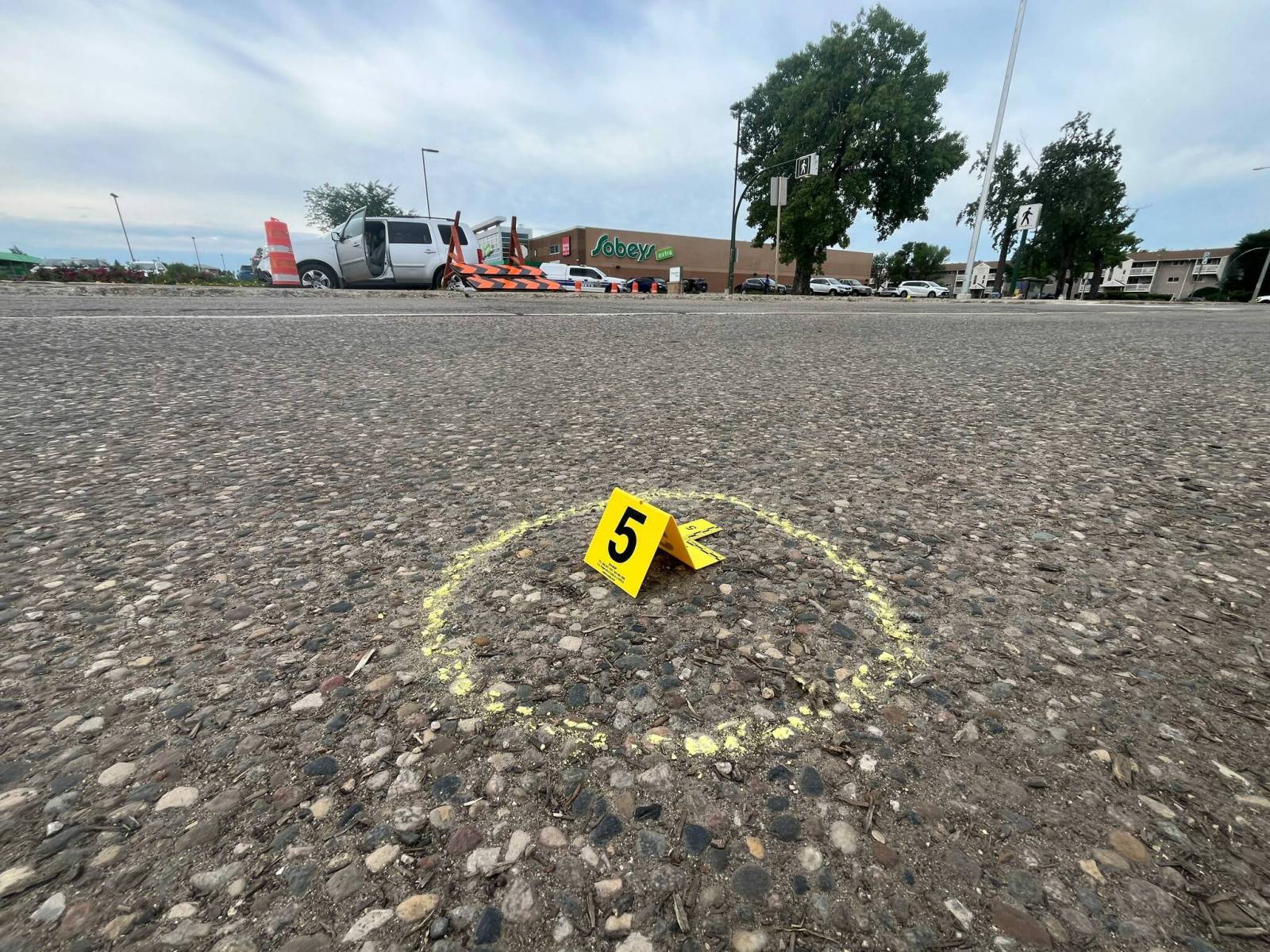
Teen hit in crosswalk faces long recovery
Lifestyle
Teen hit in crosswalk faces long recovery
 Lifestyle
PHOTOS: Cyclists in Chilliwack ride in rain to raise funds for multiple sclerosis
Lifestyle
PHOTOS: Cyclists in Chilliwack ride in rain to raise funds for multiple sclerosis
 Lifestyle
Canadian lottery winner thrilled by free plays before noticing much bigger prize
Lifestyle
Canadian lottery winner thrilled by free plays before noticing much bigger prize
 Lifestyle
New Gateway Mall owners hope to bring in a Costco
Lifestyle
New Gateway Mall owners hope to bring in a Costco
 Lifestyle
From overlooked recruit to featured player: Yorkville Christian grad David Douglas Jr. comes home to NIU
Lifestyle
From overlooked recruit to featured player: Yorkville Christian grad David Douglas Jr. comes home to NIU
More Local Coverage
Latest news Business
AI Market Trends: Q2 2026 Review and Forecast
Business
AI Market Trends: Q2 2026 Review and Forecast
 Politics
Powerful pro-life ad featuring boxing legend to air during final World Cup matches
Politics
Powerful pro-life ad featuring boxing legend to air during final World Cup matches
 Local News
Cowichan sports shorts: rugby, hockey, biking
Local News
Cowichan sports shorts: rugby, hockey, biking