

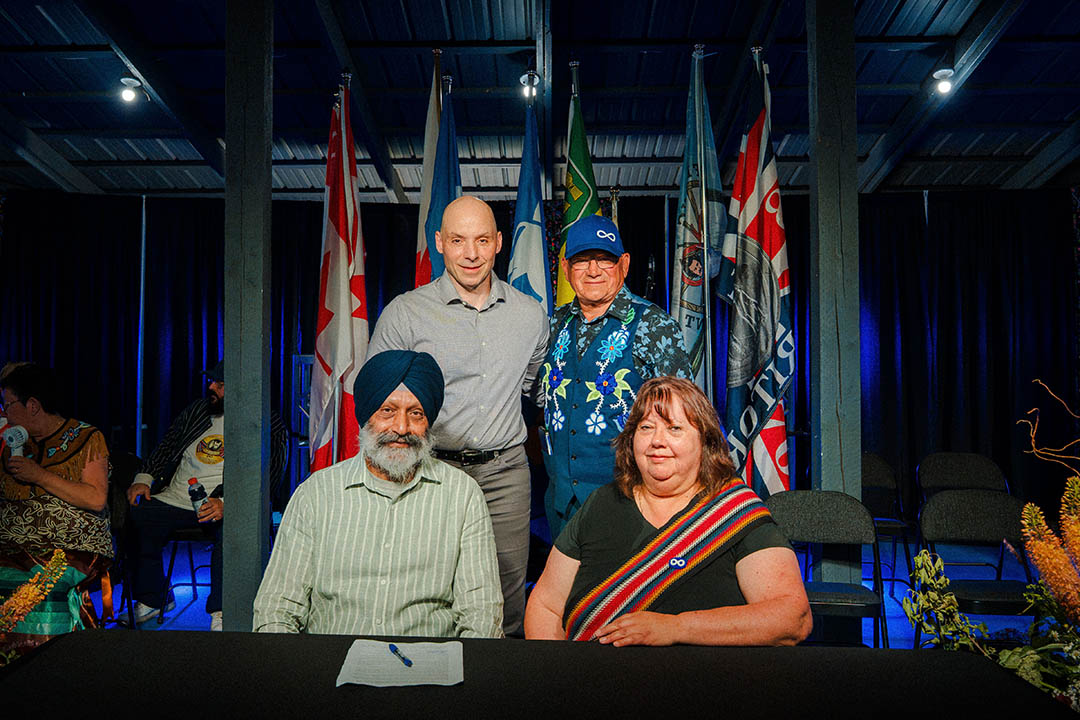
USask, MN-S sign agreement to further collaborate on community-engaged research, training, and other strategic areas
Amidst the backdrop of the annual Back to Batoche festival, the University of Saskatchewan (USask) and Métis Nation–Saskatchewan (MN-S) signed a Joint Statement of Intent to further advance their long-standing relationship through continued dialogue, coordination, and practical action. USask researcher Dr. Kurtis Boyer (PhD), a citizen of Métis Nation–Saskatchewan, said the Joint Statement of Intent is “an important step forward” in the relationship between MN-S and USask. “It recognizes MN–S as a Métis government with responsibilities for governing, delivering programs and services, and supporting the well-being of Métis citizens.
It also recognizes that strong research, reliable data, education, and policy expertise can help MN–S carry out this work,” said Boyer, who serves as the Johnson-Shoyama Graduate School Research Chair in Métis Governance and Policy at USask and the director of the forthcoming Métis Nation–Institute for Research and Governance (MN-IRG). The agreement comes at an important time as MN–S advances its self-government relationship with Canada, Boyer added. “This work will help shape Saskatchewan’s future and create new opportunities for collaboration, innovation, economic growth, and stronger communities throughout the province,” he said.
The Joint Statement of Intent was signed on July 17, 2026, by MN-S President Glen McCallum; USask President Dr. Vince Bruni-Bossio (PhD); USask Vice-President, Research Dr. Baljit Singh (PhD); and MN-S Minister of Post-Secondary Education, Language, and Identity Laura Burnouf. The signing took place during Back to Batoche 2026, a celebration of Métis identity, resilience, and community—past, present, and future. “The relationship between our Métis government and the University of Saskatchewan is grounded in trust and a shared commitment to the future and well-being of our young Métis people.
To expand precise research priorities that are rooted in respect and Métis self-determination is the space the MN–S government and USask are determined to occupy. We are confident that the important work Dr. Boyer has led since 2023 will continue under his direction as the new Métis Nation-Institute for Research and Governance takes shape,” MN–S President Glen McCallum said. The Joint Statement of Intent reflects the ongoing collaboration between MN-S as a Métis government and USask as a key public institution located on Treaty 6 Territory and the Homeland of the Métis Nation.
The parties have a long history of working together, and their relationship is already reflected in other signed agreements and existing commitments, such as the Agreement for Recognizing Métis Nation Citizenship; the Agreement to Establish Distinction-Based Approaches to Research and Planning; and the renewal and continued development of the Johnson Shoyama Chair in Métis Governance and Policy. Through the Joint Statement of Intent, USask and the MN-S government will establish a joint planning and coordination table to advance the priorities that are reflected in their previous agreements and commitments. The table will be guided by the parties’ commitment to foster community-engaged research and coordinate work in ways that recognize the right of Métis peoples to govern themselves, including through research collaboration, training, data governance, capacity building, strategic engagement, the development of a provisional Métis research institute, and other areas identified through ongoing dialogue.
The table will respect academic freedom and the respective responsibilities of both parties to direct and oversee their own academic and research activities. “At USask, we are committed to promoting the success, well-being, and social and economic empowerment of Indigenous peoples through strategic initiatives and partnerships,” said USask President and Vice-Chancellor Vince Bruni-Bossio. “As a university community, we look forward to further engaging with the MN-S government to inform ongoing impactful and collaborative work, including the development of a strategy that reflects the needs, priorities, and future of this province.”
- Published
- Jul 17, 2026
- Updated
- Jul 17, 2026
- Source
- University Of Saskatchewan
- Category
- Top
- Read time
- 3 min
Key facts
Why this matters locally
This top story matters locally because it may affect readers, businesses, commuters, families, or public services in British Columbia.
Local impact
BC Post links this item to British Columbia coverage so readers can follow related city updates, weather, traffic, events, and category news in one place.
Timeline
Source and credit
BC Post may summarize, organize, and add local context for reader clarity. Original reporting remains with the listed publisher.
Related Articles
View all Top
Rock the Lake celebrated its ninth year at Prospera Place this past weekend
Top
Rock the Lake celebrated its ninth year at Prospera Place this past weekend
 Top
BCWS aircraft helping Kamloops firefighters battle grass fire above Shuswap Road
Top
BCWS aircraft helping Kamloops firefighters battle grass fire above Shuswap Road
 Top
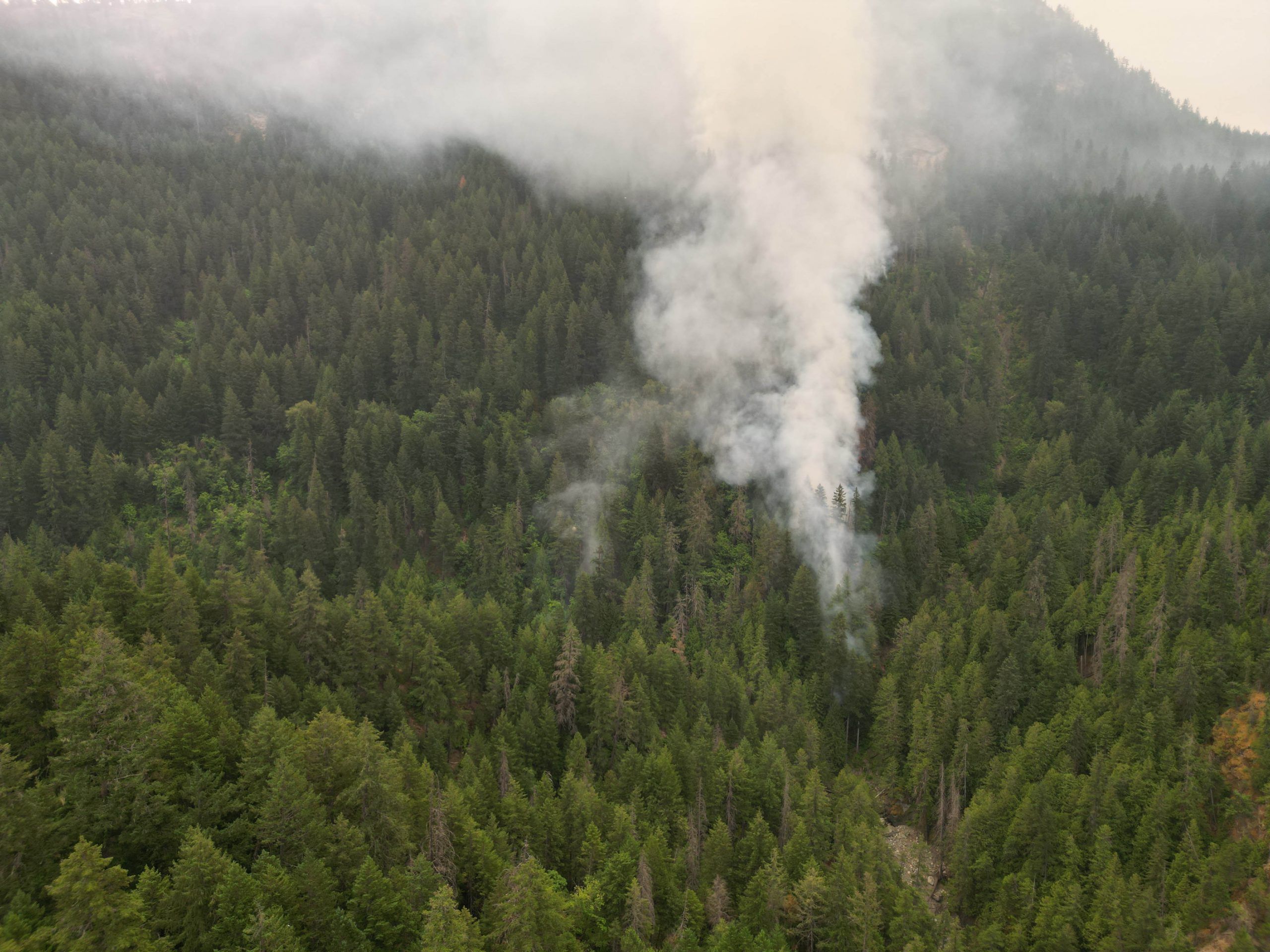
Brunswick Creek wildfire grows, leads to air quality warning in east Fraser Valley
Top
Brunswick Creek wildfire grows, leads to air quality warning in east Fraser Valley
 Top
Million-dollar contract awarded for Surrey Sport & Leisure Complex renos
Top
Million-dollar contract awarded for Surrey Sport & Leisure Complex renos
 Top
MLA Jordan Kealy to face jury in sexual assault case
Top
MLA Jordan Kealy to face jury in sexual assault case
 Top
'A sacred place': Delta park to get dedicated ash-scattering site
Top
'A sacred place': Delta park to get dedicated ash-scattering site
More Local Coverage
Latest news Politics
Powerful pro-life ad featuring boxing legend to air during final World Cup matches
Politics
Powerful pro-life ad featuring boxing legend to air during final World Cup matches
 Business
AI Market Trends: Q2 2026 Review and Forecast
Business
AI Market Trends: Q2 2026 Review and Forecast