

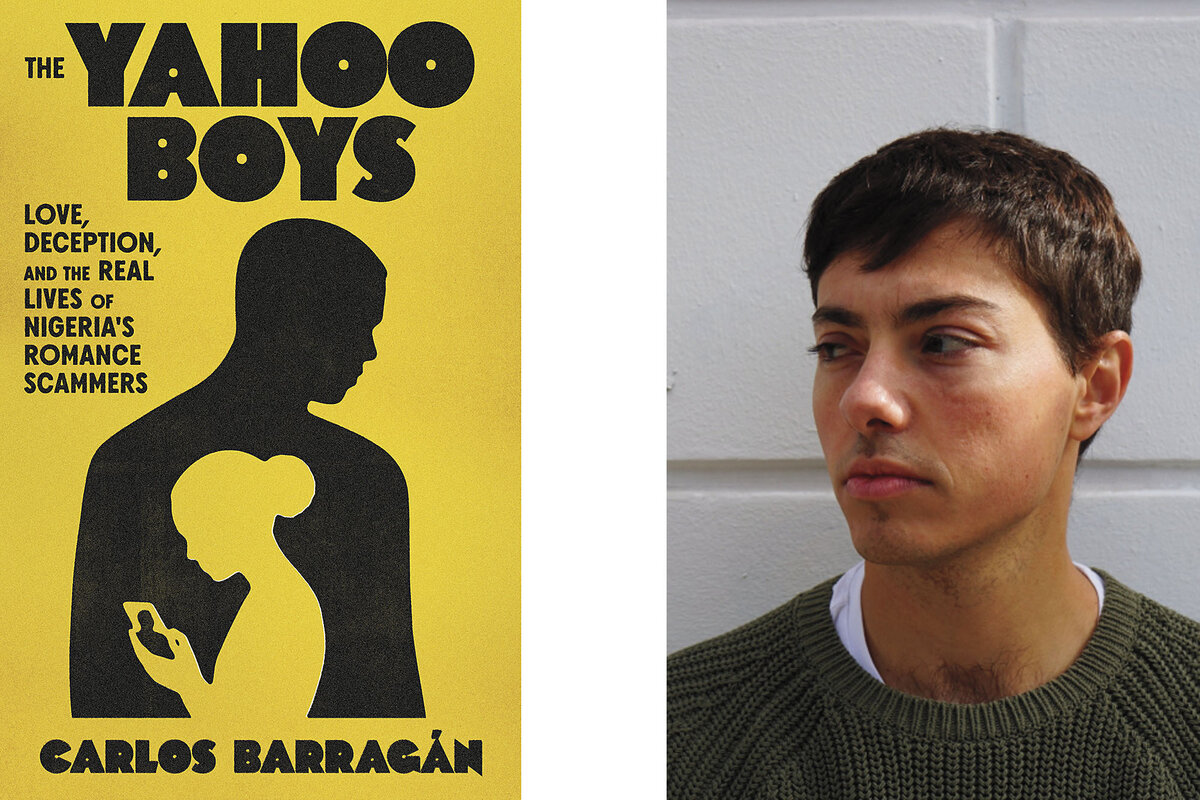
Carlos Barragán wrote “The Yahoo Boys” after investigating a fraud perpetrated on his mother.
What makes people fall for
romance scams? Loading... It began with a swipe on the dating app Tinder.
Silvia, a lonely single mother of three sons and owner of a successful dental clinic, matched with an American soldier named Brian, a handsome, divorced, 52-year-old on a mission in Syria in 2015. While his profile only had a few photos, his messages were passionate; Silvia found herself falling in love. But Brian’s repeated, unfulfilled promises to visit her home country of Spain – as well as an avoidance of video calls – struck Silvia’s sons as strange.
As her relationship with Brian progressed rapidly, a surprising announcement came through: Brian had found gold bars in a “terrorist stash.” Would Silvia like some? Alarmed at the proposal, one of Silvia’s sons, journalist Carlos Barragán, traced the IP address of Brian’s emails.
The dashing soldier’s missives weren’t coming from Syria; they were being sent from Lagos, Nigeria. The gold bars and terrorist stash weren’t real. Silvia had been targeted in a romance scam.
Barragán’s mother, heartbroken after being duped, deleted “Brian’s” emails as well as all the dating apps on her phone. Barragán wondered: “Why did she share her most private thoughts only with someone she had met online? Why did she open up so easily about our family history to a stranger?”
Why We Wrote This In “The Yahoo Boys,” a Spanish journalist probes the desire to connect that allows many fraud schemes to succeed. He also travels to Nigeria to learn the scammers’ own stories. Years later, Barragán quit his job and embarked on a journey to Nigeria to find his mother’s scammer.
His reporting resulted in “The Yahoo Boys: Love, Deception, and the Real Lives of Nigeria’s Romance Scammers,” a nuanced, compelling look at the young men perpetrating romance scams, as well as their victims abroad – and the loneliness that unites them. According to the Federal Trade Commission, reported losses from romance scams in the United States reached $1.3 billion in 2022. Readers meet Biggy, a big spender and hopeful musician pretending to be a woman to scam men; Chibuike, who impersonates famed WWE wrestler Cody Rhodes to romance a single mother in Ireland; Azeez, a boy lured by the fast money of scamming in the face of extreme poverty; and Richie, a scammer haunted by what he believes to have been the death of one of his victims.
All are known as Yahoo Boys, a nod to the Yahoo email addresses scammers in Nigeria once used. In an increasingly digital world, their exploits have expanded to dating apps and social media. Rather than working in large criminal syndicates as many Westerners assume, Yahoo Boys typically work alone, asking victims for money – most often in the form of gift cards.
Some in Nigeria view Yahoo Boys as folk heroes, stealing money from white foreigners as a means of reparations for slavery and colonialism. Others, like Azeez’s beloved mother and grandmother, view it as something to be ashamed of: a perpetuation of the infamous “Nigerian prince” scam, which targeted Westerners and promised great riches if the recipient sent a small advance fee. These fraud schemes impacted how foreigners viewed Nigeria.
For many of the Yahoo Boys, scamming is a means of escaping poverty. Azeez and his mother live in a small room with a dirt floor that floods when it rains; they are periodically evicted because of unsafe conditions. He begins scamming after peer pressure from older friends on the street.
Biggy, too, lives with family, paying them a small percentage of what he earns through scamming. Chibuike’s dream of joining the Nigerian navy requires post-secondary education that he can’t afford, and he often shares money with people on the street. Richie’s desire to become a journalist is set aside when he starts scamming to pay for tuition.
“No parent wants their son involved in internet scams, but putting food on the table is the priority,” one father tells Barragán. The voices of romance scam victims – or “magas,” as they’re known – are largely absent, save for their excerpted chat logs with Yahoo Boys. They represent a broad swath of economic backgrounds, but Barragán found that most victims were “people over forty-five ... often emotionally isolated.
Many were inherently kind and naïve, unaware of online dangers.” While Barragán spends time with support groups dedicated to scam victims and recounts his mother’s experiences with “Brian,” only one chapter is devoted to a victim: Trisha, whose husband sends a photo of a closed casket to scammer Richie, who believes he is responsible. Barragán travels to Kentucky to confirm Trisha’s passing, only to find out that she faked her death to stop Richie’s scam.
Other victims, knowing that they’re being scammed, continue communicating with Yahoo Boys. In fact, most of Azeez’s victims have been scammed multiple times. In spite of the deceit, they are searching for love, understanding, and connection – someone to pay attention.
As one Yahoo Boy in Abuja tells Barragán, “I’m one hundred percent sure your mother told things to her scammer that you don’t know. Things about her you’ve never imagined in your life. Her ambitions, her flaws, her broken dreams.
They’re looking for someone who will listen, period.”
- Published
- Jul 13, 2026
- Updated
- Jul 13, 2026
- Source
- The Christian Science Monitor
- Category
- Entertainment
- Read time
- 4 min
Key facts
Why this matters locally
This entertainment story matters locally because it may affect readers, businesses, commuters, families, or public services in British Columbia.
Local impact
BC Post links this item to British Columbia coverage so readers can follow related city updates, weather, traffic, events, and category news in one place.
Timeline
Source and credit
BC Post may summarize, organize, and add local context for reader clarity. Original reporting remains with the listed publisher.
Related Articles
View all Entertainment
Langley’s tbird hosts country music concert
Entertainment
Langley’s tbird hosts country music concert
 Entertainment
Tom Cruise unrecognizable with a gut and grey hair in ‘Digger’ trailer
Entertainment
Tom Cruise unrecognizable with a gut and grey hair in ‘Digger’ trailer
 Entertainment
Kultrun World Music Festival visits Waterloo Park
Entertainment
Kultrun World Music Festival visits Waterloo Park
 Entertainment
17 Xbox Game Pass title updates you might've missed this week
Entertainment
17 Xbox Game Pass title updates you might've missed this week
 Entertainment
Information sessions for national artistic funding set to be held at EA Rawlinson
Entertainment
Information sessions for national artistic funding set to be held at EA Rawlinson
 Entertainment
Hundreds pack Maple Ridge wharf for Tragically Hip tribute
Entertainment
Hundreds pack Maple Ridge wharf for Tragically Hip tribute
More Local Coverage
Latest news Business
AI Market Trends: Q2 2026 Review and Forecast
Business
AI Market Trends: Q2 2026 Review and Forecast
 Politics
Powerful pro-life ad featuring boxing legend to air during final World Cup matches
Politics
Powerful pro-life ad featuring boxing legend to air during final World Cup matches
 Politics
Traditional Catholic response to Cupich’s suicide distortion
Politics
Traditional Catholic response to Cupich’s suicide distortion