

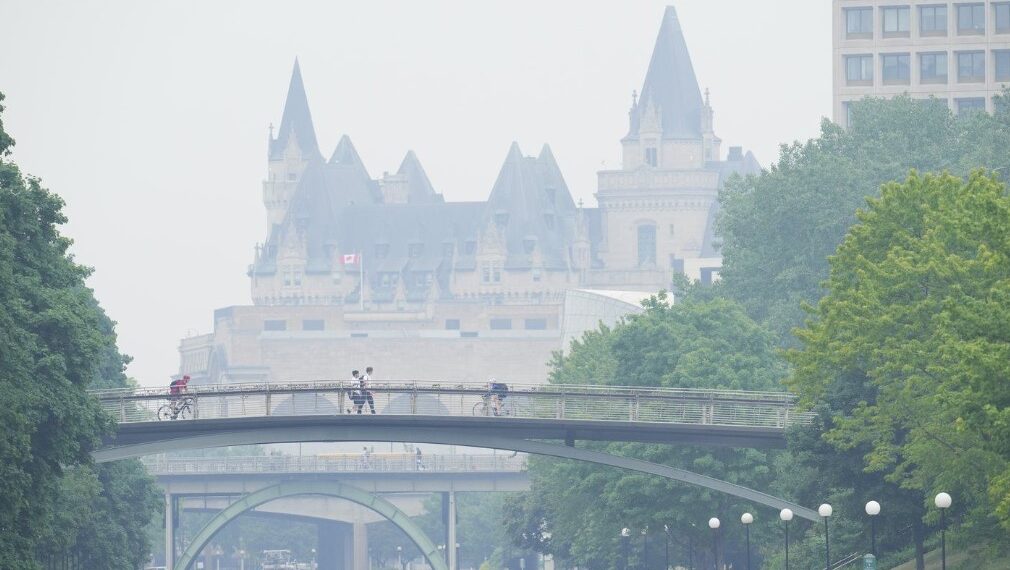
Fires burning in northwestern Ontario that have ravaged communities and forced evacuations is having an impact on the nation’s capital. On Thursday, an air quality warning was issued by Environment Canada because of smoke creating haze in the city, which can be a danger to people. The weather agency is asking people to reduce their [...]
Fires burning in northwestern Ontario that have ravaged communities and forced evacuations is having an impact on the nation’s capital. On Thursday, an air quality warning was issued by Environment Canada because of smoke creating haze in the city, which can be a danger to people. The weather agency is asking people to reduce their time outside until conditions improve late Thursday evening.
“You may experience mild and common symptoms such as eye, nose and throat irritation, headaches or a mild cough,” it notes. People most at risk for symptoms from smoke include those aged 65 and older, pregnant people, infants and young children. The humidity mixed with the smoke is causing more issues for people.
Because of this, experts are telling people to keep cool and make sure air filters are clean. Related: Climate change is eroding typical nighttime breaks in wildfire activity, study says What’s in store for Canada’s 2026 wildfire season? Wildfire season so far considered manageable across Canada, officials say “When indoors, keep windows and doors closed as much as possible.
When there is an extreme heat event occurring with poor air quality, prioritize keeping cool,” the messages reads. Communities in the north evacuating Ontario Emergency Preparedness Minister Jill Dunlop said that 15 communities in the north have already started evacuations or are considering them. She says the situation may continue to escalate rapidly, on Thursday.
Dunlop says it is likely there will be simultaneous evacuations that need to be done by air, with several communities in the north not accessible by road, and Ontario may not have enough resources to meet that need. One of the largest fires burning in the area is in a very remote portion of the province , where a blaze of 20,804.3 hectares is out of control. (Ontario Wildfire Map)
The minister asked her federal counterpart, Emergency Management Minister Eleanor Olszewski, for assistance as the crews battle the more than 180 wildfires burning across northern Ontario. Winds out of the northwest could fan the flames of dozens of forest fires that have already devastated communities, including one fast-moving blaze that damaged and destroyed homes and buildings on Namaygoosisagagun First Nation, also known as Collins First Nation, north of Thunder Bay. The fires have prompted evacuation orders for several communities, including Armstrong, Lac La Croix First Nation, Whitesand First Nation, Gull Bay First Nation and Lac des Mille Lacs First Nation.
Canadian National Railway workers are surrounded by an out of control wildfire near Armstrong, Ontario in this screen grab from social media on July 15, 2026. THE CANADIAN PRESS/Handout – X Sol Mamakwa (Mandatory Credit) X Sol Mamakwa With files from Allison Jones, The Canadian Press.
- Published
- Jul 16, 2026
- Updated
- Jul 16, 2026
- Source
- Citynews Ottawa
- Category
- Environment
- Read time
- 2 min
Key facts
Why this matters locally
This environment story matters locally because it may affect readers, businesses, commuters, families, or public services in British Columbia.
Local impact
BC Post links this item to British Columbia coverage so readers can follow related city updates, weather, traffic, events, and category news in one place.
Timeline
Source and credit
BC Post may summarize, organize, and add local context for reader clarity. Original reporting remains with the listed publisher.
Related Articles
View all Environment
50-hectare wildfire burns between Clearwater and 100 Mile House
Environment
50-hectare wildfire burns between Clearwater and 100 Mile House
 Environment
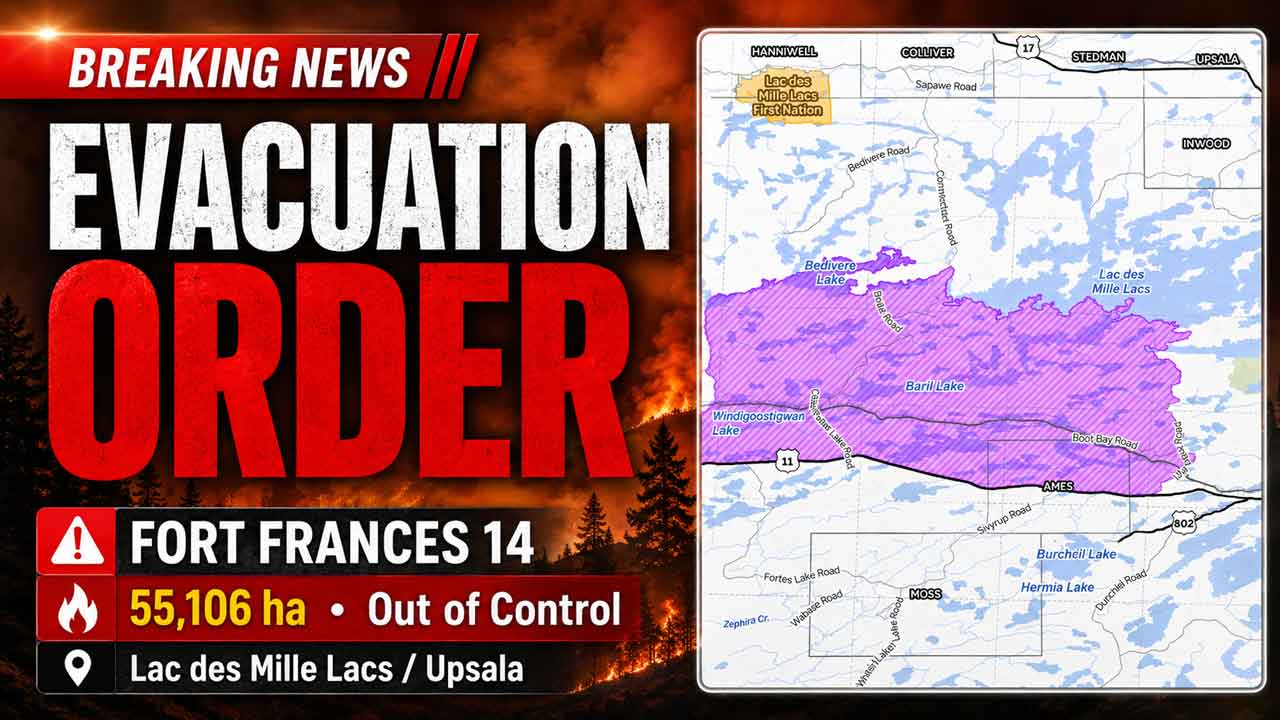
Updated Evacuation Information for Wildfire Fort Frances 14 (July 17 2026)
Environment
Updated Evacuation Information for Wildfire Fort Frances 14 (July 17 2026)
 Environment
A powerful movement of healing arrives at Delta’s Discovery Centre
Environment
A powerful movement of healing arrives at Delta’s Discovery Centre
 Environment
EU Excludes Soybean Seed from Deforestation Rules
Environment
EU Excludes Soybean Seed from Deforestation Rules
 Environment
Metro Vancouver issues air quality warning as wildfire smoke drifts in
Environment
Metro Vancouver issues air quality warning as wildfire smoke drifts in
 Environment
Vancouver forecast in 'sweet spot' but hot temperatures on the way
Environment
Vancouver forecast in 'sweet spot' but hot temperatures on the way
More Local Coverage
Latest news Business
AI Market Trends: Q2 2026 Review and Forecast
Business
AI Market Trends: Q2 2026 Review and Forecast
 Politics
Powerful pro-life ad featuring boxing legend to air during final World Cup matches
Politics
Powerful pro-life ad featuring boxing legend to air during final World Cup matches