


People across southern Ontario are once again dealing with poor air quality. But what can they do to protect themselves?
Residents across southern Ontario are once again being urged to limit exposure to wildfire smoke blowing in from large fires burning in northwestern Ontario. The hazy skies and smoky smell have prompted the return of some pandemic-era practices, such as mask-wearing and staying indoors, to help reduce exposure to harmful particles in the air. “I have a compromised immune system, so I take the best precautions to wear a mask,” said Kitchener resident Jeff McKinnon.
According to Rebecca Saari, a civil and environmental engineering professor at the University of Waterloo, wildfire smoke contains fine particulate matter that can travel hundreds of kilometres. “It’s those particles that get swept up in the wind and get carried down all the way to Kitchener, where they create elevated levels of harmful air pollution,” she explained. Health officials said those tiny particles can affect anyone, but they pose the greatest risk to older adults, young children, pregnant people and those with underlying heart or lung conditions.
“They’ll irritate and deposit in our mouths, throats, our lungs. Some of them are small enough to actually enter into our bloodstream as they’re passing through our lungs,” said Dr. Matthew Tenenbaum, associate medical officer of health with Wellington-Dufferin-Guelph Public Health. Common symptoms of smoke exposure include irritation to the eyes, nose and throat and coughing or headaches.
Saari said for people with existing medical conditions, the consequences can be much more serious. “Sensitive people, like with underlying heart and lung conditions, will have exacerbation of chronic illness that could send them to the hospital and could even lead to premature death,” she said. Experts said the best way to protect yourself during periods of poor air quality is to stay indoors with windows and doors closed whenever possible.
If you need to spend time outside, they recommend wearing a well-fitted N95 respirator to help filter fine particles from the air. “Regular cloth masks or medical masks that sit loosely on the face aren’t going to offer you much protection,” Tenenbaum said. The increased demand for N95 masks has been noticeable at local retailers.
“[Wednesday] morning actually is when they started to sell. And by the end of the day we were sold out,” said Brad Swanson, owner of Swanson’s Home Hardware in Kitchener. Swanson said customers are also buying air purifiers and replacing furnace filters to improve indoor air quality.
“They’re trying to get most of the particles out of the air,” he said. Public health officials recommend checking local air quality advisories before heading outside and reducing strenuous outdoor activities until conditions improve.
- Published
- Jul 16, 2026
- Updated
- Jul 16, 2026
- Source
- Ctv News
- Category
- Environment
- Read time
- 2 min
Key facts
Why this matters locally
This environment story matters locally because it may affect readers, businesses, commuters, families, or public services in British Columbia.
Local impact
BC Post links this item to British Columbia coverage so readers can follow related city updates, weather, traffic, events, and category news in one place.
Timeline
Source and credit
BC Post may summarize, organize, and add local context for reader clarity. Original reporting remains with the listed publisher.
Related Articles
View all Environment
50-hectare wildfire burns between Clearwater and 100 Mile House
Environment
50-hectare wildfire burns between Clearwater and 100 Mile House
 Environment
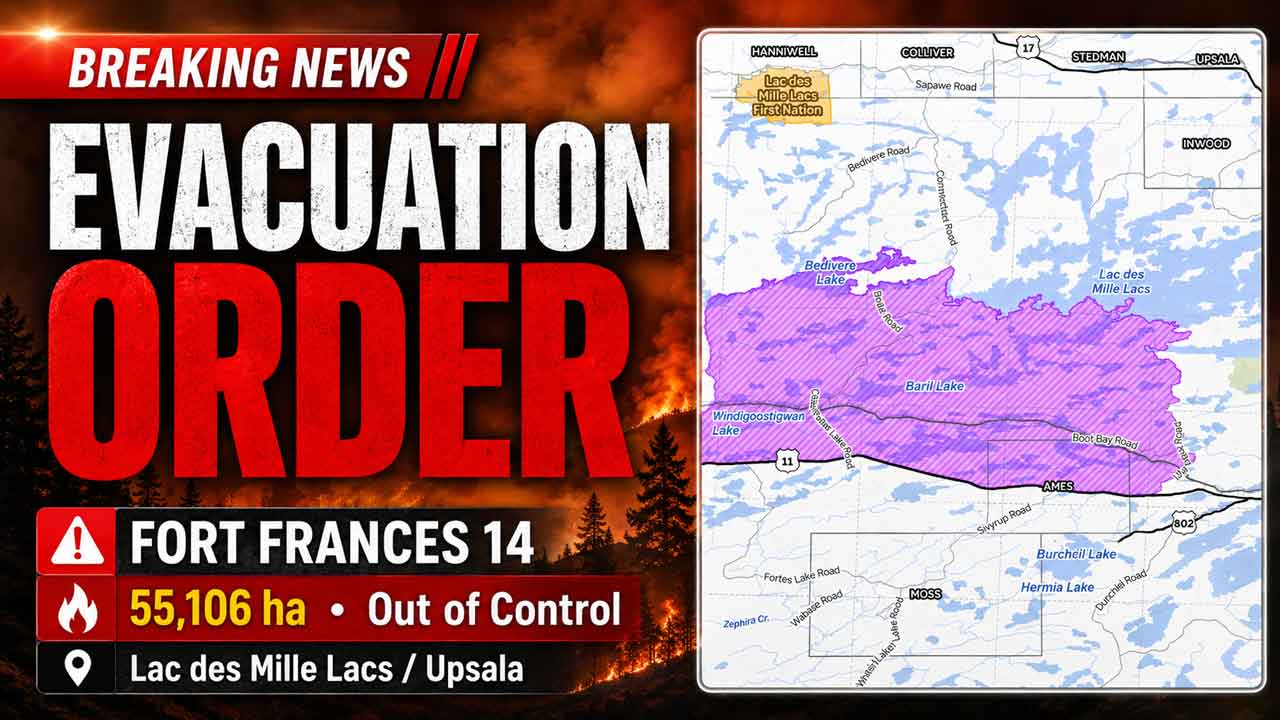
Updated Evacuation Information for Wildfire Fort Frances 14 (July 17 2026)
Environment
Updated Evacuation Information for Wildfire Fort Frances 14 (July 17 2026)
 Environment
A powerful movement of healing arrives at Delta’s Discovery Centre
Environment
A powerful movement of healing arrives at Delta’s Discovery Centre
 Environment
Port Coquitlam mayor launches program that removes graffiti on public property within 48 hours
Environment
Port Coquitlam mayor launches program that removes graffiti on public property within 48 hours
 Environment
EU Excludes Soybean Seed from Deforestation Rules
Environment
EU Excludes Soybean Seed from Deforestation Rules
 Environment
Metro Vancouver issues air quality warning as wildfire smoke drifts in
Environment
Metro Vancouver issues air quality warning as wildfire smoke drifts in
More Local Coverage
Latest news Business
AI Market Trends: Q2 2026 Review and Forecast
Business
AI Market Trends: Q2 2026 Review and Forecast
 Politics
Powerful pro-life ad featuring boxing legend to air during final World Cup matches
Politics
Powerful pro-life ad featuring boxing legend to air during final World Cup matches