

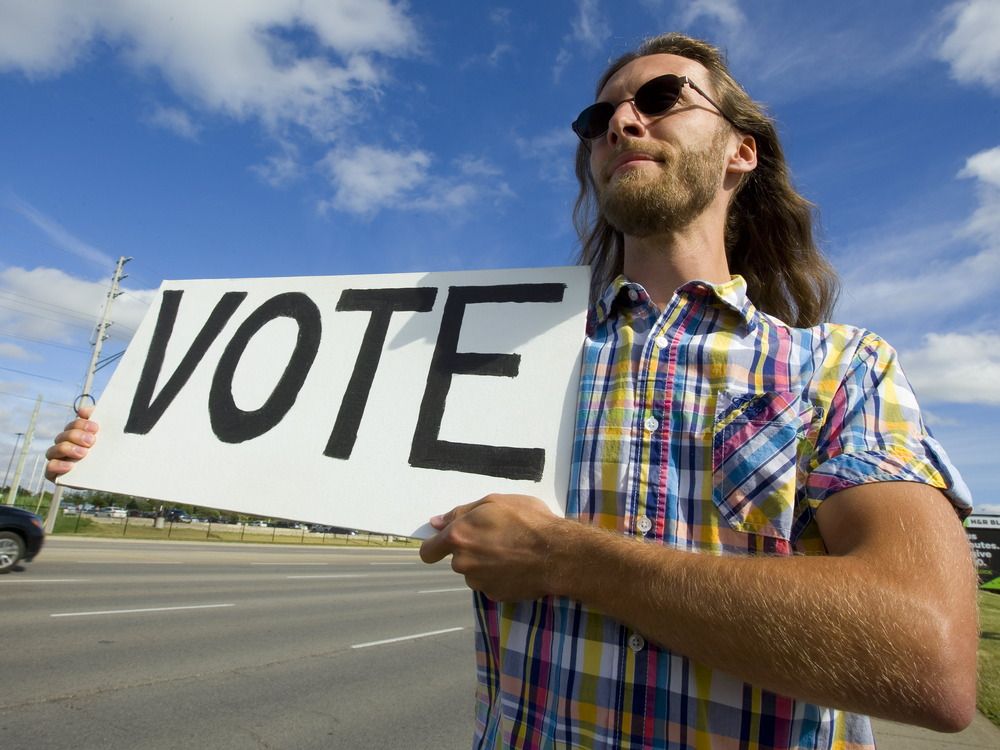
Political scientists examine why some wards vote less – and what could change that.
As London’s farthest-flung suburbs dominated the city’s still-low turnout in the last election, it was mostly east-end wards that recorded the lowest participation. With a turnout of 29 per cent in Ward 9, London’s Ward 1 recorded the lowest turnout at 20.9 per cent, followed by Ward 14 (21.1 per cent), Ward 2 (21.3 per cent), Ward 4 (21.4 per cent) and Ward 12 (22 per cent). “The patterns are not that surprising, and they’re not actually that different from what we saw in previous election years.
Demographics really are a big driver,” said Western University political scientist Martin Horak. “If we look at the wards where turnout is lowest, the combination of those three key factors – household income, education levels and home ownership – are such that you know there’s a demographic disadvantage in those places.” Just as higher education, incomes and home ownership drive turnout in London’s suburbs, lower rates of those same factors tend to depress turnout elsewhere, Horak said.
Less education tends to lead to lower political knowledge or engagement, while lower incomes and lower home ownership mean more renters. Paying property taxes through rent rather than directly as a homeowner can mean feeling less of a stake in local government. “It’s not a knock on or . . .
a judgment about people’s capacities or rational judgment to say that in a ward that has different demographics people tend to turn out less – it’s just that their calculus is perhaps different. They’ve got other things to worry about than municipal politics. They don’t feel like they have a stake in the same way,” he said.
Turnout also declined overall in the 2022 election, with just one in four eligible Londoners casting a ballot, further depressing participation in the same areas, Horak said. He said that aside from long-term demographic shifts, those dynamics are unlikely to change. However, there are circumstances that can boost turnout.
More local coverage and strong candidates can increase participation citywide. On both an overall and local basis, the intrigue of the mayoral and/or local councillor races can drive turnout, Horak said. If there is no incumbent, or a strong and organized challenger to an incumbent, that can drive up excitement and engagement – especially if they touch on hyper-local issues.
“Yes, the demographics matter, but as soon as you see, for example, an incumbent being really seriously challenged by somebody with a very organized campaign, or as soon as you see wards where there isn’t an incumbent, typically that tends to boost turnout a little because it just makes for a more interesting race, and people who are paying attention feel like it’s not a foregone conclusion, and so maybe their voice matters,” he said. This election also offers another wild card: the shift in ward boundaries. Political scientist Jacquetta Newman of Western University’s King’s University College is particularly interested in turnout in the new Ward 4, which has no incumbent, a crowded race and boundaries that shift the ward away from Old East Village toward more of the Stoneybrook area in north London.
She also foresees intrigue in the new Ward 1, with a well-recognized challenger in Roger Caranci taking on incumbent Hadleigh McAlister and the alignment of the Old East Village and Hamilton Road areas. “What might make the new Ward 1 interesting, because . . . there is a unity in terms of the concerns of those neighbourhoods,” she said.
“(It’s) a demographic unity in that ward as well, and I think it will come down to how Hadleigh and Caranci present themselves to the electorate, to the people who are going to be engaged to come out.” Ward 14 is also seeing a significant boundary change, taking in all land south of Highway 401 while also having no incumbent seeking re-election. As of Thursday, Wards 2 and 12 feature multi-term incumbents Shawn Lewis and Elizabeth Peloza, with one and two challengers, respectively. – – – Sign up for your Civic Election Briefing, a special weekly edition of The LFP Extra newsletter available only to subscribers.
Click The LFP Extra tile here, confirm your email address and you’re done.
- Published
- Jul 12, 2026
- Updated
- Jul 12, 2026
- Source
- Lfpress
- Category
- Politics
- Read time
- 3 min
Key facts
Why this matters locally
This politics story matters locally because it may affect readers, businesses, commuters, families, or public services in British Columbia.
Local impact
BC Post links this item to British Columbia coverage so readers can follow related city updates, weather, traffic, events, and category news in one place.
Timeline
Source and credit
BC Post may summarize, organize, and add local context for reader clarity. Original reporting remains with the listed publisher.
Related Articles
View all Politics
Powerful pro-life ad featuring boxing legend to air during final World Cup matches
Politics
Powerful pro-life ad featuring boxing legend to air during final World Cup matches
 Politics
Vaughn Palmer: David Eby's slow and expensive step toward involuntary care
Politics
Vaughn Palmer: David Eby's slow and expensive step toward involuntary care
 Politics
Pitt Meadows to host information session for city council candidates
Politics
Pitt Meadows to host information session for city council candidates
 Politics
Hundreds of enthusiatic supporters attend Surrey Mayor Brenda Locke’s fundarising dinner
Politics
Hundreds of enthusiatic supporters attend Surrey Mayor Brenda Locke’s fundarising dinner
 Politics
One hundred affordable housing units for seniors coming to Sherbrooke
Politics
One hundred affordable housing units for seniors coming to Sherbrooke
 Politics
‘No consequences’: East Van woman says she was targeted by hate-motivated assault
Politics
‘No consequences’: East Van woman says she was targeted by hate-motivated assault
More Local Coverage
Latest news Business
AI Market Trends: Q2 2026 Review and Forecast
Business
AI Market Trends: Q2 2026 Review and Forecast
 Local News
Cowichan sports shorts: rugby, hockey, biking
Local News
Cowichan sports shorts: rugby, hockey, biking