

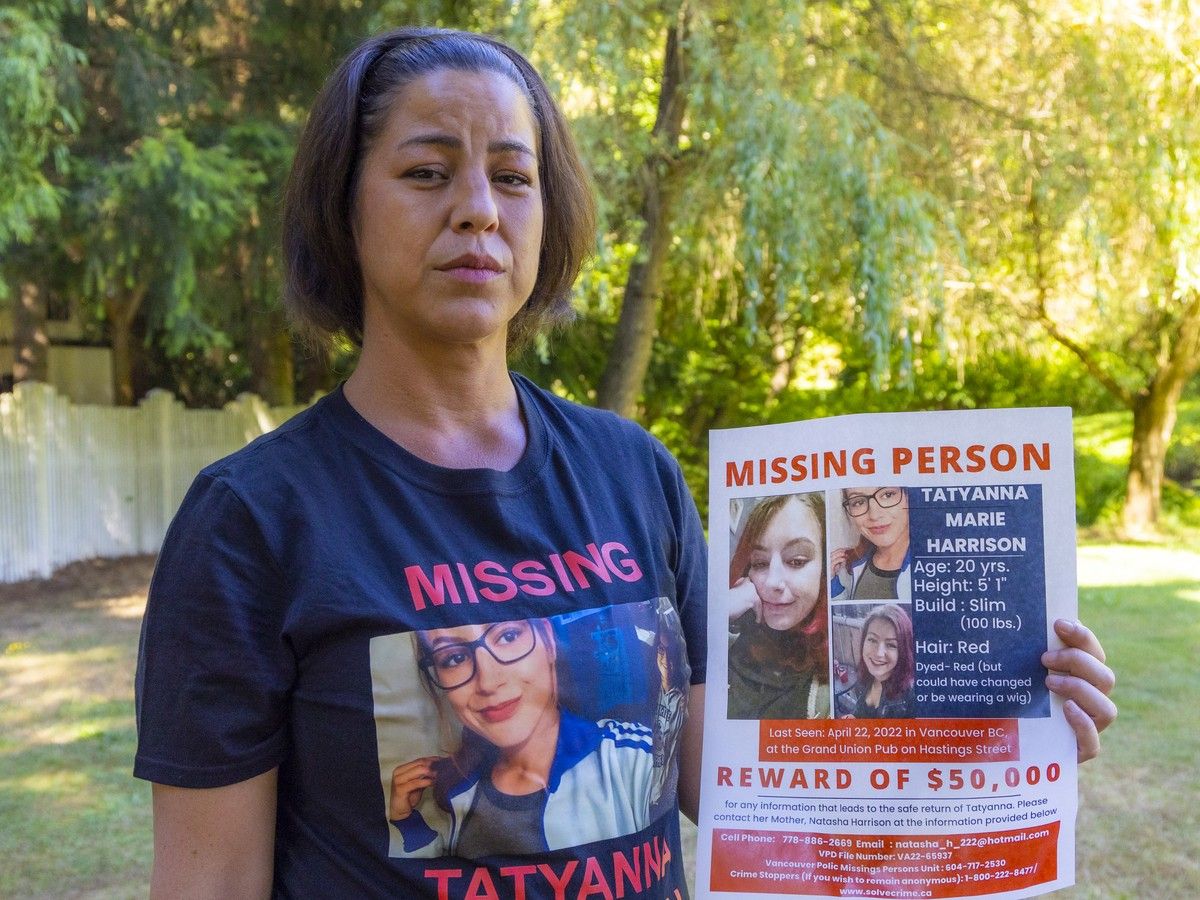
Union of B.C. Indian Chiefs, Justice for Girls says recommendations arising from inquest into death of Tatyanna Harrison, 20, raise further questions about how police agencies investigated her death
B.C. First Nations chiefs and other Indigenous advocates are calling on the province, coroner and police agencies to improve the way they investigate deaths of vulnerable women after a coroner’s inquest jury concluded the 2022 death of Tatyanna Harrison was “undetermined.” Harrison’s case needs to be reviewed after what came out at the inquest, including that investigations by the RCMP and the Coroners Service were “not sufficiently thorough and appear to have been heavily influenced by investigators’ initial assumptions at the scene,” said Sue Brown of Justice For Girls and lawyer for Harrison’s mother, Natasha Harrison.
Brown said the family still doesn’t have answers, such how Harrison got from the Downtown Eastside to Richmond, with whom and when, and what she died of, she said. The conclusion of a five-member jury, who were asked to hear the details of the 20-year-old woman’s disappearance to determine cause and manner of her death, differed from the report from the B.C. Coroners Service, which found Harrison had likely died from drug toxicity. The coroner later changed that conclusion to sepsis, a severe infection that can arise from bacterial, viral or fungal infections, and can be fatal.
Harrison, who was Cree, Métis and Brazilian, was found alone in a derelict dry-docked yacht in Richmond on May 2, 2022, but her body wasn’t identified until August of that year. Natasha Harrison, who hadn’t heard from Tatyanna since March, reported her missing a day after the discovery of the body. Advocates call the death investigation inadequate and say police and other investigators failed to comply with standards or properly co-ordinate with each other.
Grand Chief Stewart Phillip of the Union of B.C. Chiefs said the inquest uncovered “profound errors in this investigation” and “missteps” by the police. “Tatyanna’s death is part of a deeply systemic crisis of gendered and racial violence and the Missing and Murdered Indigenous women, girls and two-spirit+ epidemic,” he said in the release. The chiefs, Justice for Girls and the B.C. Civil Liberties Association, supported the jury’s recommendations, released the statement after a 10-day inquest earlier this month into Harrison’s death.
The jurors made eight recommendations, including that those involved in missing persons investigations be adequately trained, police investigative units include Indigenous liaison officers, and police comply with standards for such investigations or be held accountable if they don’t. Recommendations also include to consider requiring police agencies to not just accept investigative findings from other agencies, and co-ordinate their findings before going public with them. Harrison’s family and other advocates questioned the RCMP’s conclusion that her death was not suspicious and that she had not been sexually assaulted, even though she was unclothed from the waist down and had bruises on her face and unexplained sores on the front of her hips and pelvis.
She was barefoot and her shoes were never found. None of the items on the boat were conclusively linked to her, they said. They are calling for B.C. solicitor general Nina Krieger to arrange to review and renew investigations into Harrison’s disappearance and death and “to determine how each of these agencies failed,” the release said.
The RCMP testified they found drug paraphernalia at the site, and assumed Harrison, unidentified at the time, used illicit substances and was “possibly (involved in) prostitution” based upon finding condoms and soap in a bag, the release said. But they knew nothing about her or whether the bag belonged to her, they said. They claimed the Coroners Service accepted the RCMP’s initial drug-toxicity theory by investigating the death through its drug toxicity unit and by failing to follow evidence that refuted the overdose theory.
The inquest heard from toxicologist Dr. Aaron Shapiro and Coroner Cynthia Hogan that a preliminary toxicology report found low levels of fentanyl “within therapeutic levels” in Harrison’s body, the release said. But Hogan told the RCMP and Harrison’s family multiple times that her death was “likely due to drug toxicity” and didn’t say the levels were therapeutic until August 2022. The Coroners Service also told Vancouver police that the cause of death was an overdose, information the police posted publicly in August 2022.
It is not known how the assumptions impacted how the police or coroner investigated her death, but “the inquest has raised further concerns,” said Brown. “Nobody questioned these assumptions, even as the evidence emerging was unable to substantiate them, and that should be concerning to everybody,” she said. “The Coroners Service got it wrong.”
A forensic pathologist, Dr. Matthew Orde, testified at the inquest that Harrison couldn’t have died from sepsis and he said he would have done a sexual assault forensic exam at the autopsy because the manner of death was “undetermined.” The inquest jury agreed with Orde, unanimously ruling that Harrison’s cause and manner of death should be classified as undetermined. The RCMP said in an email it will review the recommendations.
Vancouver police and the Coroners Service did not immediately respond to requests for comment. Nina Krieger, B.C.’s public safety minister and solicitor general, said the province is waiting for the full inquest report and will review all the findings before deciding next steps.
- Published
- Jul 13, 2026
- Updated
- Jul 13, 2026
- Source
- Vancouver Sun
- Category
- Crime
- City
- Richmond
- Read time
- 4 min
Key facts
Why this matters locally
This crime story matters locally because it may affect readers, businesses, commuters, families, or public services in Richmond.
Local impact
BC Post links this item to Richmond coverage so readers can follow related city updates, weather, traffic, events, and category news in one place.
Timeline
Source and credit
BC Post may summarize, organize, and add local context for reader clarity. Original reporting remains with the listed publisher.
Related Articles
View all Crime
Video shows rescue of lone survivor from deadly B.C. helicopter crash
Crime
Video shows rescue of lone survivor from deadly B.C. helicopter crash
 Crime
A dozen cats are missing after New Westminster apartment fire that displaced roughly 100 residents
Crime
A dozen cats are missing after New Westminster apartment fire that displaced roughly 100 residents
 Crime
B.C. seeks forfeiture of alleged gangster’s properties worth more than $6.2 million
Crime
B.C. seeks forfeiture of alleged gangster’s properties worth more than $6.2 million
 Crime
‘N’ driver involved in Abbotsford rollover crash, police say
Crime
‘N’ driver involved in Abbotsford rollover crash, police say
 Crime
Motorcycle impounded after new rider reaches ‘shocking speed’ on B.C. highway
Crime
Motorcycle impounded after new rider reaches ‘shocking speed’ on B.C. highway
 Crime
Pedestrian struck by bus, critically injured in Surrey
Crime
Pedestrian struck by bus, critically injured in Surrey
More From Richmond
View all


More Local Coverage
Latest news Business
AI Market Trends: Q2 2026 Review and Forecast
Business
AI Market Trends: Q2 2026 Review and Forecast
 Politics
Powerful pro-life ad featuring boxing legend to air during final World Cup matches
Politics
Powerful pro-life ad featuring boxing legend to air during final World Cup matches