

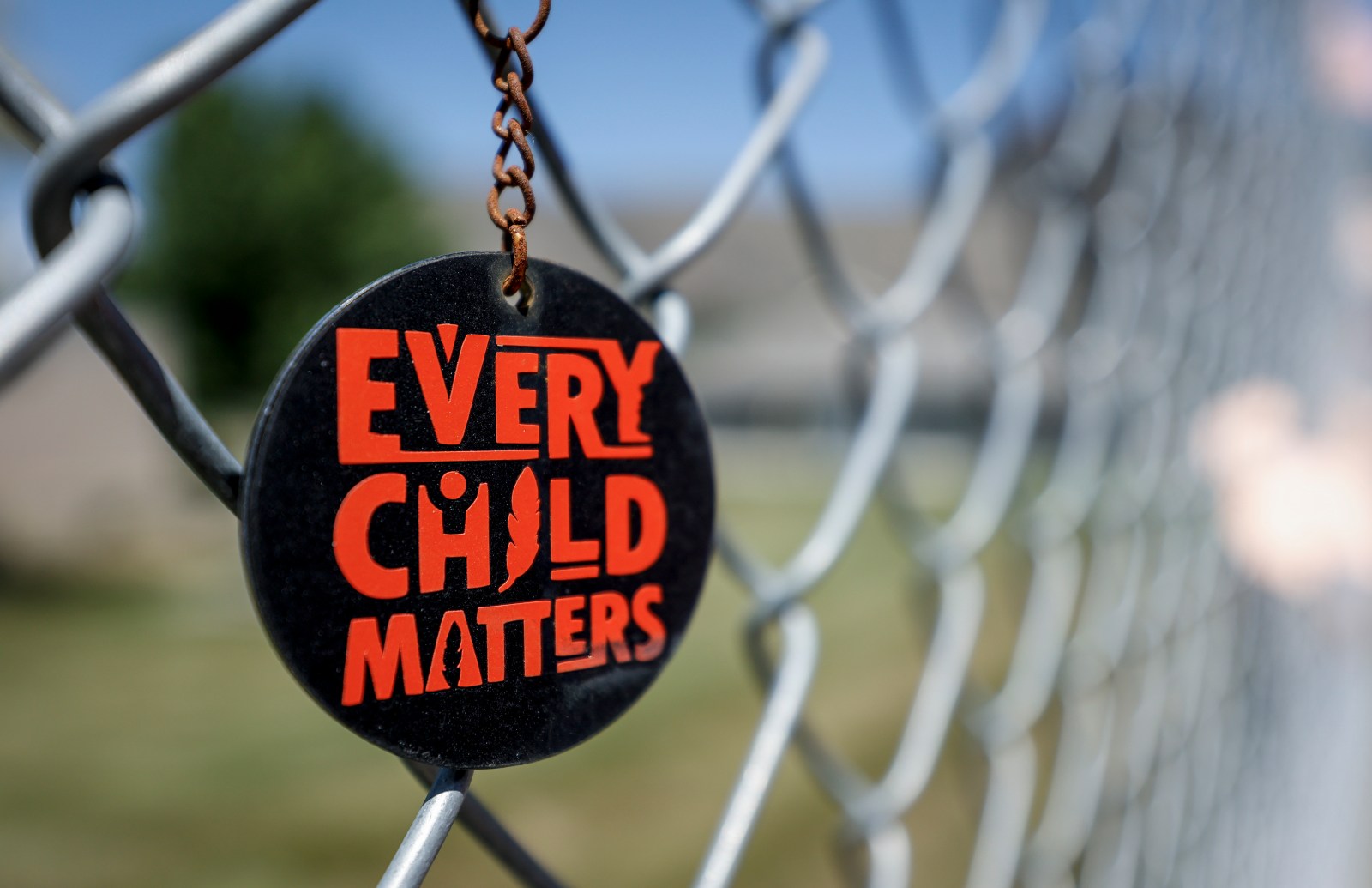
It was supposed to be a watershed moment for Canada.
We need your support! Local journalism needs your support! Now, more than ever, we need your support.
or call circulation directly at (204) 727-0527. Your pledge helps to ensure we provide the news that matters most to your community! To continue reading, please subscribe: Add Brandon Sun access to your Free Press subscription for only an additional $1 for the first 4 weeks*
It was supposed to be a watershed moment for Canada. When Prime Minister Stephen Harper stood before the House of Commons in 2008 to offer an historic apology to the survivors of Indian residential schools, he was unequivocal. “The government of Canada built an educational system in which very young children were often forcibly removed from their homes, often taken far from their communities,” Harper said.
“Many were inadequately fed, clothed and housed. All were deprived of the care and nurturing of their parents, grandparents and communities. “First Nations, Inuit and Métis languages and cultural practices were prohibited in these schools.
Tragically, some of these children died while attending residential schools and others never returned home. “The government now recognizes that the consequences of Indian residential schools policy were profoundly negative and that this policy has had a lasting and damaging impact on Aboriginal culture, heritage and language. “While some former students have spoken positively about their experiences at residential schools, these stories are far overshadowed by tragic accounts of the emotional, physical and sexual abuse and neglect of helpless children and their separation from powerless families and communities.
“The legacy of Indian residential schools has contributed to social problems that continue to exist in many communities today.” In giving voice to the pain and suffering that was forced upon Indigenous people in this country — and the role that the Canadian government played — Harper’s speech that day was possibly the most consequential and honourable action that the former prime minister ever took while in office. And yet, 18 years later, we are still debating the history of residential schools as if there is a debate to have.
Even after the Truth and Reconciliation Commission spent six years travelling across Canada, listening to the stories of survival from more than 6,500 witnesses as a way to document the truth of the residential school system. Even after the TRC found that Canada had pursued a policy of “cultural genocide” by systematically attempting to destroy Indigenous cultures and languages, and the families to which they belonged. Not to mention the systemic abuse, neglect and disease that many Indian schools survivors experienced.
And the fact that thousands of children died while attending the schools, even as the government and churches often failed to document their names or even return their bodies to their families. In the wake of the former prime minister’s apology, and the findings of the Truth and Reconciliation Commission, the debate in this country has shifted from acknowledging the past to fighting against residential school denialism. Residential school denialism has moved from the fringes of the internet to a targeted political movement that works to undermine the efforts of the TRC.
The manipulation of historical facts to minimize the harms of the residential school system is harmful and debilitating to honest reconciliation efforts in this country. And it should not be tolerated. In June, the federal Bill C-9, known as the Combatting Hate Act — aimed at both combating antisemitism, Islamophobia and other forms of hate, as well as protecting places of worship from acts of violence — was given royal assent.
However, an amendment to the legislation that would have criminalized residential school denialism did not receive enough votes in the Senate to be included in the bill. This week, the Assembly of First Nations chiefs unanimously decided to call on the federal government to criminalize residential school denialism as hate speech under federal law. It was also reported that the AFN’s resolution calls for the creation of an independent complaints commission to address residential school denialism and hate speech directed at survivors, their families and First Nations communities.
The official line from Crown-Indigenous Relations Minister Rebecca Alty on Thursday was that the federal government’s hate speech bill “hadn’t done the legislative analysis” on whether residential school denialism should be considered as such. However, the minister attempted to reassure those gathered at the Assembly of First Nations 2026 Annual General Assembly in Ottawa that work was moving forward to address residential school denialism. “There was a commitment of $5 million to address residential school denialism, so that work is underway,” Alty said, without confirming whether there are plans to formally entrench residential school denialism as hate speech.
Ironically, given his rather strong support of free expression, Harper would probably not support efforts to make Indian Residential School denialism a criminal offence, either now or during his time in office. But Canada has made it a hate crime under the Criminal Code to condone, deny or downplay the reality of the Jewish Holocaust during the Second World War. It’s also a hate crime to wilfully promote antisemitism in this country.
Why should Indian Residential School denialism be treated any differently?
- Published
- Jul 16, 2026
- Updated
- Jul 16, 2026
- Source
- Brandonsun
- Category
- Politics
- Read time
- 4 min
Key facts
Why this matters locally
This politics story matters locally because it may affect readers, businesses, commuters, families, or public services in British Columbia.
Local impact
BC Post links this item to British Columbia coverage so readers can follow related city updates, weather, traffic, events, and category news in one place.
Timeline
Source and credit
BC Post may summarize, organize, and add local context for reader clarity. Original reporting remains with the listed publisher.
Related Articles
View all Politics
Powerful pro-life ad featuring boxing legend to air during final World Cup matches
Politics
Powerful pro-life ad featuring boxing legend to air during final World Cup matches
 Politics
Vaughn Palmer: David Eby's slow and expensive step toward involuntary care
Politics
Vaughn Palmer: David Eby's slow and expensive step toward involuntary care
 Politics
Pitt Meadows to host information session for city council candidates
Politics
Pitt Meadows to host information session for city council candidates
 Politics
Hundreds of enthusiatic supporters attend Surrey Mayor Brenda Locke’s fundarising dinner
Politics
Hundreds of enthusiatic supporters attend Surrey Mayor Brenda Locke’s fundarising dinner
 Politics
One hundred affordable housing units for seniors coming to Sherbrooke
Politics
One hundred affordable housing units for seniors coming to Sherbrooke
 Politics
Funding local governments to speed up delivery of homes
Politics
Funding local governments to speed up delivery of homes
More Local Coverage
Latest news Business
AI Market Trends: Q2 2026 Review and Forecast
Business
AI Market Trends: Q2 2026 Review and Forecast
 Local News
Cowichan sports shorts: rugby, hockey, biking
Local News
Cowichan sports shorts: rugby, hockey, biking