

New consumer research from IDnow shows that only about half of French and German customers have heard of the European Digital Identity Wallet (EUDI Wallet). To readers of Biometric Update , this may seem impossible; the EU is rolling steadily toward the December 2026 deadline it set for Member States to offer a digital wallet to citizens. As such, it is a strong reminder of the importance communications plays in rolling out new technology. A post from IDnow says that Sapio Research surveyed 2,000 respondents across France and Germany, and discovered that 51 percent of respondents have never heard of the EUDI Wallet. “A further 27 percent have heard of it but are unsure what it does, leaving just 20 percent with any clear understanding of a system that will reshape how hundreds of millions of people prove who they are online.” The problem already looks dire. Awareness must exist if understanding is to follow. IDnow says that knowing about the EUDI Wallet makes a significant difference to people’s trust in the system, “with those who are familiar with it more than twice as likely to believe their government can roll it out securely and effectively.” “The implication is significant: awareness is not just a communications challenge; it is a trust-building one.” EUDI Wallet has some explaining to do Modern tech is built, in large part, on language . Chips and devices are the delivery mechanism, but language powers both the code that produces apps we interact with and the sales pitches crafted to make new technology appear innovative and appealing. While computer code advances, humanity’s first communications code – interpersonal language – is often a neglected factor in change management. Unfamiliarity breeds suspicion. Overly technical language is dull, and too often used as an excuse for effectively meaningless words. Branding is an important anchor of trust. These are lessons that the biometrics and digital identity sector are still learning. Consider that many in the general public are still adapting to the idea of a digital wallet at all. While some are advanced and others well established , many European digital identity systems are still in a developmental stage. And according to EU open data , cash continues to represent over 60 percent of physical transactions in regions such as Austria and Slovenia. Digital revolution aside, cash and card remain the dominant forms of payment for most people – for now. Moreover, for many users, a digital wallet means one of two things: Apple Wallet or Google Wallet – two titans of OS tech that could easily seize the wallet market, too. The EUDI Wallet scheme is meant as a driver of change. But IDnow’s data suggests that the change will take many by surprise – meaning that the shift to mobile wallets will be a matter of reactive adaptation, rather than a smoothly managed transition that prioritizes clear, effective communication. “A digital wallet can only build trust if people understand the benefits that it brings them,” says Liudmyla Rabchynska, director of global regulatory and government affairs for IDnow. “Information and communication will be crucial to the success of the EUDI Wallet in the coming months.” Trust is the premium commodity in the digital ecosystem, and even those who know about the EUDI Wallet and trust it will be rolled out effectively still have concerns about data protection, security and potential misuse. Just 7 percent of respondents to IDnow’s survey say they have no concerns whatsoever about the wallet. Wallets are a privacy product How, then, to get more people in the know and on board? It may be a matter of finding the customer sweet spot. “When respondents were told that the EUDI Wallet would allow them to prove something, such as being over 18, without sharing their name, address, date of birth, or any other personal detail, 63 percent said they would be more likely to use it.” Many of the concerns around digital technology frame it as an invasion of privacy. Digital ID is often associated, in certain places, with surveillance and government control. The EU’s job, then, is to reshape people’s understanding of wallets as a tech product that protects privacy – in effect, working against years of accumulated evidence that Big Tech wants as much of our data as it can get. Rabchynska says “concerns about a new digital identity solution are entirely understandable.” “What matters is that people understand the safeguards behind the EUDI Wallet and the control they retain. That is precisely where the real communication challenge lies.” Beyond awareness and adoption lies acceptance. And for Europe to truly accept the EUDI Wallet scheme, it has to work – and it has to work interoperably . “Seventy-three per cent of respondents fear that different systems and services will not work together seamlessly; 69 percent are concerned that the technology might be too complicated or unreliable,” the data says. “These are the practical tests the EUDI Wallet will need to pass to earn lasting trust .” Signicat envisions hybrid future with EUDI Wallet, e-ID New content from Signicat also weighs in on the EUDI Wallet. The Norwegian identity verification and e-signature firm suggests that, for businesses, “the real question is not simply: ‘how do we support the EUDI Wallet?’ The better question is: ‘how do we support tomorrow’s mix of wallets, eIDs, and verification methods?’” “Because the next phase will not be wallet-only. It will be hybrid.” The EUDI Wallet, Signicat says, is not arriving in an empty market. “In countries such as Norway, Sweden, Denmark, Finland, Belgium, Italy , the Netherlands, and many others, people already use national or bank-issued eIDs to log in, verify themselves, sign and approve sensitive actions.” The notion that everyone across the EU will willingly transition to the EUDI scheme is fictive. Transition will inevitably be messy, with different countries moving at different speeds. “Some customers will prefer the eID they already know,” Signicat notes. “Some journeys will require wallet-based attribute sharing. Others will still depend on existing eIDs, ID document verification, registry checks, risk scoring, or step-up authentication.” Existing e-IDs will continue to matter. According to Edwin de Ron, product manager at Signicat, “EUDI Wallets will be an important step forward, but the transition will be gradual. Businesses need to support wallets without losing the customers that prefer eIDs they know and trust. The strongest identity journeys will be the ones that combine coverage, choice and compliance in one flow.” Eurosmart position paper looks to future of walletdom Eurosmart, an established trade association for digital security professionals, has published a position paper on the EUDI Wallet. The paper (accessible to members) argues that “the long‐term success of the EUDIW depends on its ability to deliver sustainable trust, user privacy, and operational resilience in the face of evolving threats and usage scenarios.” “In that perspective, this paper explores future‐proof security foundations for decentralized digital identity wallets, rather than short‐term implementation choices.” Specifically, it focuses on security architectures that support strong guarantees on privacy, resilience and user control over time. “In particular, hardware‐backed security mechanisms based on Secure Elements are examined as a future‐proof step for high‐assurance EUDIW implementations. Secure Elements enable decentralized identity models where cryptographic keys remain under the exclusive control of the user, while supporting critical capabilities such as offline operation, battery‐off use cases, and increased resistance to large‐scale or high‐potential attacks.” Trinsic sees EUDI progress, but gaps remain Some have been gearing up for the EUDI Wallet longer than others. Trinsic published its paper on “ The State of EUDI ” in January 2026. The report says that, as of early 2026, core EU‐level requirements had largely been defined and member states were “actively transposing those requirements into national schemes, operational processes, and technical implementations.” “At the same time, many of the components that determine whether EUDI will function reliably at scale, like registrars, certification schemas , certificate governance, and the practical ‘last mile’ of cross‐border acceptance, are still being established.” Which is to say, the technical and legal stages have been set for EUDI Wallet’s big debut. Invitees are expected to arrive by midnight on December 31, 2026. But as with any big event, there will be scrambling in the lead-up to the deadline – and some elements of the approach will have to be re-evaluated, to determine what happens once dessert is done and everyone must go forth to live in a wallet-centric world.
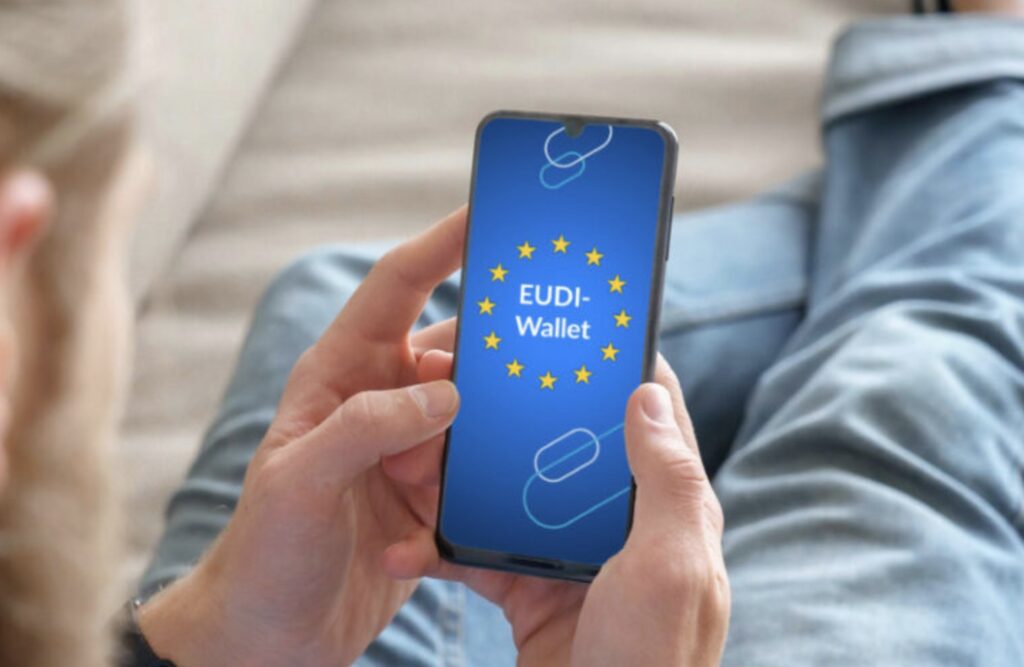
New consumer research from IDnow shows that only about half of French and German customers have heard of the European Digital Identity Wallet (EUDI Wallet). To readers of Biometric Update, this may seem impossible; the EU is rolling steadily toward the December 2026 deadline it set for Member States to offer a digital wallet to citizens. As such, it is a strong reminder of the importance communications plays in rolling out new technology.
A post from IDnow says that Sapio Research surveyed 2,000 respondents across France and Germany, and discovered that 51 percent of respondents have never heard of the EUDI Wallet. “A further 27 percent have heard of it but are unsure what it does, leaving just 20 percent with any clear understanding of a system that will reshape how hundreds of millions of people prove who they are online.
”The problem already looks dire. Awareness must exist if understanding is to follow.
IDnow says that knowing about the EUDI Wallet makes a significant difference to people’s trust in the system, “with those who are familiar with it more than twice as likely to believe their government can roll it out securely and effectively. ”“The implication is significant: awareness is not just a communications challenge; it is a trust-building one.”EUDI Wallet has some explaining to doModern tech is built, in large part, on language.
Chips and devices are the delivery mechanism, but language powers both the code that produces apps we interact with and the sales pitches crafted to make new technology appear innovative and appealing. While computer code advances, humanity’s first communications code – interpersonal language – is often a neglected factor in change management. Unfamiliarity breeds suspicion.
Overly technical language is dull, and too often used as an excuse for effectively meaningless words. Branding is an important anchor of trust. These are lessons that the biometrics and digital identity sector are still learning.
Consider that many in the general public are still adapting to the idea of a digital wallet at all. While some are advanced and others well established, many European digital identity systems are still in a developmental stage. And according to EU open data, cash continues to represent over 60 percent of physical transactions in regions such as Austria and Slovenia.
Digital revolution aside, cash and card remain the dominant forms of payment for most people – for now. Moreover, for many users, a digital wallet means one of two things: Apple Wallet or Google Wallet – two titans of OS tech that could easily seize the wallet market, too. The EUDI Wallet scheme is meant as a driver of change.
But IDnow’s data suggests that the change will take many by surprise – meaning that the shift to mobile wallets will be a matter of reactive adaptation, rather than a smoothly managed transition that prioritizes clear, effective communication. “A digital wallet can only build trust if people understand the benefits that it brings them,” says Liudmyla Rabchynska, director of global regulatory and government affairs for IDnow. “Information and communication will be crucial to the success of the EUDI Wallet in the coming months.
”Trust is the premium commodity in the digital ecosystem, and even those who know about the EUDI Wallet and trust it will be rolled out effectively still have concerns about data protection, security and potential misuse. Just 7 percent of respondents to IDnow’s survey say they have no concerns whatsoever about the wallet. Wallets are a privacy productHow, then, to get more people in the know and on board?
It may be a matter of finding the customer sweet spot. “When respondents were told that the EUDI Wallet would allow them to prove something, such as being over 18, without sharing their name, address, date of birth, or any other personal detail, 63 percent said they would be more likely to use it. ”Many of the concerns around digital technology frame it as an invasion of privacy.
Digital ID is often associated, in certain places, with surveillance and government control. The EU’s job, then, is to reshape people’s understanding of wallets as a tech product that protects privacy – in effect, working against years of accumulated evidence that Big Tech wants as much of our data as it can get. Rabchynska says “concerns about a new digital identity solution are entirely understandable.
”“What matters is that people understand the safeguards behind the EUDI Wallet and the control they retain. That is precisely where the real communication challenge lies. ”Beyond awareness and adoption lies acceptance.
And for Europe to truly accept the EUDI Wallet scheme, it has to work – and it has to work interoperably. “Seventy-three per cent of respondents fear that different systems and services will not work together seamlessly; 69 percent are concerned that the technology might be too complicated or unreliable,” the data says. “These are the practical tests the EUDI Wallet will need to pass to earn lasting trust.”Signicat
envisions hybrid future with EUDI Wallet, e-IDNew content from Signicat also weighs in on the EUDI Wallet. The Norwegian identity verification and e-signature firm suggests that, for businesses, “the real question is not simply: ‘how do we support the EUDI Wallet?’ The better question is: ‘how do we support tomorrow’s mix of wallets, eIDs, and verification methods?’”“Because the next phase will not be wallet-only.
It will be hybrid.”The EUDI Wallet, Signicat says, is not arriving in an empty market. “In countries such as Norway, Sweden, Denmark, Finland, Belgium, Italy, the Netherlands, and many others, people already use national or bank-issued eIDs to log in, verify themselves, sign and approve sensitive actions.
”The notion that everyone across the EU will willingly transition to the EUDI scheme is fictive. Transition will inevitably be messy, with different countries moving at different speeds.
“Some customers will prefer the eID they already know,” Signicat notes. “Some journeys will require wallet-based attribute sharing. Others will still depend on existing eIDs, ID document verification, registry checks, risk scoring, or step-up authentication.”
Existing e-IDs will continue to matter. According to Edwin de Ron, product manager at Signicat, “EUDI Wallets will be an important step forward, but the transition will be gradual. Businesses need to support wallets without losing the customers that prefer eIDs they know and trust.
The strongest identity journeys will be the ones that combine coverage, choice and compliance in one flow. ”Eurosmart position paper looks to future of walletdomEurosmart, an established trade association for digital security professionals, has published a position paper on the EUDI Wallet.
The paper (accessible to members) argues that “the long‐term success of the EUDIW depends on its ability to deliver sustainable trust, user privacy, and operational resilience in the face of evolving threats and usage scenarios.”“In that perspective, this paper explores future‐proof security foundations for decentralized digital identity wallets, rather than short‐term implementation choices.” Specifically, it focuses on security architectures that support strong guarantees on privacy, resilience and user control over time.
“In particular, hardware‐backed security mechanisms based on Secure Elements are examined as a future‐proof step for high‐assurance EUDIW implementations. Secure Elements enable decentralized identity models where cryptographic keys remain under the exclusive control of the user, while supporting critical capabilities such as offline operation, battery‐off use cases, and increased resistance to large‐scale or high‐potential attacks.”Trinsic sees EUDI progress, but gaps remainSome have been gearing up for the EUDI Wallet longer than others. Trinsic published its paper on “The State of EUDI” in January 2026.The report says that, as of early 2026, core EU‐level requirements had largely been defined and member states were “actively transposing those requirements into national schemes, operational processes, and technical implementations.”“At
the same time, many of the components that determine whether EUDI will function reliably at scale, like registrars, certification schemas, certificate governance, and the practical ‘last mile’ of cross‐border acceptance, are still being established. ”Which is to say, the technical and legal stages have been set for EUDI Wallet’s big debut. Invitees are expected to arrive by midnight on December 31, 2026.
But as with any big event, there will be scrambling in the lead-up to the deadline – and some elements of the approach will have to be re-evaluated, to determine what happens once dessert is done and everyone must go forth to live in a wallet-centric world.
- Published
- Jul 17, 2026
- Updated
- Jul 17, 2026
- Source
- Biometric Update
- Category
- Technology
- Read time
- 6 min
Key facts
Why this matters locally
This technology story matters locally because it may affect readers, businesses, commuters, families, or public services in British Columbia.
Local impact
BC Post links this item to British Columbia coverage so readers can follow related city updates, weather, traffic, events, and category news in one place.
Timeline
Source and credit
BC Post may summarize, organize, and add local context for reader clarity. Original reporting remains with the listed publisher.
Related Articles
View all Technology
Transformer-manufacturing company to shut down its Chilliwack facility
Technology
Transformer-manufacturing company to shut down its Chilliwack facility
 Technology
Spectro Cloud Raises $100 Million Series D to Help Customers Move AI Infrastructure Into Production Across Enterprise, Public Sector, Neocloud and Sovereign Cloud Environments
Technology
Spectro Cloud Raises $100 Million Series D to Help Customers Move AI Infrastructure Into Production Across Enterprise, Public Sector, Neocloud and Sovereign Cloud Environments
 Technology
Quebec announces plan to train more aerospace workers as demand surges
Technology
Quebec announces plan to train more aerospace workers as demand surges
 Technology
Apple’s Lawsuit Could Choke OpenAI’s iPhone Rival Before It Even Ships
Technology
Apple’s Lawsuit Could Choke OpenAI’s iPhone Rival Before It Even Ships
 Technology
ECT Reprograms Adult Neurons into a Youthful State
Technology
ECT Reprograms Adult Neurons into a Youthful State
 Technology
GO train users could face delays, cancellations due to ‘crew constraints’: Metrolinx
Technology
GO train users could face delays, cancellations due to ‘crew constraints’: Metrolinx
More Local Coverage
Latest news Business
AI Market Trends: Q2 2026 Review and Forecast
Business
AI Market Trends: Q2 2026 Review and Forecast
 Politics
Powerful pro-life ad featuring boxing legend to air during final World Cup matches
Politics
Powerful pro-life ad featuring boxing legend to air during final World Cup matches