

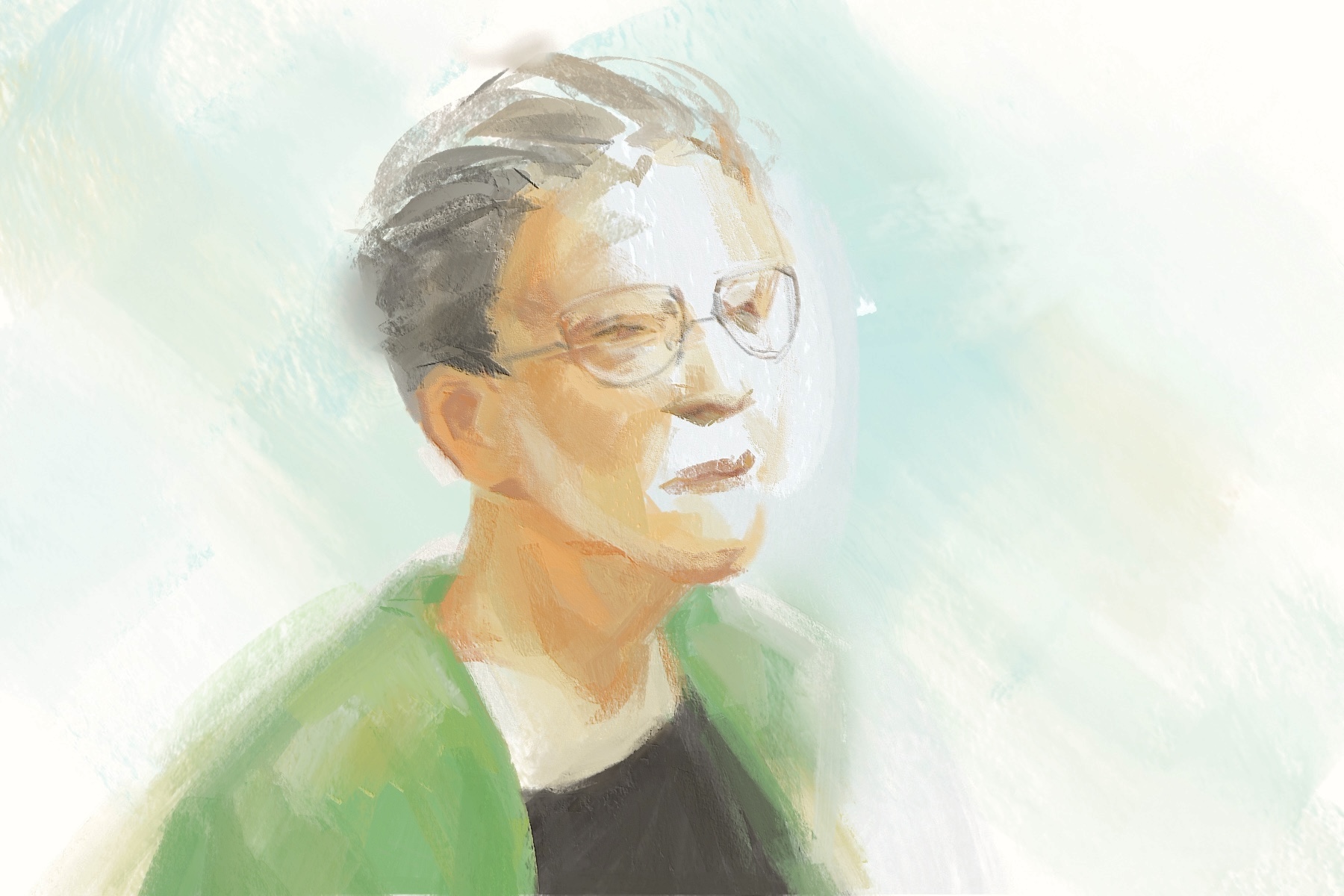
Scandalously, no press wanted to publish her long-awaited biography The post Everybody Knows Poets Are Weird. Margaret Avison Was Weirder first appeared on The Walrus .
Everybody knows poets are weird. The turtlenecks, the notebooks, the opium, the daffodils: it’s all a bit much. But even by poetic standards, Margaret Avison was an odd duck.
Acutely self-conscious and often physically fragile, she lived with such intense inwardness that even other writers were perturbed. A self-described hermit, she travelled infrequently. She had few indulgences beyond cigarettes.
Devoted to her parents, she was rarely more than a train ride from them. She had no spouse, no children, no pet. The novelist Sheila Watson remembered her as being “deathly pale.”
The critic Northrop Frye called her “a conscientious objector to life.” Yet Avison, who died almost twenty years ago, was also one of Canada’s most extraordinary authors. More often than not, her poems rework biblical chapter and verse.
Obsessed by the workings of mind and soul, they stretch syntax like elastic and cram allusions into a handful of words. Teeming with puns and newly minted compounds—and admittedly sometimes inscrutable—her poems brave what she called “[t]he mysterious, and more ample, further waters” of spiritual inquiry. The question is, does anyone care?
In Optic Heart, the first comprehensive account of Avison’s life, David A. Kent examines her days in microscopic detail. His title comes from one of her most famous poems, the sonnet “Snow”: “Nobody stuffs the world in at your eyes. / The optic heart must venture: a jail-break, / And re-creation.”
(She explained that the passage means the “whole person responding,” or “seeing with your heart.”) A long-time Avison scholar, Kent shares what was once the consensus view that her poetry, bold in style and assured in its religious conviction, is some of the best yet written in this country: “Her pre-eminent status in Canadian literature is already secure, but I believe that her reputation and standing will only grow as the real dimensions of her achievement are more fully appreciated.” I’m not so sure.
Kent’s book is a scholarly triumph, but his portrait obliges us to take a stern look at our literary history. Do Avison’s enigmatic poems speak to readers today, or are they vestiges of a past we’ve left behind? Whatever the answer, one fact about Optic Heart remains scandalous: no one wanted to publish it.
More than forty years in the making, Optic Heart is a cradle-to-grave biography. Or will be: the second instalment is scheduled for 2028. Volume One ends in 1977, when Avison was not yet sixty.
She lived another thirty years, writing all the while, before dying in 2007 of complications from a broken hip. Kent follows the narrative established by Avison’s autobiography, the posthumous I Am Here and Not Not-There. I use the word “narrative” loosely.
Despite its innermost intensity, Avison’s life was uneventful. Her friendships with most writers seemed relatively free of acrimony. She had an infatuation or two, and she may even have been in love with the American poet John Frederick Nims.
Kent downplays a rumoured dalliance with the Canadian poet A. J. M. Smith. “More than once,” as Kent writes, marriage was broached and awkwardly dismissed. (Avison was awkward to the core.)
But little evidence suggests that she had much acquaintance with the themes—romance, passion, heartbreak—that have preoccupied lyric poets since the first lyre was strung. Optic Heart is so chaste that I got excited by a
Source and reference
reference to Essex County. Avison was born in Galt, Ontario, on April 23, 1918. She was a “PK,” a Methodist preacher’s kid. Although her childhood was happy enough, it was marked by self-consciousness. “We were trained,” she wrote, “to be aware of people’s expectations of a minister’s child.” That sensitivity never dissipated. After the Avisons moved from Calgary to Toronto in 1929, Margaret hardly left the city again. From her teenage years on, she lived with depression and anorexia, the latter requiring hospitalization. Trying to keep off teenage weight (to offset adolescence, as she put it), she became a compulsive urban walker. Upon finishing high school in 1936, she journeyed across town to study English literature at the University of Toronto. There, she embarked on a literary career, writing and publishing poems and stories. She was also beset by suicidal thoughts, and, at...
Read original source- Published
- Jul 17, 2026
- Updated
- Jul 17, 2026
- Source
- Thewalrus Ca News
- Category
- Entertainment
- Read time
- 9 min
Key facts
Why this matters locally
This entertainment story matters locally because it may affect readers, businesses, commuters, families, or public services in British Columbia.
Local impact
BC Post links this item to British Columbia coverage so readers can follow related city updates, weather, traffic, events, and category news in one place.
Timeline
Source and credit
BC Post may summarize, organize, and add local context for reader clarity. Original reporting remains with the listed publisher.
Related Articles
View all Entertainment
Tom Cruise unrecognizable with a gut and grey hair in ‘Digger’ trailer
Entertainment
Tom Cruise unrecognizable with a gut and grey hair in ‘Digger’ trailer
 Entertainment
Kultrun World Music Festival visits Waterloo Park
Entertainment
Kultrun World Music Festival visits Waterloo Park
 Entertainment
Langley’s tbird hosts country music concert
Entertainment
Langley’s tbird hosts country music concert
 Entertainment
17 Xbox Game Pass title updates you might've missed this week
Entertainment
17 Xbox Game Pass title updates you might've missed this week
 Entertainment
Information sessions for national artistic funding set to be held at EA Rawlinson
Entertainment
Information sessions for national artistic funding set to be held at EA Rawlinson
 Entertainment
Hundreds pack Maple Ridge wharf for Tragically Hip tribute
Entertainment
Hundreds pack Maple Ridge wharf for Tragically Hip tribute
More Local Coverage
Latest news Business
AI Market Trends: Q2 2026 Review and Forecast
Business
AI Market Trends: Q2 2026 Review and Forecast
 Politics
Powerful pro-life ad featuring boxing legend to air during final World Cup matches
Politics
Powerful pro-life ad featuring boxing legend to air during final World Cup matches
 Local News
Cowichan sports shorts: rugby, hockey, biking
Local News
Cowichan sports shorts: rugby, hockey, biking